Archive | Genealogy RSS feed for this section

Nathaniel Mason’s Will: Grasier of Withybrook, Warwickshire

1 Jan

Nathaniel's will


It begins….”I Nathaniel Mason of Withybrook in the County of Warwick Grasior being of sound and perfect mind memory and understanding God be praised to make and ordain this to be my last will and testament in manner and form following and first and principally command my soul in the hands of God Almighty and my body I commit to the earth to be reverently buryed  at the discretion of my executor herein after named and as for and concerning such worldly estate as it hath pleased God to bestow upon me I give and dispose as followeth”

WOW…didn’t know that there was no punctuation in those days and that it would go on for three pages in a script and wording  with which I was not all that familiar. It soon became clear that Nathaniel had died childless and that his brother JOHN MASON and his brother-in-law JOHN BLOCKLEY, husband to his sister ELIZABETH,  would be his executors and that JOHN MASON would get the largest part of the estate. Guess this is why the John’s in my direct line farmed the land in Withybrook. John Mason born in 1748 is my 3X Great Grandfather and it is his daughter Ann Mason that marries into the Perkins Family.

John Perkins…Grandson of John Mason, Son of Ann Mason


Why would I want to spend so much time on the will of someone who died almost 300 years ago? The answer is “I’m  crazy..well yes… but I am also curious and a Family Historian” and this Will gives me a great deal of information about my Mason family. They appear to have lived in Warwickshire for a very long time…..Sarah,  daughter of Thomas Mason was born March 4, 1653 in Withybrook and a Thomas Mason was buried there in the church cemetery age 91 in 1691… meaning he was born around 1600. Good possibility that he was the father of Thomas Jr. who was born in 1633…..so there we are, almost 400 years on the farm, so to speak. This information is found in the online scanned Parish Church Records….no more transcriptions with their many errors. I can turn the pages and see the names for myself!


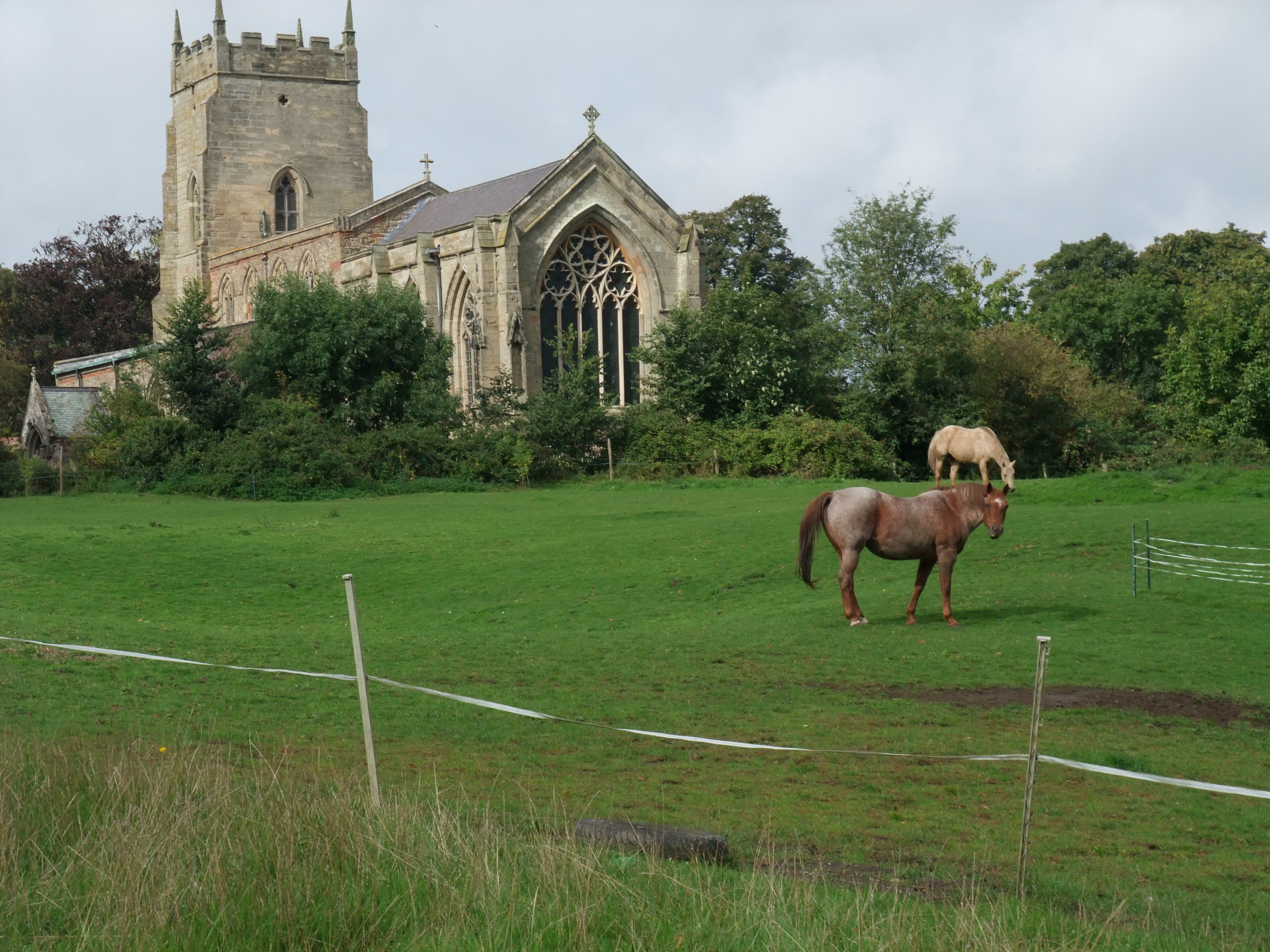
Farm at Withybrook, Warwickashire

Farm at Withybrook, Warwickshire some 8 miles from Coventry

Right at the start, I had to access a dictionary. What is a Grasior or Grasier?….my guess would be farmer of some sort. Oxford says ” someone who feeds cattle for market or a large scale sheep or cattle farmer”.  After the preliminaries of the will, Nathaniel begins his bequests. He takes care of his wife Elizabeth for the remainder of her life by a trust  of 240 pounds managed by the TWO JOHN’s. He gives her “my BED in the parlor with all the bedding thereunto belonging in my chest standing at the said bed foot all my linen except for what is used with my other beds all my pewter which was my wife’s at the time of our marriage.” Nice of him to return it to her.

He then goes on to make specific monetary bequests to his siblings, kinsmen, kinswomen and nieces and nephews.  “How I give and bequeath unto my nephew JOHN MASON, son of my said brother John  Mason the sum of 100£ . To my nieces ELIZABETH DALTON and SARAH MASON daughters of my said brother John Mason and to each of them 40£ apiece. To MARY MASON another daughter of my said brother John Mason” …..and so on and so on as the money is doled out. Hard to equate the value of this money in today’s terms, but I would guess that he was a reasonably wealthy gentleman. (In 1720 an ounce of gold in London cost about £4.31  and today it costs £768 and a midling type of family could live on 40 to 60 pounds a year.)

He takes care of John’s younger children.. “How I give to my nephew DANIEL MASON another of the sons of my said brother John Mason the sum of 10£ to be paid at age 13 in order to put him into an apprenticeship.”  Apprenticeships were commonly arranged for the younger children in large families so they would be able to earn a living.

Next he disposes of  his possessions many of which go to his nieces “. How I give and bequeath to my niece ELIZABETH DALTON my bed in the chamber over the hall with all the bedding thereunto belonging and my best brass pot. How I give unto my niece SARAH MASON my bed standing at the stair head with all the bedding thereunto belonging. How I give to my niece MARY MASON my great table with the joynt stools thereto belonging. And the other chest in my said parlor and also my best cupboard in the said hall.

The next part of his will is very useful as it names men that his kinswomen married, where they lived and what they did…..a big help in family history research. “How I give to my nephew JOHN BLOCKLEY son of  SISTER BLOCKLEY the sum of 100£ and to my niece ELIZABETH daughter of SISTER BLOCKLEY 40£ and to MARY BLOCKLEY daughter of  SISTER BLOCKLEY 20£. How I give to my kinswomen ELIZABETH AND MARY ROBINSON daughters of LUKE ROBINSON of ANSTEY in the CITY OF COVENTRY GRASIER and to each the sum of 20£ at the ages of 21 years. So this clues me in to the fact that the  Robinson’s and the Blockley’s are extended family and I know where they are living in Warwickshire relative to where Nathaniel was living in Withybrook. Since land is passed only to the eldest son, it is important to determine what happened to the rest of the sons and daughters. These women are likely his cousins/aunts which mean I have more help to trace backwards to the common ancestors…Thomas Jr (1633) and/or Thomas Sr. (1600).

This item I found interesting “How I give unto Mr. almighty SMITH of Leire in the county of Leicester and Mr. THOMAS SMITH his brother each of them 5£.” I wonder what his relationship was with the 2 brothers? Perhaps they had done him wrong in some business transaction….I don’t believe almighty is a christian name…but rather in the vain of “so who does he think he is”.

In a codicil to the will he makes some changes….How I make and appoint my Kinsman JOHN MASON of Rynton aforesaid YEOMAN Sole Executor of this my last will and testament and do give unto him all the rest of my GOODS CHATTELS and PERSONAL ESTATE…..a very lucky man I would say as he always would be reasonably well off.  The  Concise Oxford Dictionary  states that a yeoman was “a person qualified by possessing free land of 40/- (shillings) annual [feudal] value, and who can serve on juries and vote for a Knight of the Shire. He is sometimes described as a small landowner, a farmer of the middle classes.”  Owning land was the main form of wealth in the 18th century. Political power and influence was in the hands of rich landowners. At the top were the nobility. Below them were a class of nearly rich landowners called the gentry. In the early 18th century there was another class of landowners called yeomen between the rich and the poor.

So..there you have it…the information that can be gleaned from a Will. The class system was alive and well in England but it would appear that this part of my family was doing OK!
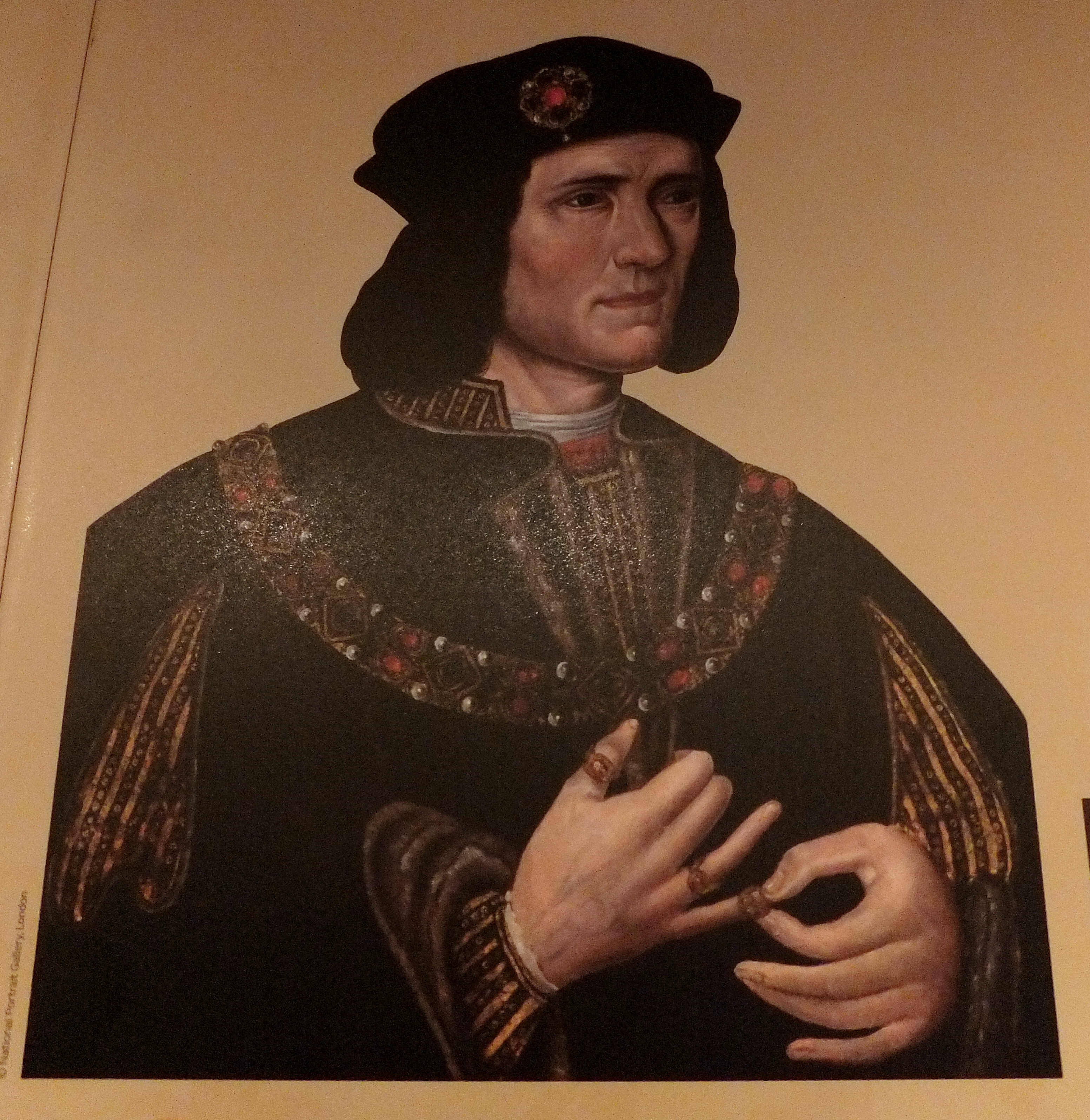
Reburying of a King Found in a Car Park! Richard lll

12 Sep
DSCF3556

King Richard III

The remains of Richard III will be reburied in Leicester Cathedral on March 26, 2015. Now why would I be interested in such an event? The story begins in 2010, when I first visited Leicester. The London Trippers, part of the England/Wales Group at the Alberta Genealogy Society, had spent 2 weeks in London researching their ancestors in  various archives. Following that, everyone went their separate ways and I decided to visit Leicestershire, home to my Perkins/Benford ancestors.    


DSCF3838

My home away from home in the Belmont Hotel. Made The Bar my office.

I wanted to visit Claybrooke Magna, a small village 12 miles from Leicester on the Leicestershire/Warwickshire border, where my Dad had been born in 1904. His father and grandfather had been the Village Blacksmiths since 1860. The Benford branch of my family had been the Village Carpenters for an even longer period of time.  I made the Belmont Hotel in Leicester my home base and would often head out along the New Walk, a delightful pedestrian walkway which took me to the city centre, where I  would  take photos. 

??????????????????????????????????

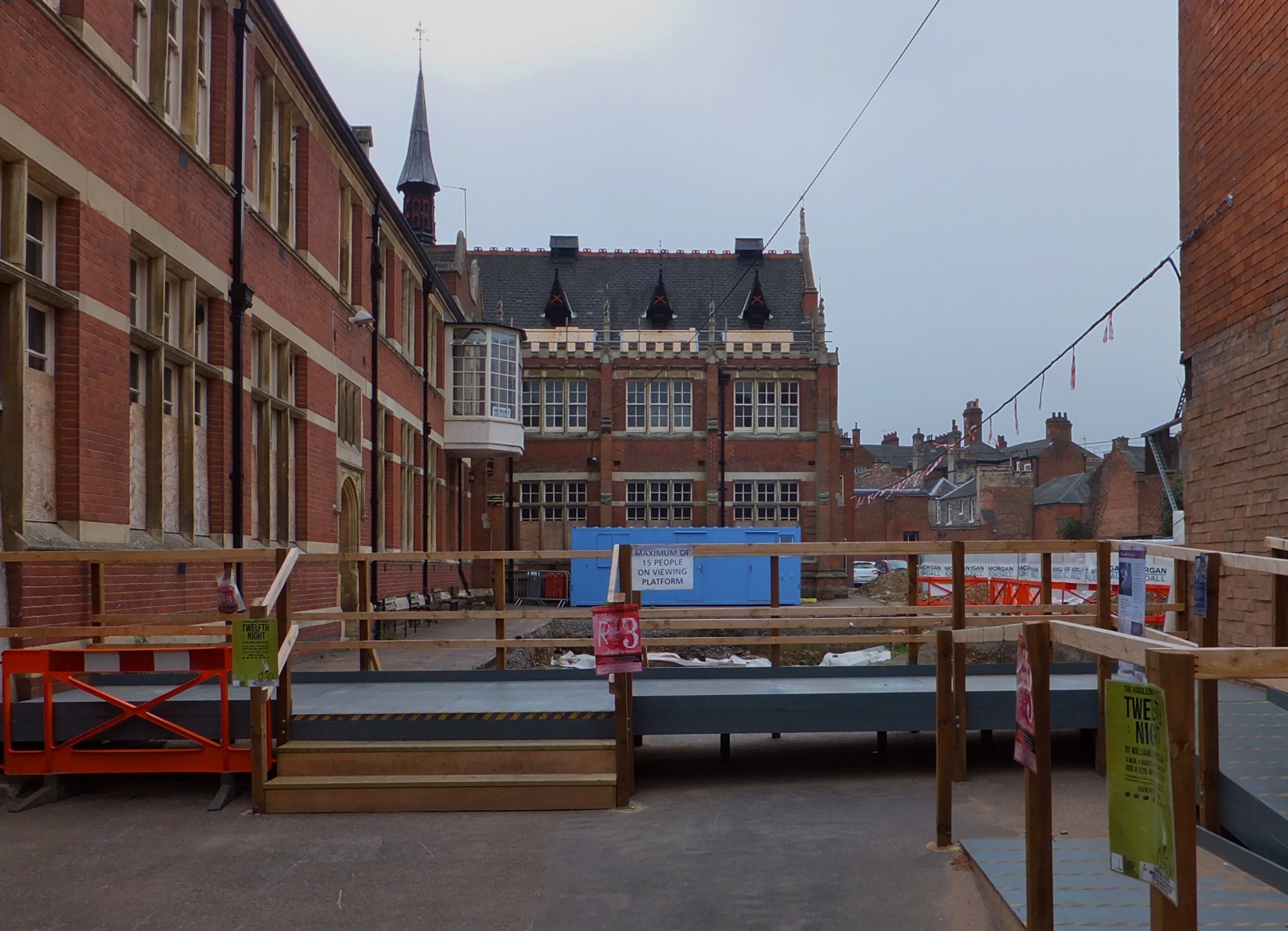
My picture taken in 2010 of the Car Park where Richard was discovered behind the wall on the right.

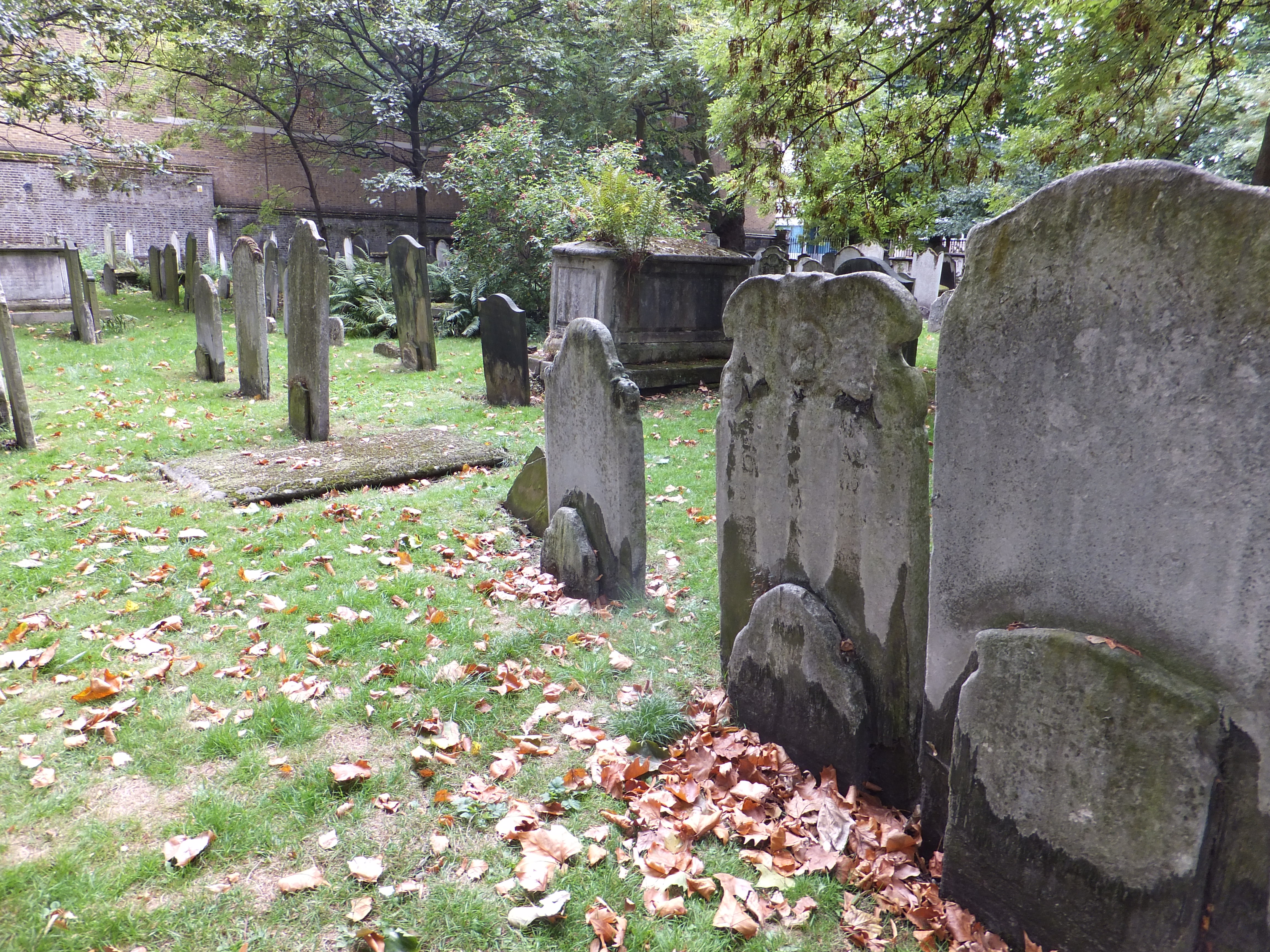
One day, late in the afternoon, as I was heading home, I came upon a property with an iron fence and gate and behind it some Brick Buildings  with chimney pots and a long Brick Wall which made a great picture against the darkening sky. This was one of hundreds of photos I took on the trip, and I never gave it another thought until August 2012  when I learned that the  remains of King Richard III had been discovered in a car park in Leicester. 

Richard III Dig: Bones Found Under Leicestershire Car Park

Richard III: ‘When I saw the skull, the hair on the back of my neck stood up’

As archaeologists leave the Leicester site where they believe they have found royal remains, locals are already convinced………

Richard III car park

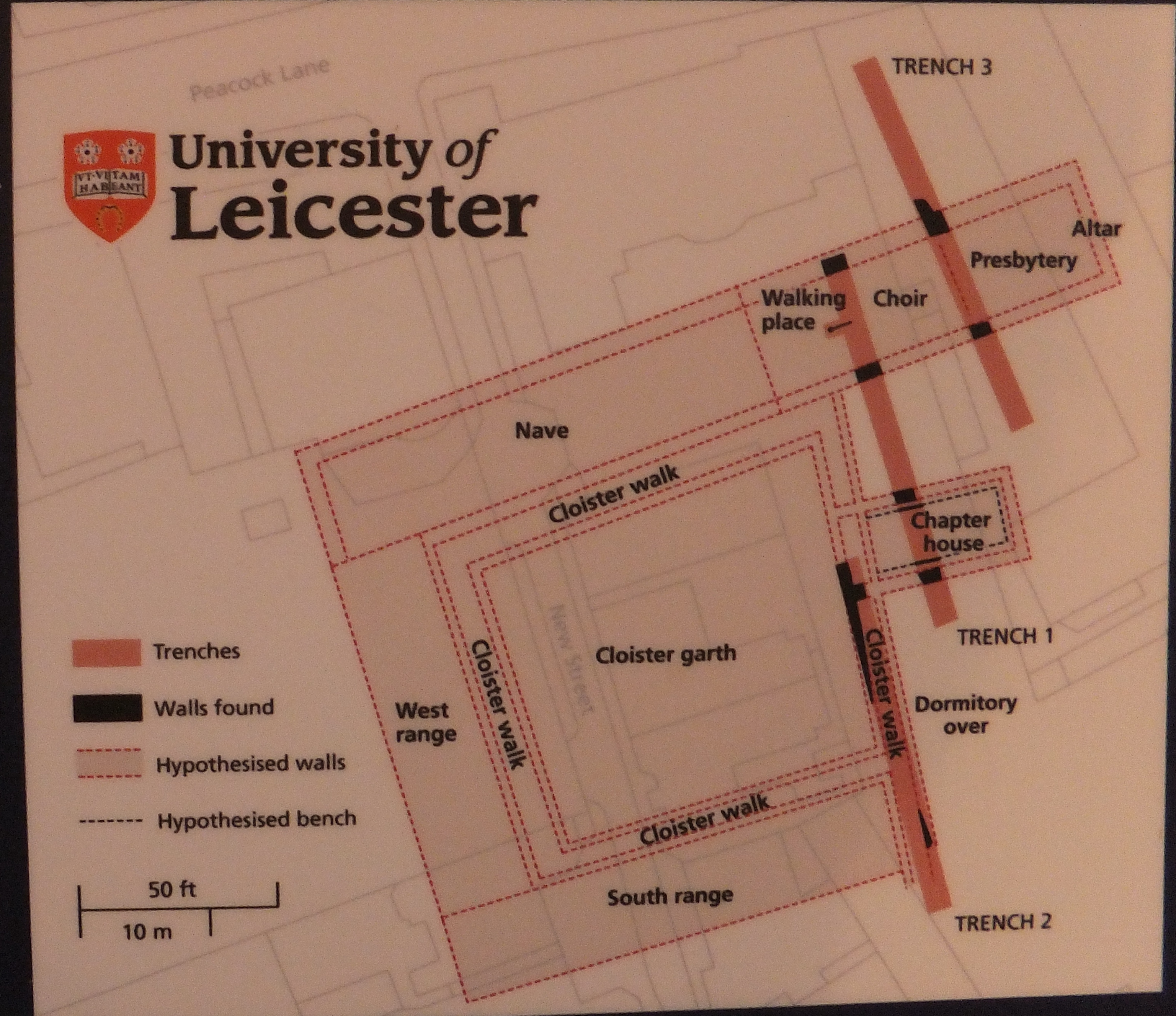
Trench 1 was dug on the other side of the wall and that is where Richard’s remains were eventually discovered. (From The Guardian Newspaper Sept 23, 2012)

I  thought, “Could this be  in the same area that I had taken the photo 2 years earlier. The place looks familiar.” I got out my pictures and sure enough it was the very same site.    I joked with friends that the archaelogists should have asked me as I knew where Richard was…. I had taken that picture in 2010 because Richard III had been trying to  get someone’s attention to have him removed from the car park site to somewhere more befitting a grave for a king.

It was the same site !

It was the same site ! The wall behind which he was discovered has been taken down.

DSCF3585

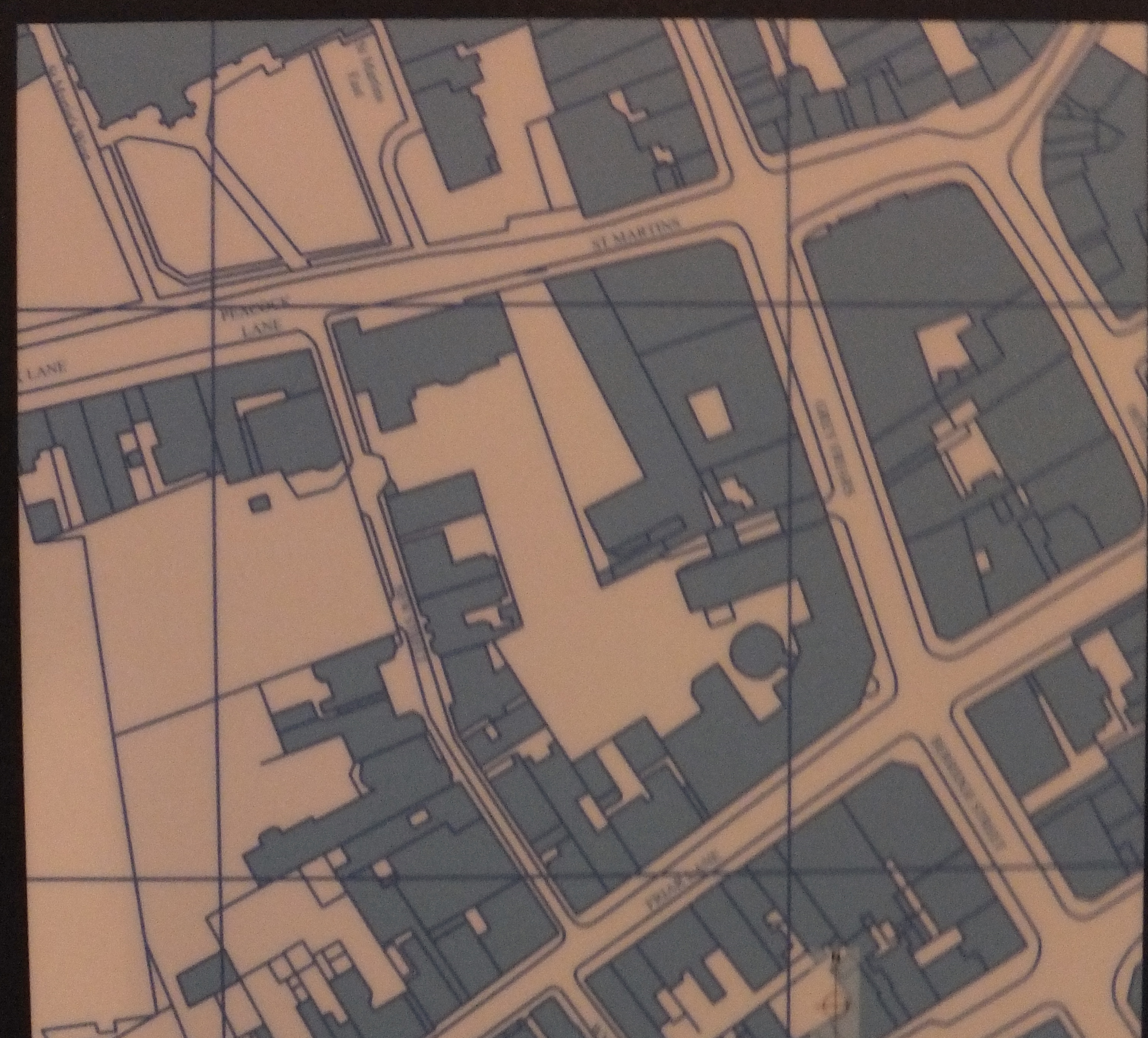
Greyfriars Friary

The actual search began on August 25, 2012, the 527th Anniversary of his burial. In  2010, Dr. Ashbrown-Hill had published compelling evidence building on the work of David Baldwin, that Richard was buried in the choir of the Greyfriars and his remains had not been disturbed during the Dissolution of the Monasteries. He also traced Richard’s family tree to the Ibsen family, descendents of Richard’s sister. Their mitochondrial DNA sequence could be helpful in proving the remains were Richard’s if they were ever located. Phillipa Langley had approached the Leicester City Council with a proposal that part of the Car Park where part of Alderman Herrick’s garden and the Greyfriars Friary had stood, be investigated. A team of archaeologists undertook an assessment of the site and developed an excavation strategy. The dig was eventually funded by the City Council, The University of Leicester and the The Richard III Society. By a strange quirk of fate, the bones that were discovered on the first day of the dig in the first trench dug, ultimately turned out to be those of Richard III.

Richard III reigned for only two years and two months…1482 – 1485. He was born during the reign of King Henry VI and his childhood was lived during the War of the Roses. Richard’s first recorded visit to Leicester was on May 10, 1464 at the age of 11. He was also in Leicester on a Post Coronation Progress and stayed at the castle from August 17-20, 1483. On August 7, 1485 Richard learned that Henry Tudor had landed in Wales and intended to claim the throne. Richard sent out letters to his followers ordering them to gather at Nottingham and Leicester. On August 20, 1485 rode into Leicester for the final time. He stayed overnight at the White (Blue) Boar Inn and the following morning rode out over the old Bow Bridge. He was on his way to fight in what would become known as the Battle of Bosworth. During a gallant fight, he was killed in battle and his body was brought back to Leicester over the same bridge he had crossed that morning. He was 32 years old. His body was eventually buried in the Greyfriars Friary, a site that runs parallel to St. Martin’s Cathedral. His remains were to languish in this grave till August 2012. He was 32 years old.

DSCF3563

Greyfriars with St. Martin’s in top left corner

DSCF3561

Richard’s remains were found in Trench 1 beside the wall

DSCF3562

I took my photo from the iron fence on the street looking towards the wall.

King Richard III to remain in Leicester

May 23, 2014

 Follow Dean Monteith’s Blog on the St. Martin’s website.

A statement from The Very Revd David Monteith, Dean of Leicester Cathedral:

“The delays are over.  The law is clear and unequivocally set forth in today’s judgement.  Richard III fought here, fell here, died here, has lain here and was rediscovered here.  He will now be finally led to rest with the prayers of God’s people in a manner fitting to his story and with dignity as befits a child of God and an anointed King of England. This historic place marked the end of one dynasty and the start of the next.

This community, which has changed so much since then, then symbolises the best of modern Britain – respectful of the past, diverse in character and generous in welcome.  Our community are humbled to be entrusted with this next task on behalf of the people of England as the eyes of the world watch on.

Everyone now knows about the ‘King in the Car Park’, championed by the Looking for Richard project and achieved with the partnership of the City of Leicester and the expertise of the University of Leicester.”

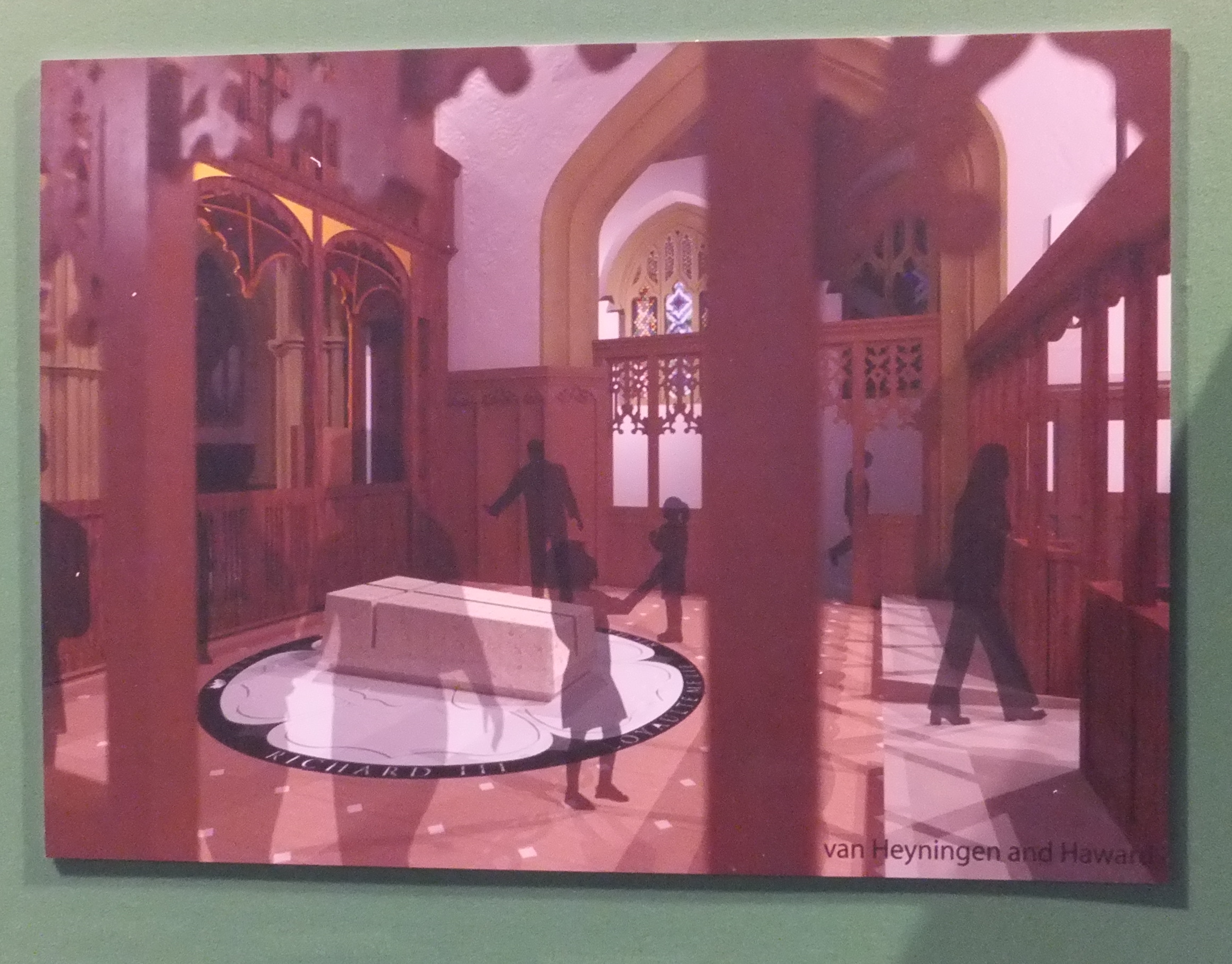
Richard’s remains will be buried in St Martin’s Cathedral March 24, 2015.   At present there is a Memorial Stone to Richard. This will be removed and a new tombstone created.

DSCF3541

St. Martin’s Cathedral showing Choir and Altar.

DSCF3532

Memorial to Richard in front of Altar.

DSCF3515

Plans for the new memorial.

David Monteith’s Blog continued…

“We now will continue to work together to complete the task in Spring 2015. The past weeks of waiting have been trying for all our staff and volunteers and this entire process has been costly financially and emotionally.  But I want to say to everyone, whatever viewpoint you take that everyone is welcome here.  Bosworth was a bitter battle with different branches of the same family at war.  Five hundred years on we can learn a little and my prayer is that we might travel now together to finally lay King Richard to rest. The final paragraph of the ruling summed up: ‘Since Richard III’s exhumation on 5 September 2012, passions have been roused and much ink has been spilt.  Issues relating to his life and death and place of re-interment have been exhaustively examined and debated.”

The Very Reverend David Monteith, the Dean of Leicester Cathedral, has explained the considerable efforts and expenditure invested by the Cathedral in order to create a lasting burial place “as befits an anointed King”.  “We agree that it is time for Richard III to be given a dignified reburial, and finally laid to rest.”

Recent announcements indicate that The Cardinal Archbishop of Westminster (Roman Catholic) and The Archbishop of Canterbury (Church of England) will both be taking part in services in Leicester Cathedral to mark the reinterment of King Richard III. Remember there was no Church of England in the time of Richard III. It hadn’t yet come into being, so Richard would have been a devout Catholic.

Both Dioceses are working together with other stakeholders to organise various acts of worship during the week in which Richard III’s mortal remains will be re-interred in Leicester Cathedral. 

  • On Sunday March 22 the remains of Richard III will be received into Leicester Cathedral. 
  • On Monday March 23, Cardinal Nichols will celebrate Mass for the repose of the soul (a ‘Requiem Mass’) of Richard III in Holy Cross Church. 
  • On Thursday March 26, the mortal remains of Richard III will be re-interred in Leicester Cathedral, with an invited congregation and in the presence of the Most Revd Justin Welby, Archbishop of Canterbury.
  • On Friday March 27, invited people from across the city of Leicester and the county of Leicestershire will gather in the Cathedral to mark the end of King Richard’s journey and the sealed tomb will be revealed to the public.
  • In addition, the Cathedral will be open for people to visit, to pay their respects and to pray from 23-25th March, and from Saturday 28th March the area around Richard III’s tomb will be open to the public.

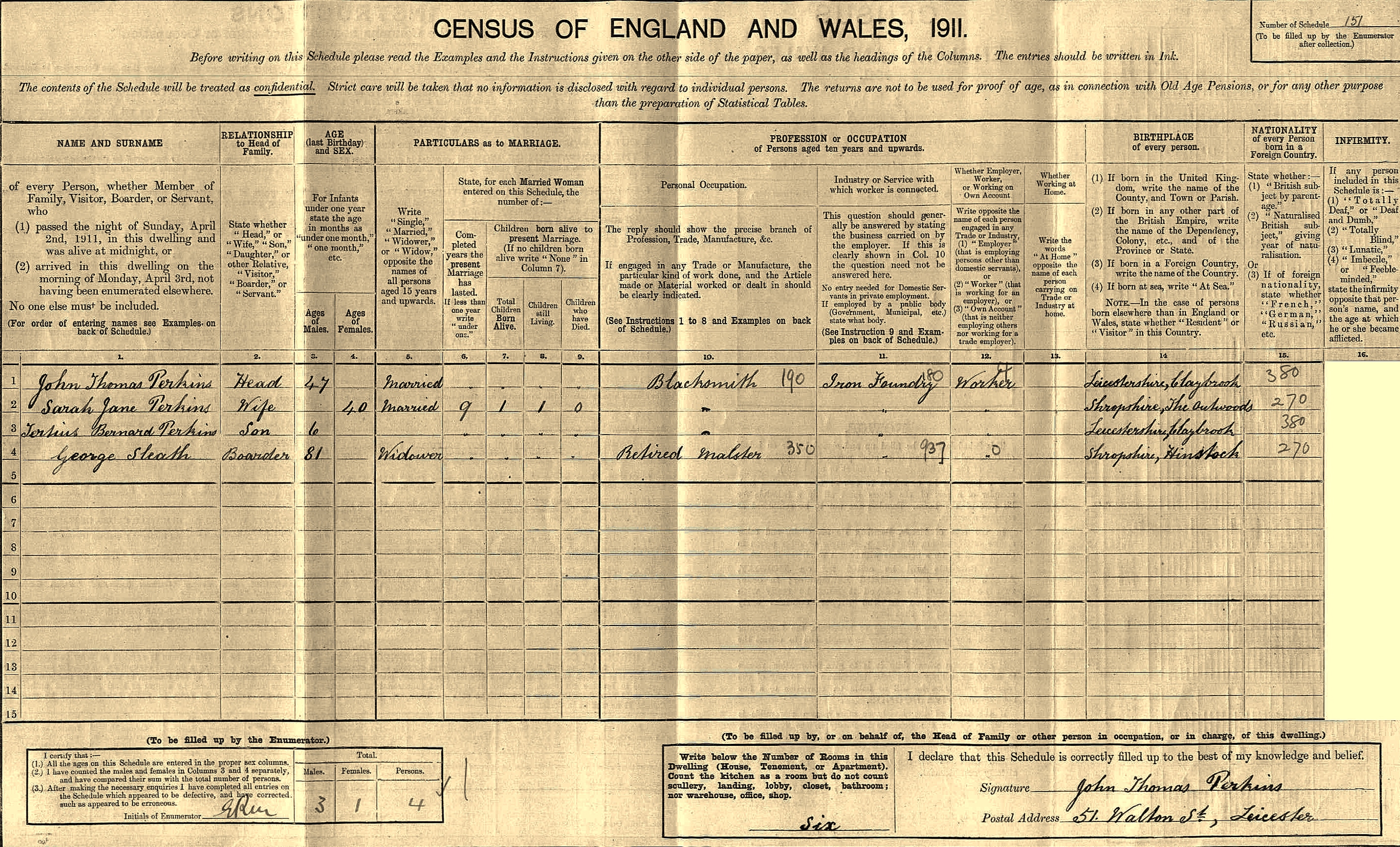
 It is not only Richard who has a connection to Leicester. In 1913, it was from here that John Thomas and Sarah Perkins, my grandparents and Tertius Perkins, my father, left for Liverpool and ultimately their new home in Canada. They had been living in the city for several years since leaving Claybrooke Village.    See the 1911 Census Form completed by my Grandfather.

Perkins 1911 England census

The 1911 Census Form completed by my Grandfather.

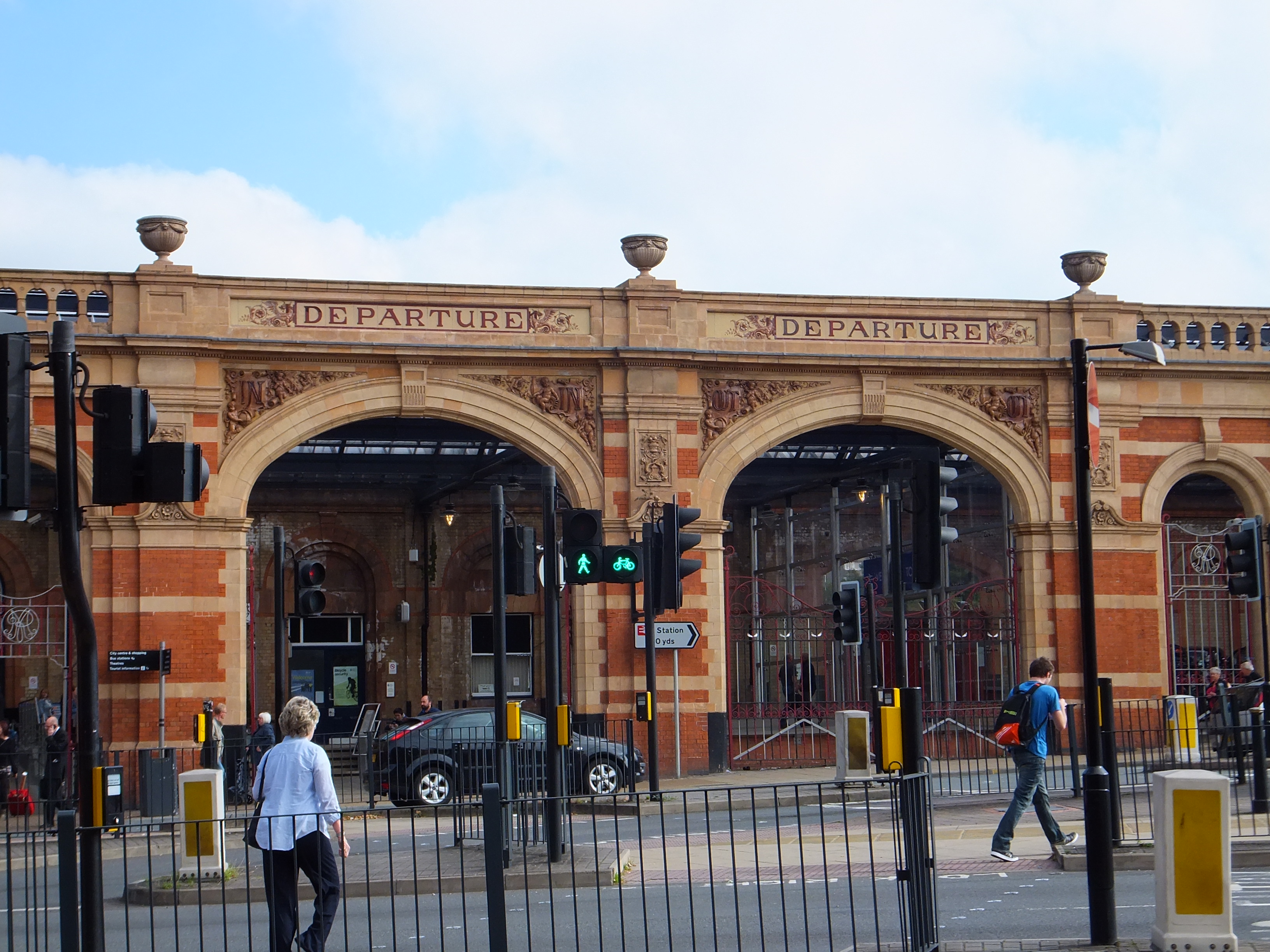
Leicester Train Station

Leicester Train Station

 My roots go deep in the English soil. I have discovered Perkins, Benford, Mason and Sleath names in the Parish Records of Leicestershire, Warwickshire and Staffordshire going back to the late 1500’s.  My immediate family was from Claybrooke Magna, LEI and Withybrook, War, while my Benford family, was at one point in time in Leicester.…perhaps some of them were actually there when Richard was buried.

I have a Burial Record from Ancestry…Scanned Parish Records from Withybrook Church showing that Thomas Mason would have been born around 1600, 115 years after Richard’s Burial. Thomas’ Great Great Grandfather could then  have been alive during Richard’s Reign. Gives one something to think about!

Thomas Mason
Death Age: 90
Birth Date: abt 1601
Burial Date: 13 Jan 1691
Burial Place: Withybrook, Warwickshire, England
Father: Mason
Mother: Mason

John Mason
Death Age: 85
Birth Date: abt 1656
Burial Date: 15 Dec 1741
Burial Place: Withybrook, Warwickshire, England
Father: Mason
Mother: Mason

My plan is to be in Leicester in March 2015 for the Reinternment of the Remains of Richard III. I may not have a seat in the cathedral, but I will certainly be outside! Perhaps some spirits from the past will be there with me!

UPDATE: March 18, 2015

Only 4 days and I will be flying over to London and then on to Leicester for the Reburial Activities. It is a solemn occasion indeed, as is any burial, or in this case a reburial of remains. That does not mean that there can’t be any celebrations…..life is for the living and they are the ones left to remember and celebrate the life of the one who has died. This can be done with words, pictures and music and in this instance FIREWORKS from the Cathedral roof. Let us all remember this King who ruled for such a short time and died too young. Let us try for greater understanding of him and his accomplishments…..a man of the late Middle Ages.

Edgar Gorer: London Antique Dealer…Death on the Lusitania

26 Jun
Sinking of the Lusitania on May 7, 1915

Sinking of the Lusitania on May 7, 1915

He was Edgar Gorer and his First Class Ticket was number 46057 and his Saloon Cabin was number B73. He was making the return trip from New York to his home in  London aboard  the Lusitania. He had come over in January to arrange for an exhibit of the Henry Sampson Collection at Dreicer’s on Fifth Avenue. He sailed May 1 but  never made it home. He died when the Lusitania was torpedoed by a German U-boat 11 miles off  the south-eastern coast of Ireland on May 7, 1915.  It was reported that, although at one point he was in possession of a lifebelt, he gave it away. The only member of his party of nine to survive was Frank Partridge.    


FIFTY NEW YORKERS LOST IN FIRST CABIN; Hope Abandoned for Justus Miles Forman, Edgar Gorer, and Dr. Fred Stark Pearson


To understand the full story of how Edgar Gorer became a well-known and respected Antique  Dealer, we must go back to the arrival in England, in the early 1800’s, of his grandfather Lewis Gorer. Lewis was from Prussia and was likely part of the early wave of Jewish immigration in the 19th century. Many of these immigrants settled in the seaside ports, including Brighton, where in 1839, Lewis married Hannah  Abraham Cohen. By 1851, according to the census, he had moved and was living at #7 North Street in Stepney, London. He was listed as a General Dealer. His 4 children were Solomon (10),  Adelaide (9), Barnet (6), and Esther (3). By the 1871 Census, Lewis had died and Hannah was living with her son, Solomon (29), his wife Helen (vanGoor) and their children, Lewis(2) and Annie (infant))   in High Street, Kensington. Solomon was listed as  a Tobacconist.

Solomon quickly established himself in London, as by the 1881 Census, he was living at 32 Delamere Crescent in Paddington and was listed as a Silversmith. His third child Edgar had been born and was 8 years old at this time. By 1891, Solomon had moved to 113 Edgeware Road and was a Gold and Silversmith. Edgar appears to have moved out, though the two older children were still living at home. In 1901, the family was back together again in a new home in Hampstead at #16 Greville Road.

Solomon had been busy expanding his business and by 1886, had additional premises on the Strand at #433. This was a fancy jeweller’s shop which specialized in artificial diamonds. In 1896, Solomon relocated this business to 59 New Bond Street next door to his son Edgar. He operated as a Silversmith, while Edgar, who had considerable business acumen, was a dealer in Oriental works of art. The final move of both stores was to 170 New Bond Street in 1899. By 1900, the two businesses had become S. Gorer and Son, interior decorators and the Indo China Trading Company which was run by Edgar. Solomon died in 1907 in retirement at Eastbourne.

Edgar was really the shining star in the family. He had married Rachel Alice Cohen at the Hampstead Synagogue in 1902. Ree as she was called, was a sculptor who had attended the Slade school of Art and who was a friend of the poet and writer Edith Sitwell, the eldest of the three Sitwell siblings, Osbert, Edith and Sacheverell, who created so much of a stir in English artistic circles between the wars. The Gorer’s had three sons,Geoffrey, Peter and Richard.  On the 1911 census, Edgar and his family were living at #45 Netherhall Gardens, Hampstead.  Geoffrey was 6 and Alfred Mace was 3,( possibly Peter Alfred).  The third son Richard was not  born until 1913.

#45 Netherhall Gardens looks new so original house may have been torn down as #47 is the older home at the end of the drive

Edgar Gorer, his wife Rachel. mother Hannah and sister Annue

Edgar Gorer, his wife Rachel. mother Hannah and sister Annie


Edgar continued to grow his business and opened up a store in New York on Fifth Avenue. Michael Dreicer was the sole agent for Edgar in the US and Canada. Gorer, as the business  became known, moved Edgar into the realm of an international dealer in Chinese Art, especially Chinese Ceramics,  boasting major clients in Britain and across the Atlantic. Edgar  gained a reputation for buying up important collections, such as that formed by Richard Bennett, Sir William Bennett, George R. Davies and Alfred Trapnell, and promoting them through exhibition and privately printed catalogues.


  Letterhead

Old Chinese porcelain and works of art

Sole agents for the United States and Canada,

Dreicer and Co., (Jewels) 560 Fifth Avenue, New York.
Gorer, 170 New Bond Street, London, W

gorer1


Edgar entered into two lawsuits as a result of his high-profile activities, one with William Hesketh Lever over the purchase of the Richard Bennett Collection and Duveen over a Kangxi vase, which Gorer had offered to Frick but which Duveen had claimed was a fake. The latter lawsuit, launched to save his reputation, was never heard in court, as on the day of its announcement, 7th May 1915, Gorer was crossing the Atlantic on the Lusitania which was torpedoed and he lost his life. When Edgar died in 1915, he left an estate of 53,ooo uk pounds to his wife Rachel, who died in 1954.

RIVAL SUES DUVEENS ASKS FOR $575,000; Gorer Says Art Dealers Called His Wares “Fakes” and Spoiled Sale to H. C. Frick. DENIED HE WAS AN EXPERT And Declared They Were the Real Judges of Art, the Complaint Sets Forth.


Edgar’s three sons went on to distinguish themselves in various fields. Geoffrey (1905 – 1985) became a writer and Social Anthropologist and was a colleague of  the American Cultural Anthropologist Margaret Mead. Peter Alfred (1907 – 1961) became an immunologist and pioneered transplant immunology in London and, had he not died an early death from cancer, would likely have received the Nobel Prize.  Richard (1913 – 1994) became a Horticulturist. He wrote a number of books and  also edited Edith Holden’s hand-written diary about wild flowers in the countryside near her home, which she illustrated  with water-colour sketches. This work, published as The Country Diary of an Edwardian Lady, became very successful. More people know of Richard Gorer because of this book than from any of his other writings.

Spencer Mason Goes to London! Withybrook, War to Old Street, Islington

19 Jun


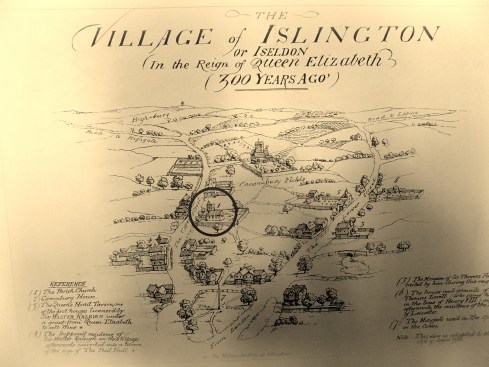
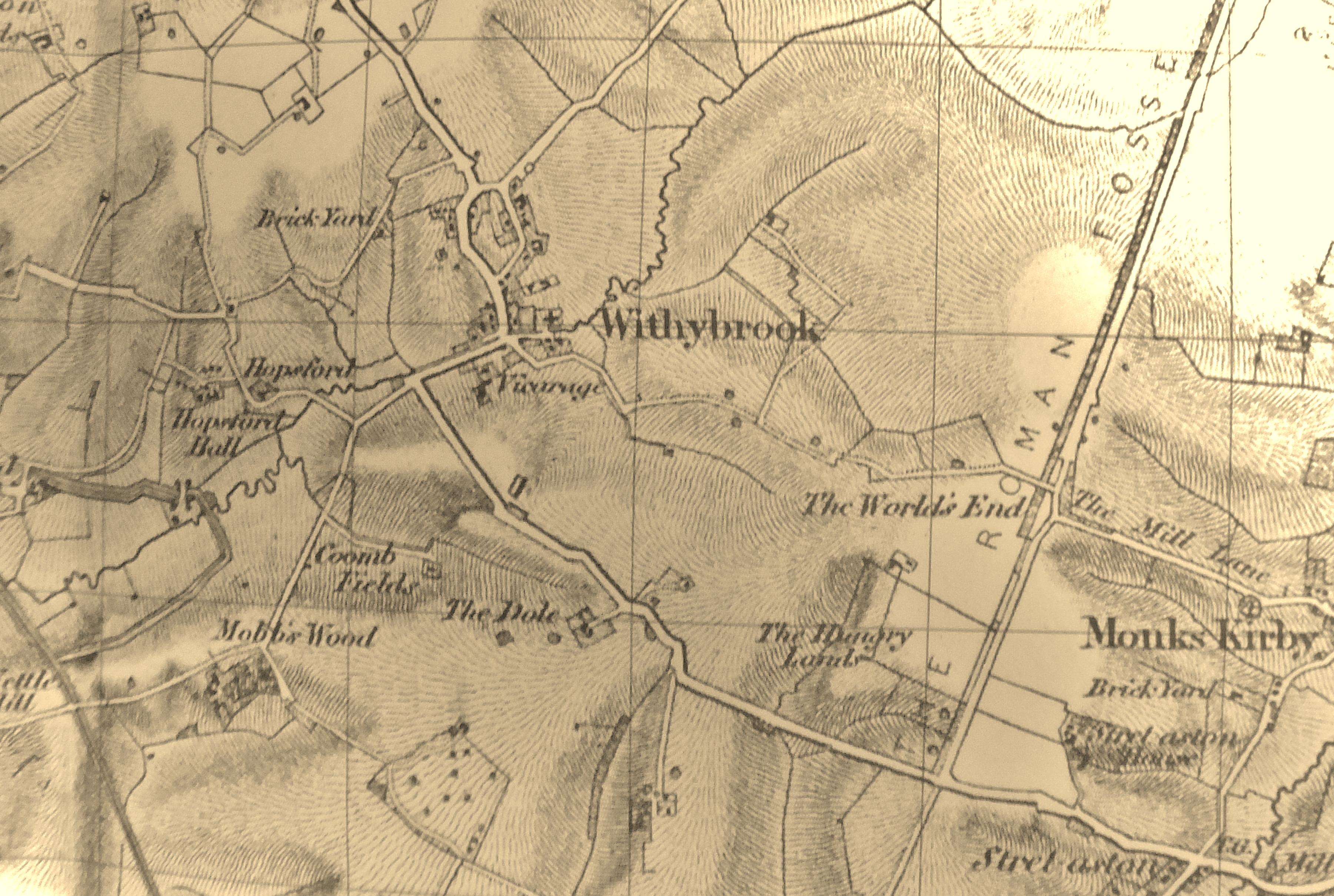
Islington map

I should have known things wouldn’t  be any different, even back in the 1700’s, given that my grandparents up and relocated to Canada from Leicestershire, England in 1913. People have always migrated,  generally either to escape their current situation or to find better opportunities elsewhere. My grandparents were no different, and in their 40’s with a 9 year old son,  they migrated to Canada looking for a better life.

I attended the Exodus: Movement of the People Conference in Hinckley, LEI in September 2013 sponsored by the Halsted Trust. I heard speakers talk about all types of “Migration”. Some folks moved down the road from village to village or village to city, while others moved from halfway around the world.

This got me to thinking….my ancestors were all Midland people from Leicestershire, Warwickshire and Staffordshire or so I thought. Had any of them moved on to other areas of England, even to other countries? One day while I was  looking at Non-Conformist Church Records, I decided to do a general name search for one of my lines, the Mason’s of Warwickshire. I knew that in the late 1700 their children had been  baptized at the Independent Chapel in Stretton under Fosse, WAR. Along with all the records I expected to find,  up pops a Mason in London. Now this wasn’t  a surprise, as Mason is a very common surname. What was a surprise was the name Spencer Mason, a less common christian name.  In 1745,  John Mason had married an Ann Spencer in Withybrook, WAR. The Spencer name was then used as a christian name in subsequent generations. I knew that John and Ann had a child they christened Spencer. Could this be the same Spencer Mason,  who with his wife Martha, was having his children christened in London in the late 1700’s at St. Luke’s.

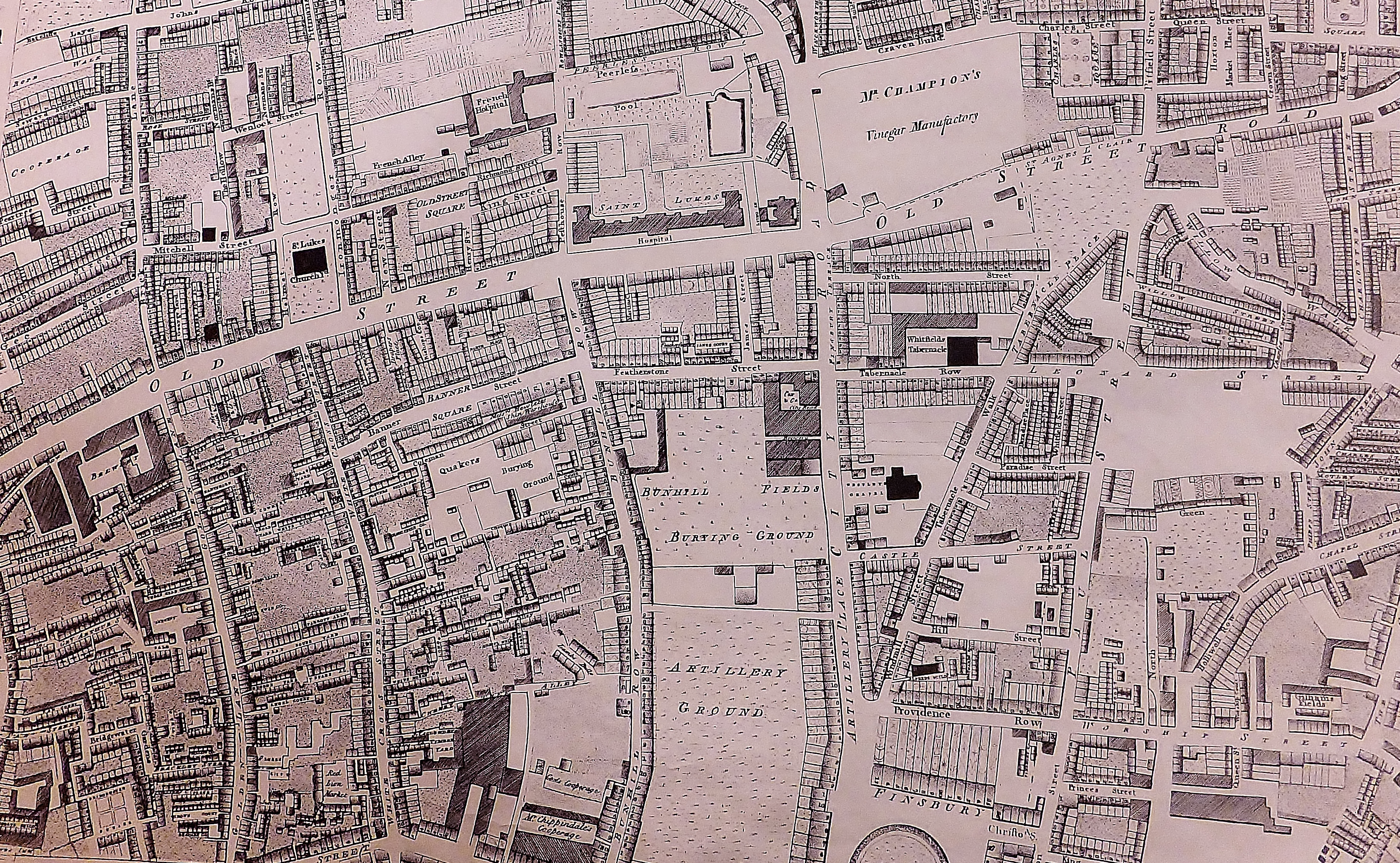
I began my search and  soon discovered that my Spencer Mason had been baptised in Withybrook at the Parish Church November 5, 1750. In the transcription on Ancestry, they had not been able to read the Christian name and wrote “Sp???? son of John and Ann Mason. When I checked the original record, I could clearly see the name was Spencer. So I confirmed a Spencer born in Withybrook who was my ancestor.  The Baptism Records 0f St. Luke’s Church on Old Street, London showed Martha as Spencer’s wife.  Further checking and I located a Marriage Record in Warwickshire for Spencer Mason of the Parish of St. Luke’s Old Street, London and Martha Compton of the Parish of Withybrook. They were married by License on March 6, 1776 at the Withybrook Parish Church. Martha had been baptised in Withybrook on 28 Jan 1755, the daughter of John and Martha Compton. It looks as if Spencer was already living in London but returned home to marry Martha. They then returned to London to live, as their first child is christened at St. Luke’s, Jun 15, 1777.  Spencer Mason also  turns up on the London Tax Records for 1780 as a tenant in the house of Joseph Foster Pryor in St. Luke, Old Street, Borough of Islington. He appears in these records until 1802, although the proprietor is now  listed as John Martin. Spencer’s burial is listed in the Bunhill Fields Burial Grounds on City Road (Non-Conformist Records Bunhill BG 1800-1803) on December 16, 1802. His Will lists his address as Old Street Square.

2013-09-16 05.01.46

Old Street showing St. Luke’s Church and Old Street Square where Spencer and his family lived until his death in 1802.

St. Luke's Parish Church

St. Luke’s Parish Church


Old Street area showing the Bunhill Fields Burying Grounds.

Old Street area showing the Bunhill Fields Burying Grounds where Spencer Mason was buried in 1802.


During his lifetime, Spencer worked as a Baker. He and Martha had a number of Children, all of whom were baptised at St. Luke’s, Old Street. Following naming patterns, his first son was John, named after his father John Mason and his first daughter Ann Spencer, named after his mother.  Listed below are the Birthdates for the children: 

John Mason                                18 May 177  

Ann Spencer Mason                26  Mar 1779                 

Martha Spencer Mason          09 Jul 1781

William Spencer Mason         16 Aug 1784

Samuel                                           01 Jun 1786

William Henry Mason             11 Jul 1788

Mary Ann Mason                      05 Sep 1790

Daniel Spencer Mason           01 Jan 1793

Eliza Mason                               15 Feb 1795

Bunhill Fields Burial Ground today

Bunhill Fields Burial Ground today

I located a will for Spencer Mason and at the same time found one for his youngest son, Daniel Spencer Mason. It was this one that intrigued me as the heading was “Daniel Spencer Mason: A Gentleman of Islington”.  Daniel would have been only 9 years old when his father died. How did he come to be called “A Gentleman”. A new investigation began.

Daniel Spencer Mason: A Gentleman of Islington

Daniel Spencer Mason: A Gentleman of Islington


To a degree, gentleman came to signify a man with an income derived from property, a legacy or some other source, and was thus independently wealthy and did not need to work. The term was particularly used of those who could not claim any other title even the rank of esquire.

Records of Admissions  indicate that Daniel Spencer Mason was admitted to St. Paul’s School London on October 23, 1804. He was age 11 and it was noted that he was the son of the Late Spencer Mason, Baker of Old Street Square.

St Paul’s was founded in 1509, at the height of the Renaissance in England. It may be that its founder Dean John Colet of St Paul’s Cathedral intended his friend Erasmus to be the first High Commissioner, though the plan never came to fruition. Colet made The Mercer’s Company trustees to the School, rather than the Church or Oxford or Cambridge, because he found less corruption among married men of business. Originally situated by St Paul’s Cathedral, the school moved four times before occupying its present, riverside site in 1968. It survived the Plague, the Great Fire and the Civil War and in 1870 was one of only two day schools included by the Clarendon Commission as one of the the “Nine Great Public Schools of England”.

Full text of “Admission registers of St. Paul’s school, from 1748 to 1876”

http://www.archive.org/stream/…/admissionregiste00stpa_djvu.txt

……Daniel Spencer Mason, aged 11, son of the late Spencer M., baker, Old Street .

i8o4] SCHOLARS OF ST. PAUL’S SCHOOL. 229

Admitted.
Aug. 11. James Phillips, aged 10, son of Richard P., lighterman,
Hungerford.
Oct. 4, John Corrie Hudson, aged 8, son of Thomas H., of the
Stamp Office.
Entered the Legacy Department, Somerset House ; died about 1879.
William Kynaston; aged 13, son of John K., hosier, of
Newgate Street.
See July 31, 1804.
„ 5. David Henry Flack, aged 11, son of Henry F., school-
master, of Broad Street, St. James’s.
„ 6. Thomas Stroud, aged 8, son of Thomas S., haberdasher, of
Ludgate Street.
Charles George Dixon, aged 9, son of George D., of St.
Martin-in-the-Fields.
„ 23. Daniel Spencer Mason, aged 11, son of the late Spencer M.,
baker, Old Street Square.
Dec. 22, Robert Rowley, aged 9, son of Robert R., surgeon, of High
Street, Borough.

I kept searching and found mention of Daniel Spencer Mason in Electoral Registers, The London Gazette, The Law Advertiser and the Records of the Sun Fire Office.

He is mentioned in the London Electoral Registers 1832 – 1965 in the years:

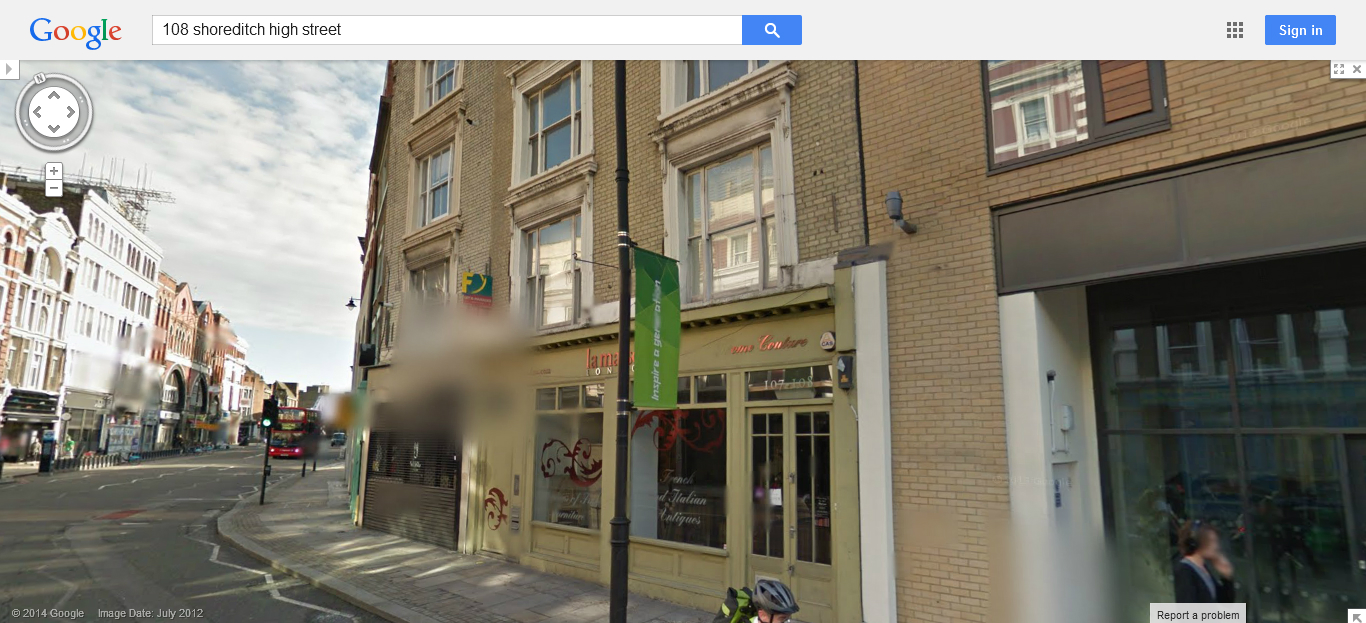
1832  Shoreditch, Ward St. Leonard, Shoreditch Borough of Tower Hamlets.

107/108 Shoreditch High Street today

1835, 1836, 1837  #107 Shoreditch

In the London Gazette 18 Oct 1837

NOTICE is hereby given, that the Partnership formerly

subsisting between us the undersigned, Daniel Spencer

Mason and Jabez Balch, carrying on business at No. 107,

High-street, Shoreditch, as Linen-Drapers, Mercers, Hosiers,,

and Haberdashers, was. dissolved on the eighth day of October

1837 ,by, mutual consent—Dated this 27th day of June 1837.

Daniel Spencer Mason.

Jabez Balch.

Records of Sun Fire Office – The National Archives | Access to Archives

……Insured: John Dorset Pool and Daniel Spencer Mason 107 Shoreditch linen 

The Law Advertiser – Volume 2 – Page 149

1824 –

POOL John Dorsett, and Daniel Spencer Mason, of Shore- ditch, linen-drapers 1 May

Partnership was dissolved May 1, 1824.

Daniel died 1846. Age 53. Record indicates on 25th July his body was brought to the Bunhill Field Burial Ground from New Norfolk Street, Islington.

(Piece title 4000 BFBG 1838 – 1846)

His will is  Dated Aug 1, 1846. He leaves his estate in Brinklow, Warwickshire to his youngest sister Eliza and the rest of his estate to be divided between his sisters Ann Spencer Mason and Mary Ann Mason Finch, widow. On the 1851 Census, Mary Ann is head of the household at age 60, Ann is 72 and Eliza 56. They are all listed as Fund Holders ( A Fund holder is someone who does not have land but has funds in government bonds, then known as consols or consolidated annuities) and are living at 19 Brudenall Place in the Parish of Shoreditch.  On the 1841 census the sisters were living in Islington at New Norfolk Terrace. Daniel Spencer may have been in Warwickshire visiting as there is a Spencer Mason listed as a visitor at the farm of John Mason in Withybrook. In 1846, it is the New Norfolk Terrace house from which Daniel’s body is removed.

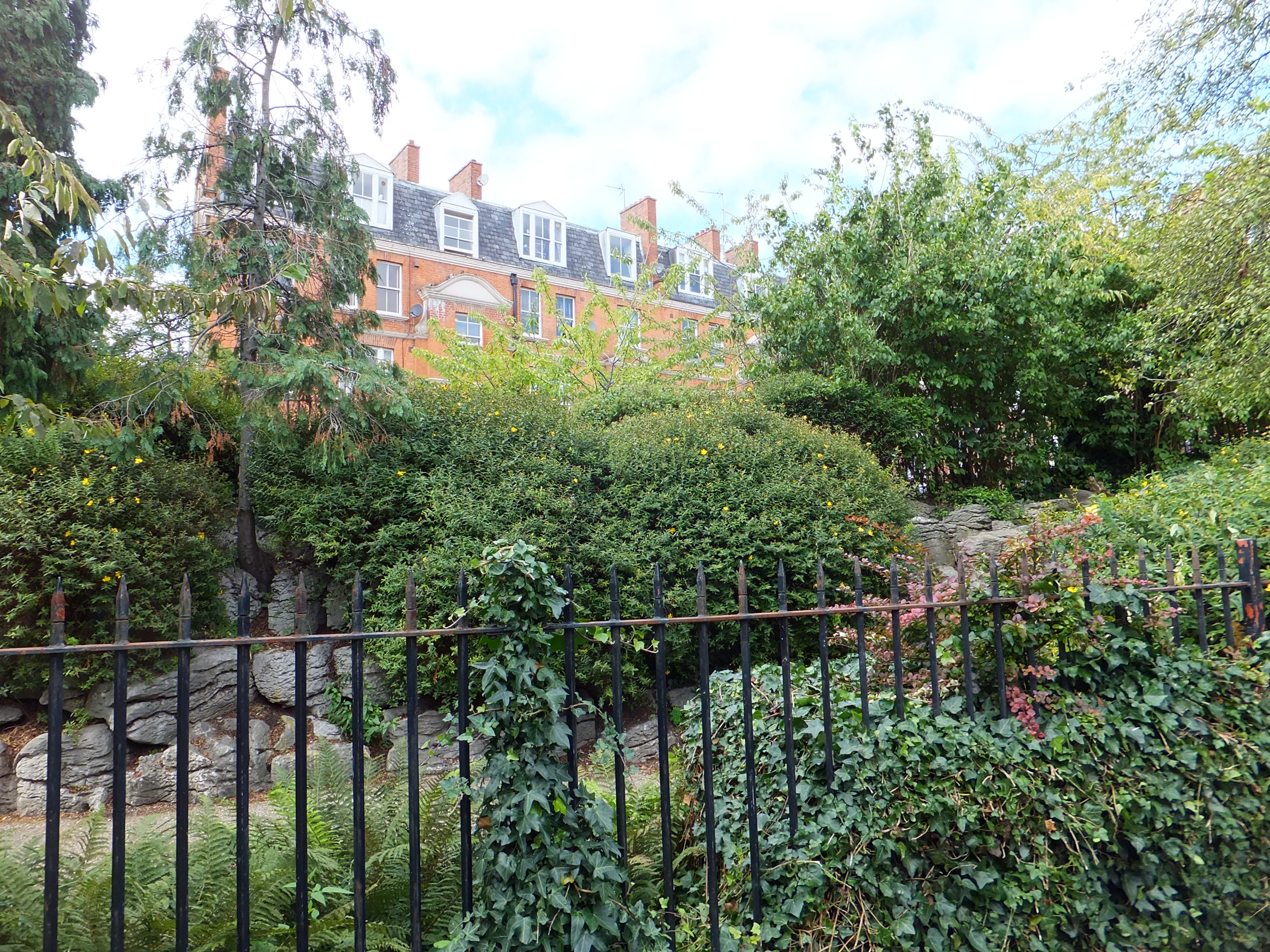
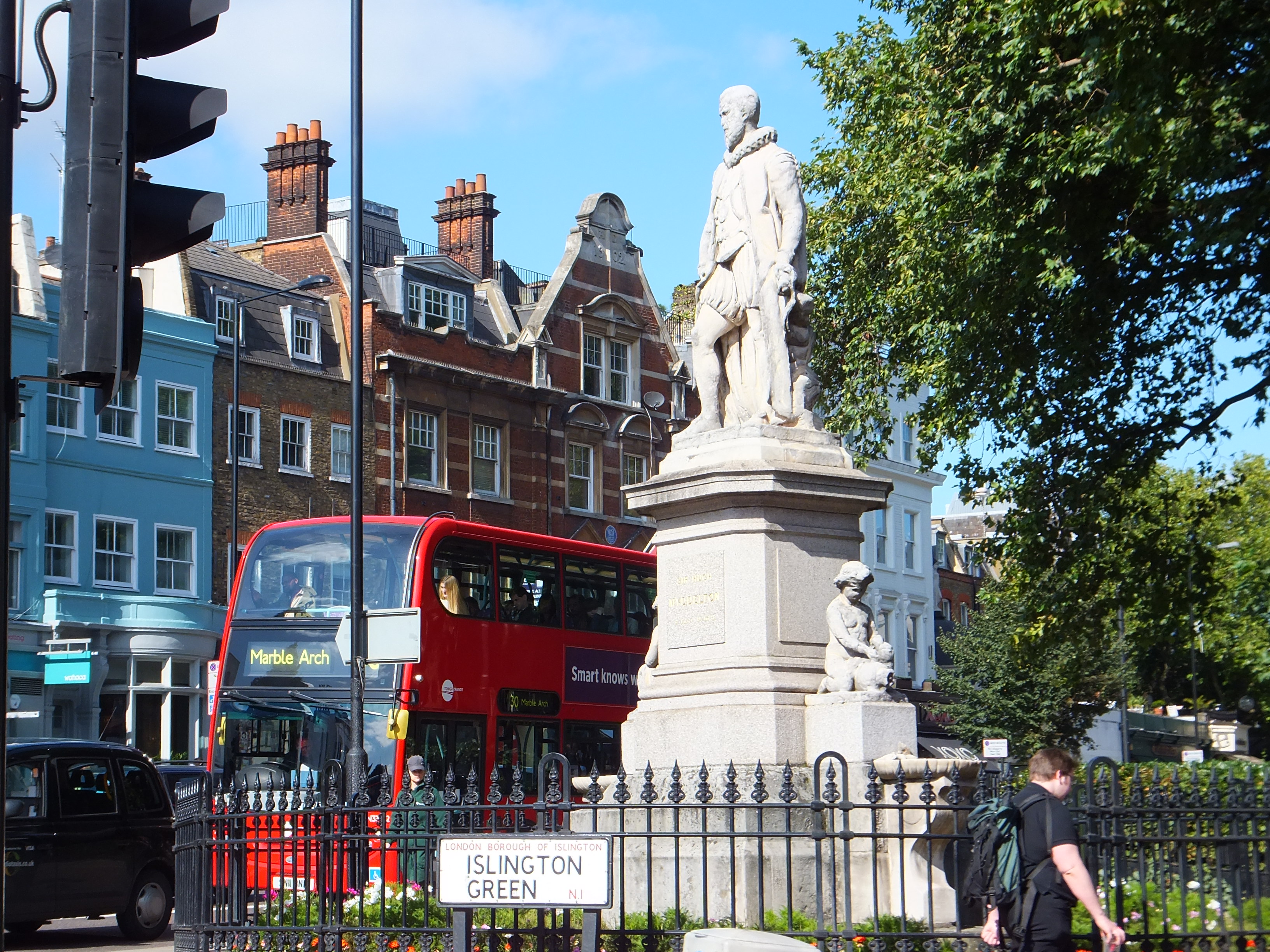
Here we have a glimpse of the Spencer Family who left Warwickshire to seek their fortune elsewhere. I found this all very interesting as when I made trips to London in recent years, I stayed at Rosebery Hall in Islington. I walked many of these streets, little knowing that 200 plus years ago, my ancestors had made their home in this area.


An area in Islington today which remains much the same as when the Spencefr's lived here.

An area in Islington today which remains much the same as when the Spencer’s lived here.

DSCF3319


Rosebery Avenue outside Rosebery Hall

Rosebery Avenue outside Rosebery Hall

100 Years since they left the Old Country…Leicester, England to Edmonton, Canada

4 Jul
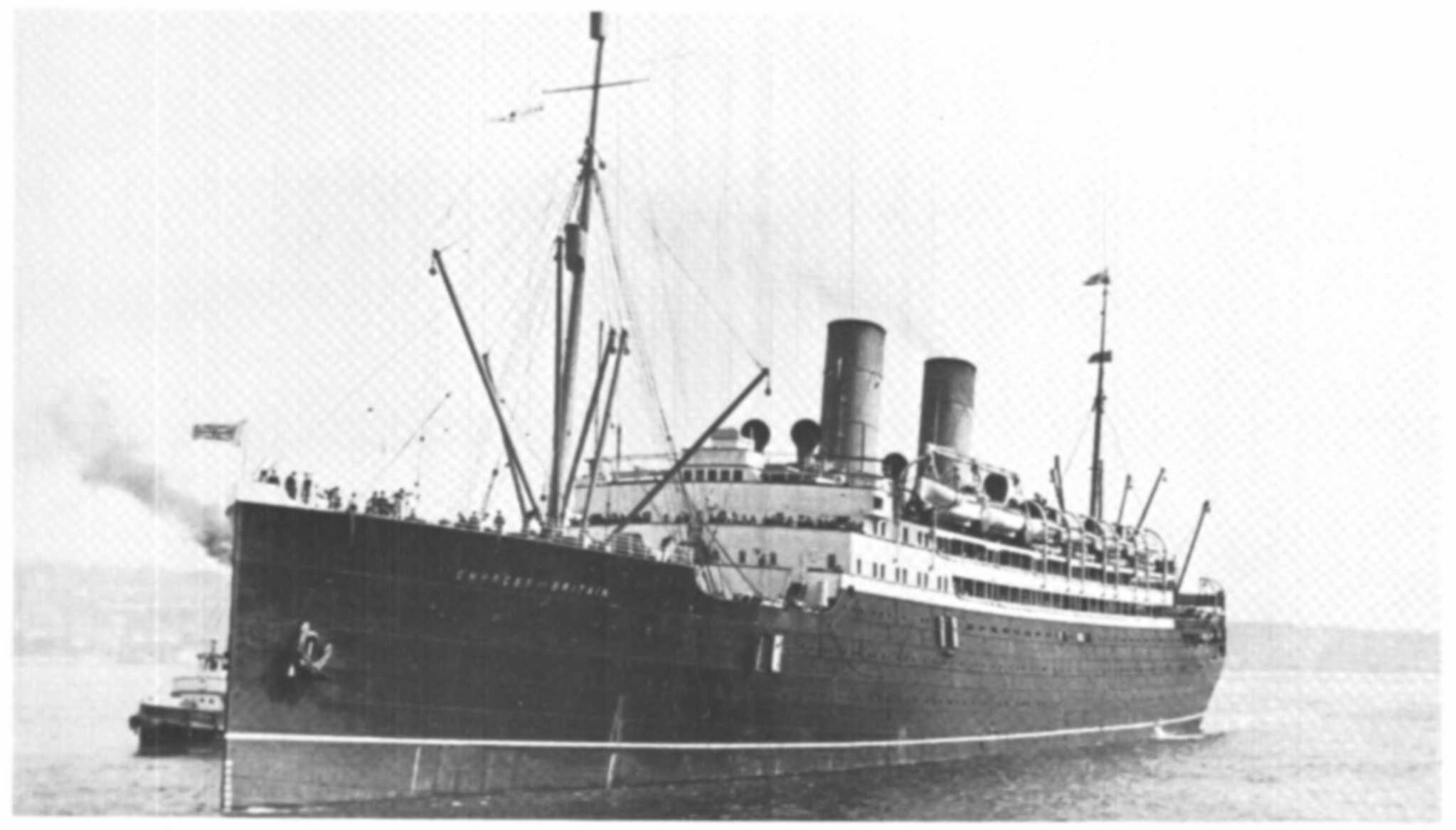
The Empress of Britain

The Empress of Britain

This July 4th will mark the 100th Anniversary of the arrival of my Perkins family in Canada….and believe it or not, my Grandmother, Sarah Jane Perkins, did not travel lightly….her Piano, Parlor Sofa and Chair, Grandfather Clock, pictures, china, Sideboard and China Cabinet, as well as  family clothing and bedding in a number of steamer trunks, arrived with her.

They sailed from Liverpool, England aboard the Empress of Britain on June 27, 1913 and arrived in Montreal on July 4, 1913. There they boarded a train for Edmonton, Alberta. The next phase of their journey likely took 7 or 8 days as they crossed the great country of Canada by CPR train.

John Thomas Perkins, his wife Sarah Jane and son Tertius Bernard at house in Ritchie. c. 1930

John Thomas Perkins, his wife Sarah Jane and son Tertius Bernard at house in Ritchie. c. 1930

What circumstances existed in Britain that caused a 50 year old man to move his family, lock stock and barrel to a new country, I will never know. They certainly must not have been good, for him to make that decision at such a late stage in life. Perhaps he felt that it would be the only thing he could do for his son who was 9 at the time. His brother-in-law Jack Sleath, had moved his family to Canada in 1906 and was intending to homestead. Unfortunately only 2 years after his arrival, his wife Clara died of Tuberculosis, leaving him with 2 small girls to raise. This would not be done on a homestead and he stayed on in Red Deer.

Correspondence, that came into my hands several years ago, that Jack had written to his wife’s brother back in England, gave an indication that the Perkins family might have been intending the same thing, but with changed circumstances they altered their plans and didn’t arrive until 7 years later. They bypassed Red Deer to settle in Edmonton.

New Home in Canada!

New Home in Canada!

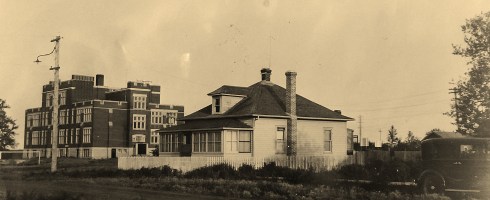
Edmonton in 1913 was a bustling place. The new Strathcona Library was opened as was Holy Trinity Anglican Church. Both were to play important roles in my life. My grandfather got a job at Ribchester’s as a Blacksmith. Later on he joined the Hudson Bay Store in their Hardware Department as a clerk. My dad started school at the newly opened Ritchie School.

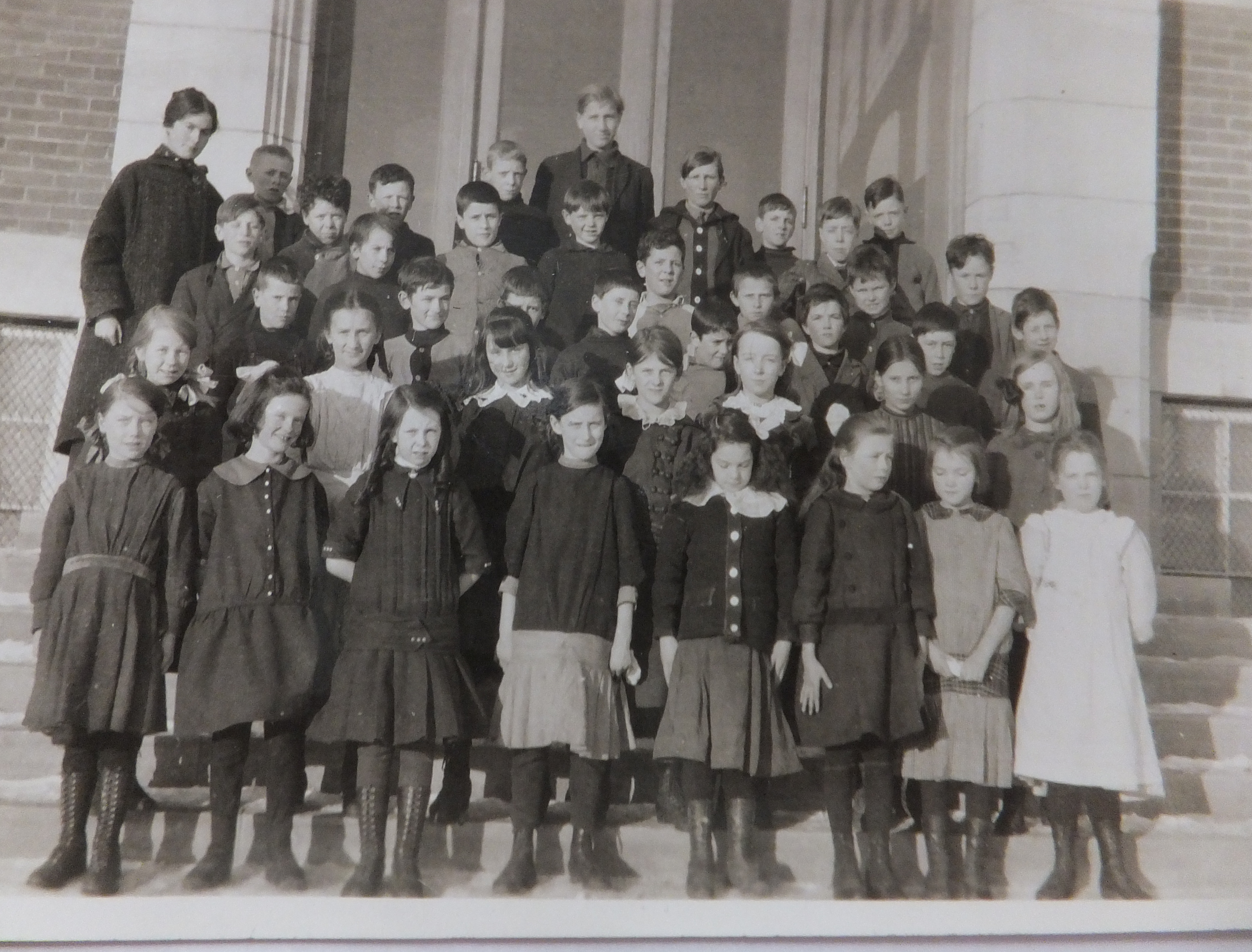
Tertius Perkins and his class at Ritchie School 1914.

Tertius Perkins and his class at Ritchie School 1914.

100 years later, I still live in the house my grandfather purchased in 1920. When they first arrived they rented a house on 97 Street and 76 Avenue. After the war, they purchased the house across from the school from Emma Richardson. I doubt my grandfather knew how  fortunate it was for him to have made this decision to emigrate and that many years later, his descendant would be so grateful to him for doing so.

A Dragon Boat Caper in China!

11 May

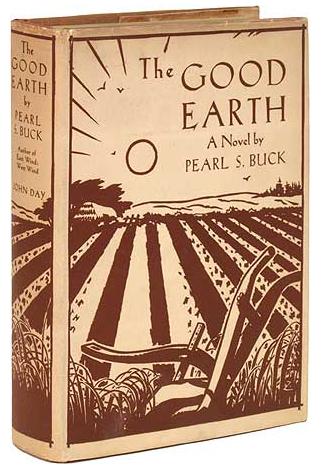
As a child, I had always dreamed of going to China. It was that “Mysterious East” that I had read about in books that intrigued me. I had read “The Good Earth”,  one of my Mom’s Book of the Month Club books. It was  a novel written by Pearl S. Buck and published in 1931. It was the story of a farming village in China prior to WW1. I had also scanned the World Book of Knowledge that belonged to my Dad, for maps and pictures of that part of the world as well as Life Magazines. I loved the images of The Forbidden City, the Temple of Heaven, The Great Wall and streets full of people riding bicycles. I had read about the Manchurians and the Mongolians, the Han Chinese, the Ming and the Qing Dynasties. In school we studied Mao Zedong, who founded the People’s Republic of China in 1949 and his attempts to modernize China’s economy by focusing on agriculture and industry.  Mao died in 1976.GoodEarthNovel

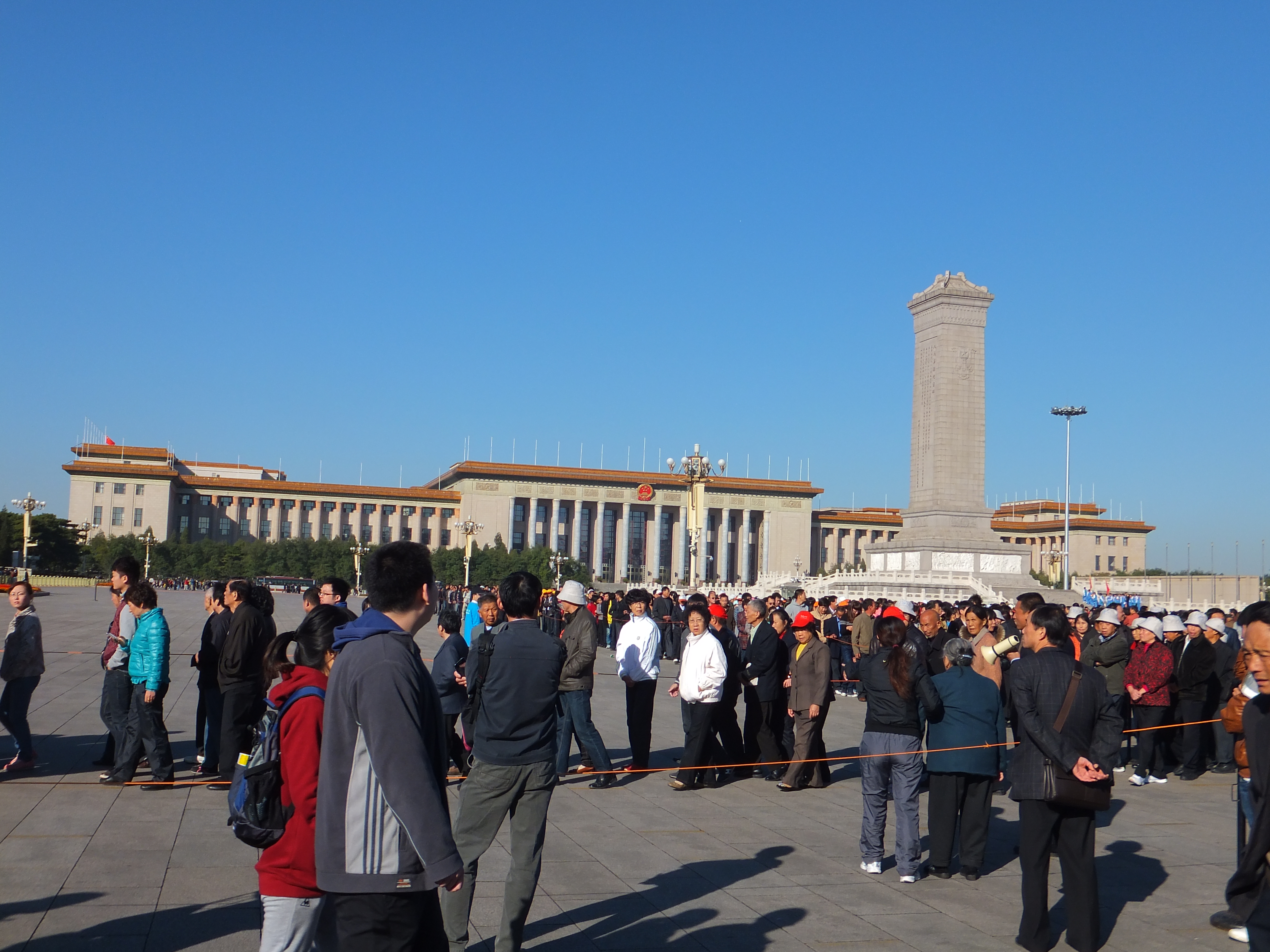
Tiananmen Square and the Great Hall of the People. Line-up is for Mao's Mausoleum.

Tiananmen Square and the Great Hall of the People. Line-up is for Mao’s Mausoleum.

I watched on TV as the Student Protests unfolded in Beijing’s Tiananmen Square, where on June 4,  troops with assault rifles and tanks inflicted thousands of casualties on unarmed civilians trying to block the military’s advance on the square  which had been occupied for 7 weeks. This event became known as the Tiananmen Square Massacre.

DSCF1060

While attending Home Coming at the University of Alberta in the fall of 2011, I picked up a brochure from AHI Travel and noticed a tour, “China and the Yangtze for October 2012.” I was hooked! I booked the tour, obtained my visa, got my shots and exchanged my money.

October 17, 2013 saw me standing in Tiananmen Square on my first day in Beijing.  And no, the bright Alberta like Sky is not Photo Shopped. It was a glorious morning, about 15C, and the clear sky was the result of a big rainstorm the day before which had cleared the air. The huge Flower Basket was left over from the Public Holiday, National Day on October 1 to commemorate the Founding.

Next day I was at the Great Wall. Those pictures that I had seen in Life Magazine so  long ago, were now real. What an amazing sight. This section of the wall at Badaling was used by the Chinese to protect their land and had many guards to defend China’s capital Beijing. Made of stone and bricks from the hills, this portion of the Great Wall is 7.8 meters (26 ft) high and 5 meters (16 ft) wide. The day I visited hundreds of school children on field trips were scurrying up and down the steep steps.

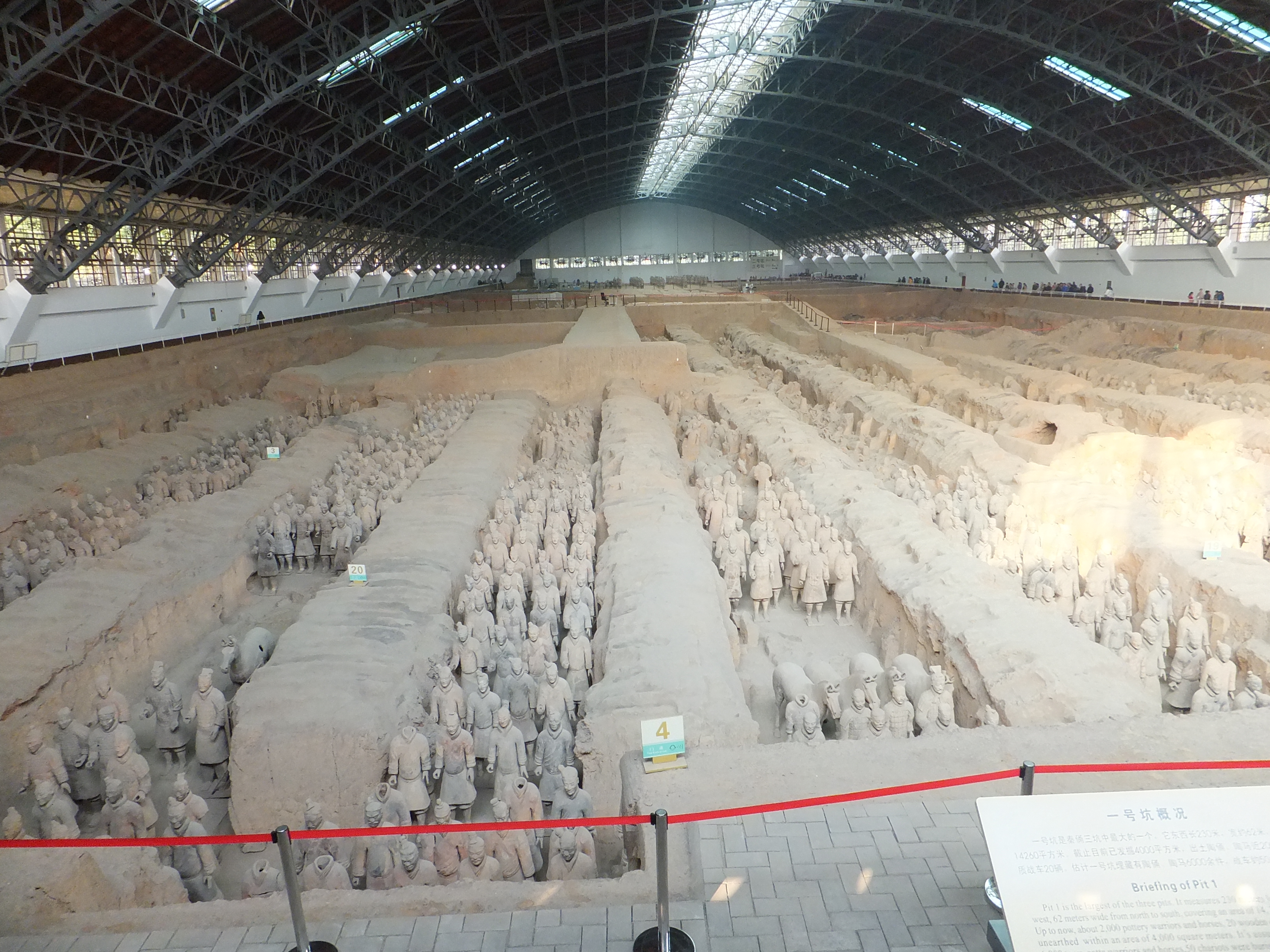
DSCF1158One of the things I most wanted to see on my trip were the Terra Cotta Warriors at Xian. This is a collection of terracotta sculptures depicting the armies of  the first Emperor of China. It is a form of Funerary Art buried with the emperor in 210 BC. Its purpose was to protect the emperor in his afterlife. The burial site was discovered in 1974 by some local farmers. Pit one is truly an overwhelming site with 6000 figures representing the Emperor’s Army along with  their horses. One of the advantages of this tour was an opportunity to visit sites not open to regular tours. We were able to visit the Shaanxi Provincial Institute of Archaeology to view artifacts not yet made available to the public.

Pit One - The Army to protect the Emperor in the afterlife

Pit One – The Army to protect the Emperor in the afterlife

Our tour now headed south to Guilin  in the Guangxi Zhuang Autonomous Region. It sits on the west bank of the Li River and the name means “forest of sweet Osmanthus” owing to the large number of fragrant Sweet Osmanthus trees located in the city. China has 55 minorities and many live in this area. The city has long been renowned for its unique scenery  of Karst topography. If you have ever looked at Chinese Paintings and wondered about the “lumpy mountains” …..well they are for real as a tour down the Li River showed me. In geographic terms, Karst Topography is a landscape shaped by the dissolution of a layer or layers of soluble bedrock, usually carbonate rock such as limestone or dolomite. South China is a major Karst area in the world, and Guilin is a rare example in terms of its scale and uniqueness.

Li River Cruise

Li River Cruise

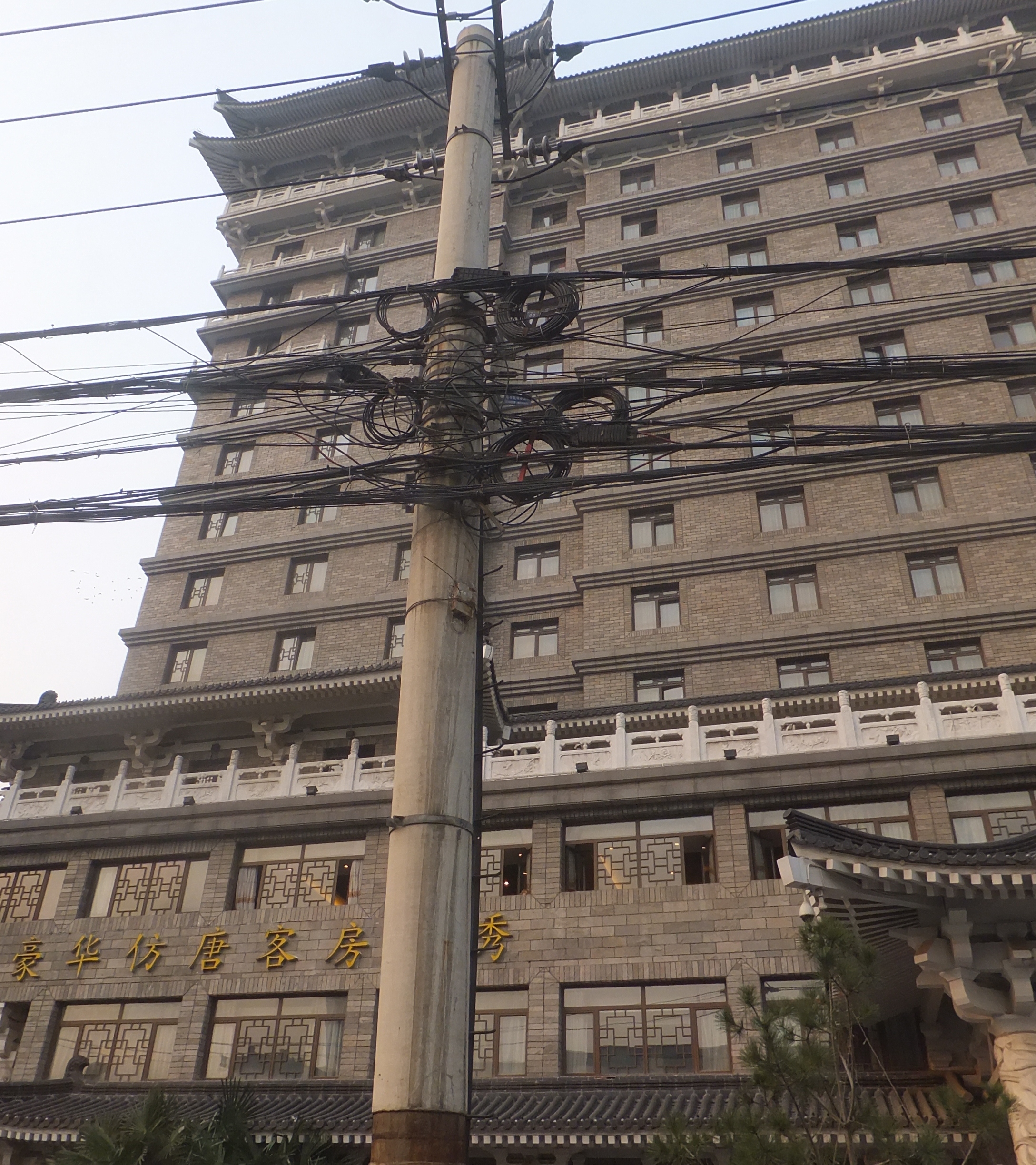
China is a land of contrasts. I really had no expectations for my visit, but I was not to be disappointed in any way. The street scenes fascinated me. Whether is was  parents and grandparents giving the children a ride to school on scooters, the ladies selling flowers in the Street Market at Chengdong or the markets at the relocation village on the Yangtze River, every turn brought new images. Food stalls provided a never-ending source of delight. Some of the wiring outside of buildings made me question our wiring codes…..thank goodness we have them! Traffic was everywhere and each day thousands of new drivers take to the road. Cars big and expensive flooded the roads.

Wiring in Xi'an

Wiring in Xi’an

Our Breakfast on the dock....Kidding!

Our Breakfast on the dock….Kidding!

Scooter ride to School

Scooter ride to School

Shanghai at night

Shanghai at night

One of my favorite stops was at a farming village near Xian. We went there on a rainy  Sunday and the first to greet us was a group of preschoolers. They must have been 3 or 4 years old and language was not a barrier to these kids. Our host at the village was an artist who has been sent to the countryside during Mao’s time as Chairman. During The Cultural Revolution, he had declared certain privileged urban youth would be sent to mountainous areas or farming villages in order to learn from the workers and farmers there.

Pre-schoolers in the farming village

Pre-schoolers in the farming village

We were entertained by a local group with a Dragon Boat Dance. Fernando and I were encourage to take our turn “paddling the boat”. Fernando was the oldest member of our tour group and his energy was amazing for a man well into his eighties.

The Dragon Boat Caper

The Dragon Boat Caper

Later in the day we were taken to Mr. Zhang’s  Studio where he gave us a lesson in Chinese Brush Painting. Of course we could also purchase his Folk Art and most of us came away with several pieces all of mine featuring pandas.

DSCF1679

Mr. Zhang and his Peasant Folk Painting

DSCF1676

This came home with me!

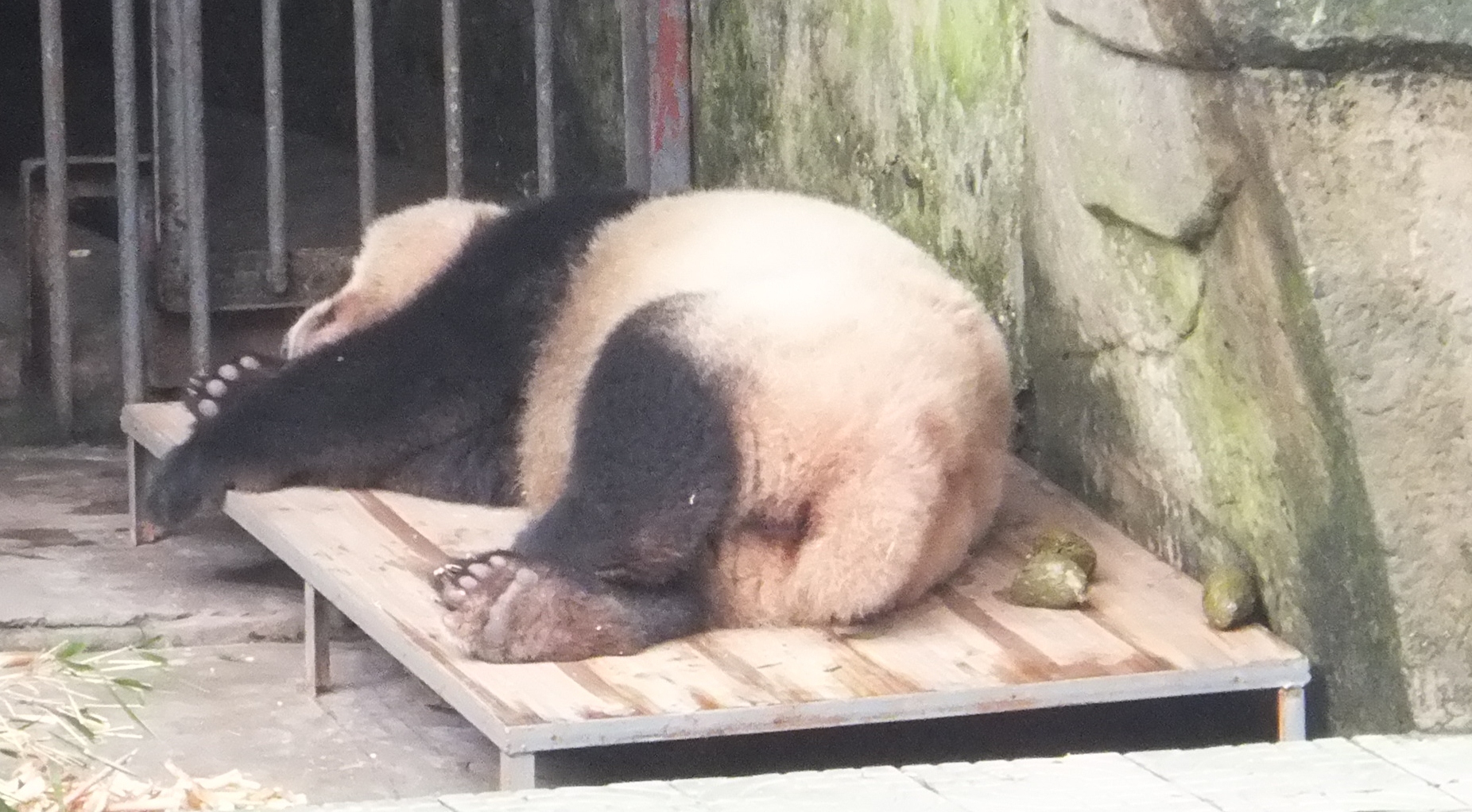
I had seen the real thing when we visited the zoo at Chengdong. Er Shun was getting ready for her big move to Canada. She was going to spend 5 years each at the Toronto and Calgary Zoos. I am not sure how impressed Er Shun was with the prospect of this trip, as the behavior she displayed when she heard Canadian voices was very explicit. Judge for yourself in the pictures (right of Bottom). I hope she will be in a better frame of mind when she lives  in Toronto. I will visit her again once she gets to Calgary in 2018!

Eating my bamboo leaves!

Eating my bamboo leaves!

Er Shun sat up and did his business......

Er Shun sat up and did her business……

Then fell back to continue her nap!

Then fell back to continue his nap!

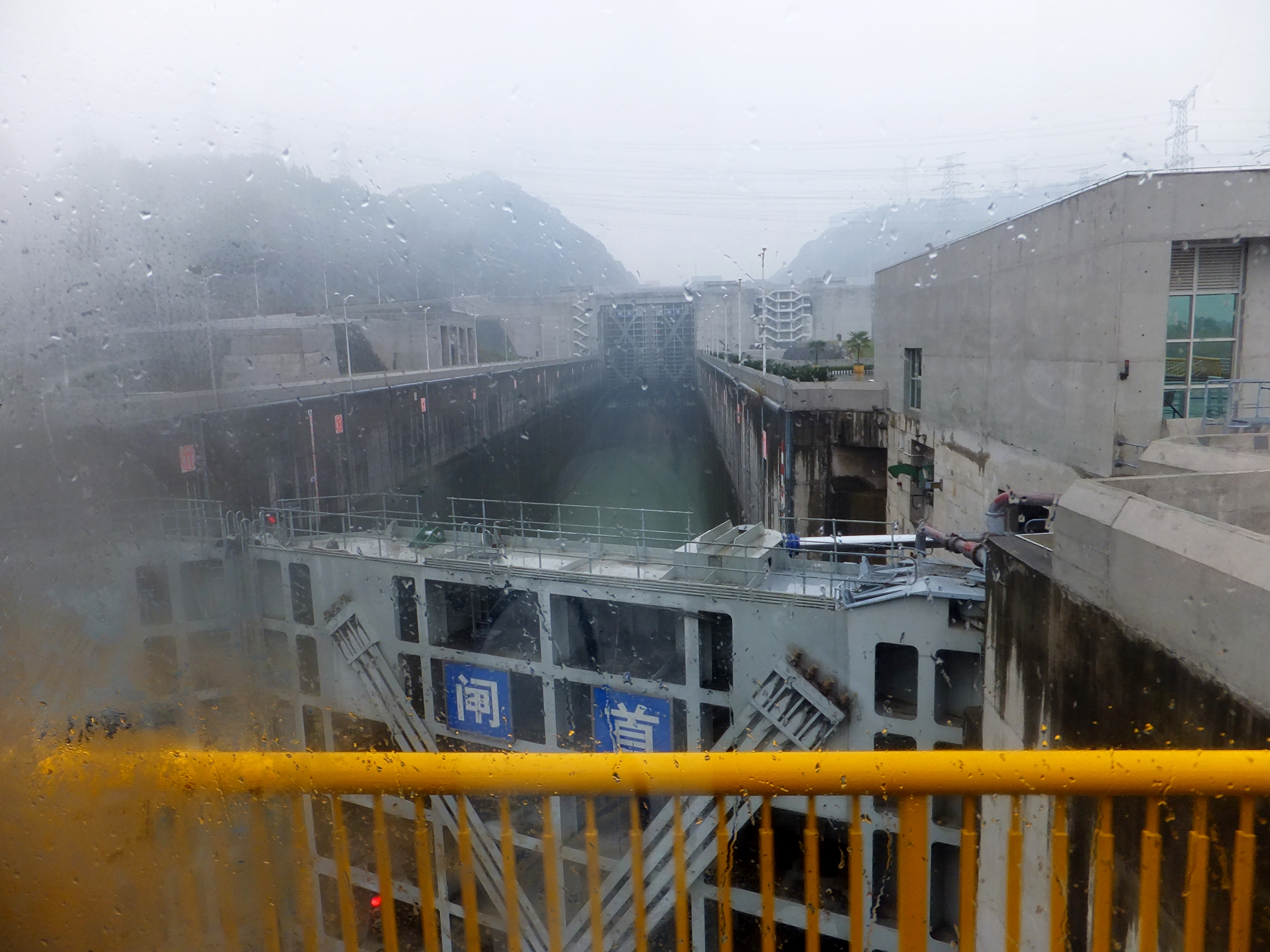
We took a three-day Yangtze River  Cruise, the highlight of which was the  trip through the locks of the Three Gorges Dam. This dam which is 2 km across and 600 feet high,  provides a significant amount of China’s energy.Building it and the 400 mile long reservoir, meant that there was flooding a of a very large area, causing destruction to a number of villages and cultural sites. Millions of people had to be relocated.   We went through the locks at night and it took several hours….a fascinating experience. Next day we visited the museum which explains the complete story of the dam and its construction.

From the museum looking back towards the locks

From the museum looking back towards the locks

Size of a lock is hard to comprehend

Size of a lock is hard to comprehend

This farm is now at river level but was 575 feet up the mountain at pre-flood level.

This farm is now at river level but was 575 feet up the mountain at pre-flood level.

Beijing and Shanghai are fabulous cities. For me, Beijing seemed a little too sanitized, the result of the demolition and construction it did in preparation for the 2008 Summer Olympics. We visited the “Bird’s Nest”, the Olympic stadium and I was certainly impressed with its size. Overall the city was very clean and there was construction going on everywhere…….roads, sewers, buildings!

Olympic Stadium

Olympic Stadium

Interior of the Olympic Stadium

Interior of the Olympic Stadium

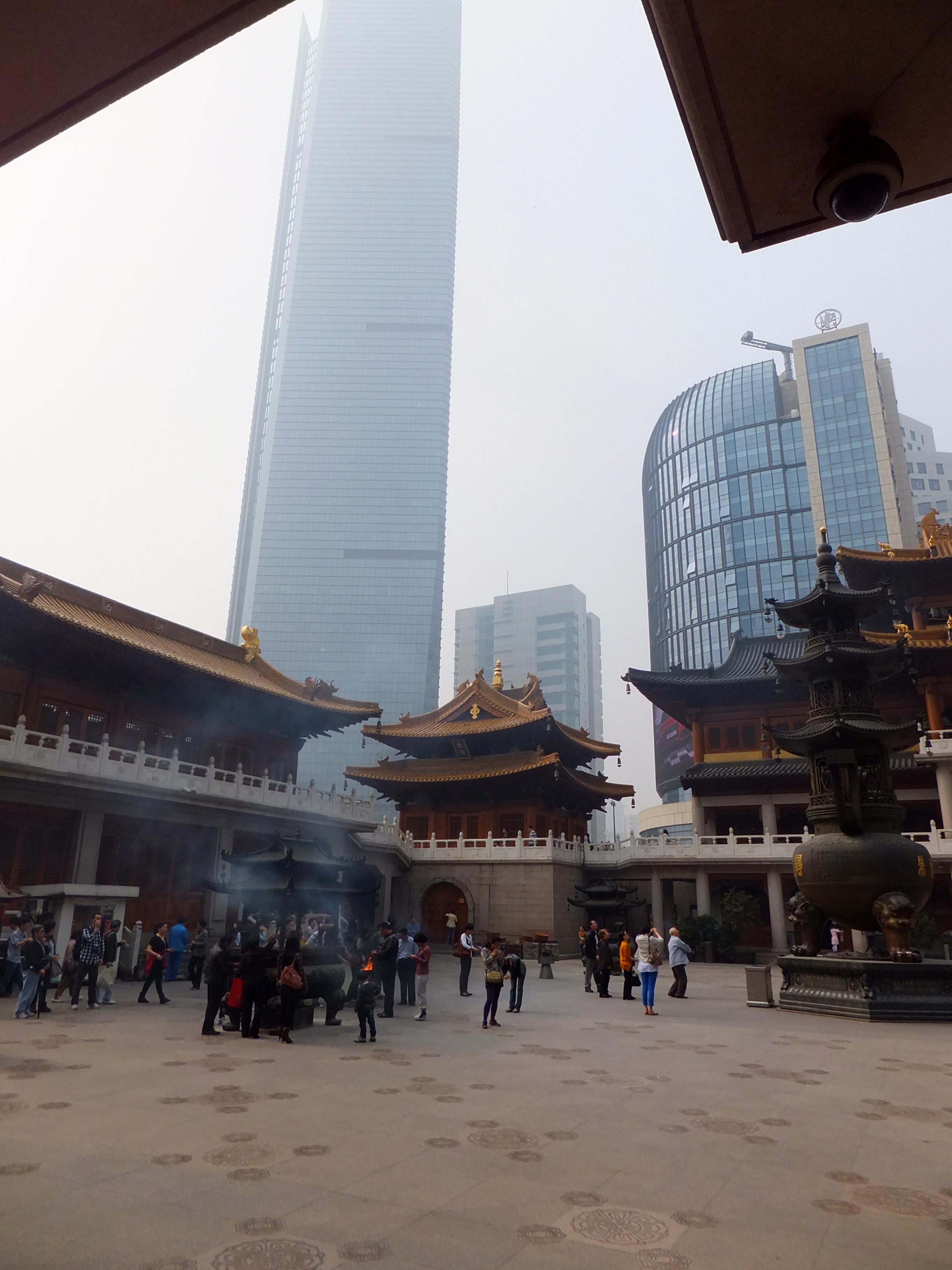
Shanghai was definitely my favorite city.  It had such a vibrancy to it…whether it was in the morning with people doing exercises in the park or at night when all the lights came on.

Shanghai...a city of contrasts

Shanghai…a city of contrasts

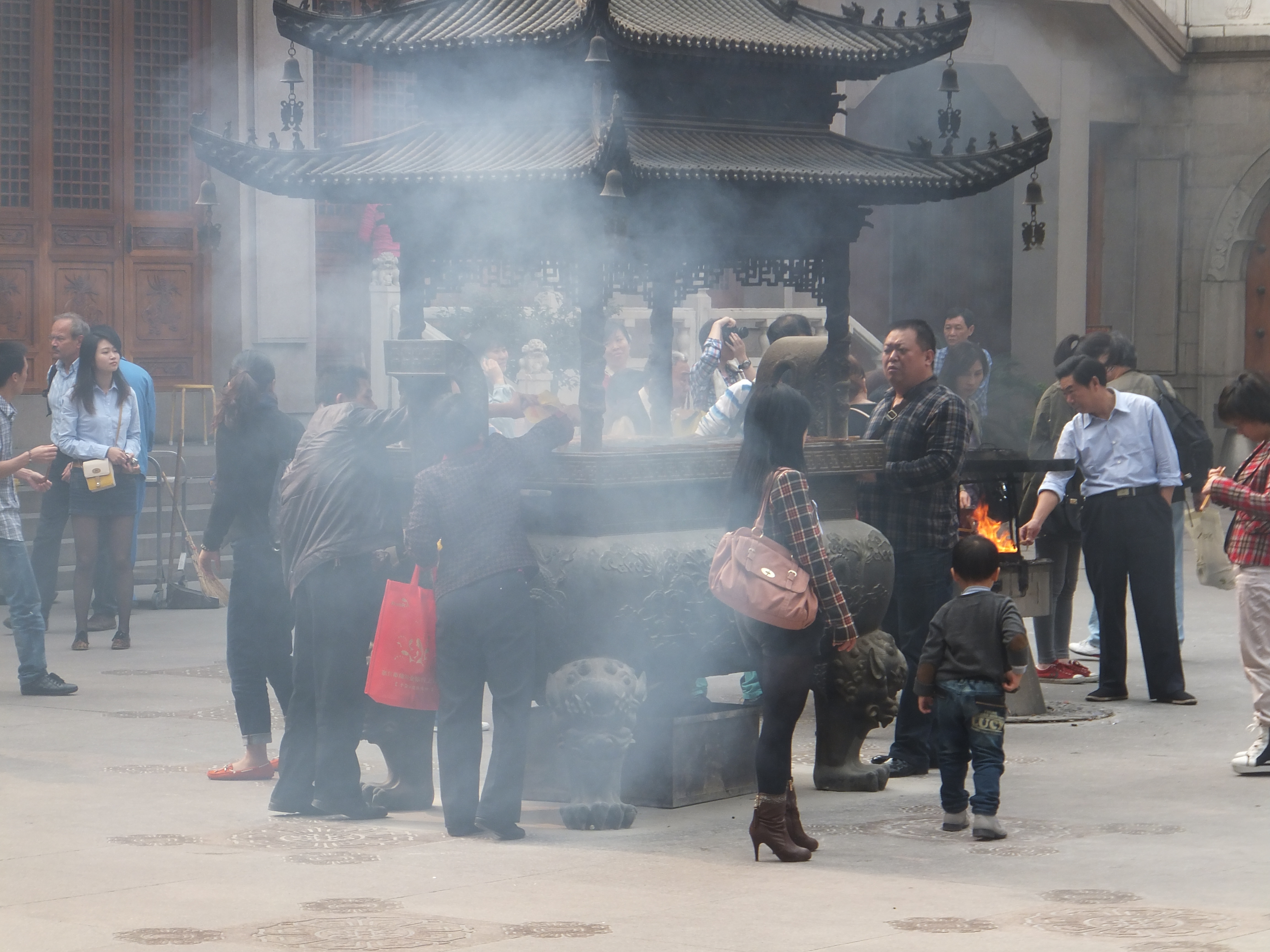
Jing Temple in Shanghai

Jing Temple in Shanghai

For centuries it was an administrative, shipping and trading city. It grew in importance in the 19th century due to the European recognition of its Port location. It was opened to Foreign Trade following the British Victory over China in the First Opium War and the subsequent Treaty of Nanking in 1842 which allowed the establishment of the Shanghai International Settlement.

View from the Bund across the River to Pudong

View from the Bund across the River to Pudong

Along the BUND!

Along the BUND!

Today you can see its growth everywhere, yet there still remains remnants of the British, French and American influence.  The Bund was at onetime the heart of Colonial Shanghai. Many of these buildings remain, but now serve other purposes. Next to London, Shanghai is my second favorite World City and I can’t wait to return!

Soldiers of the Queen in India…..A Jewel In the Crown! British Army in the Afghan Wars..Punjab

2 May

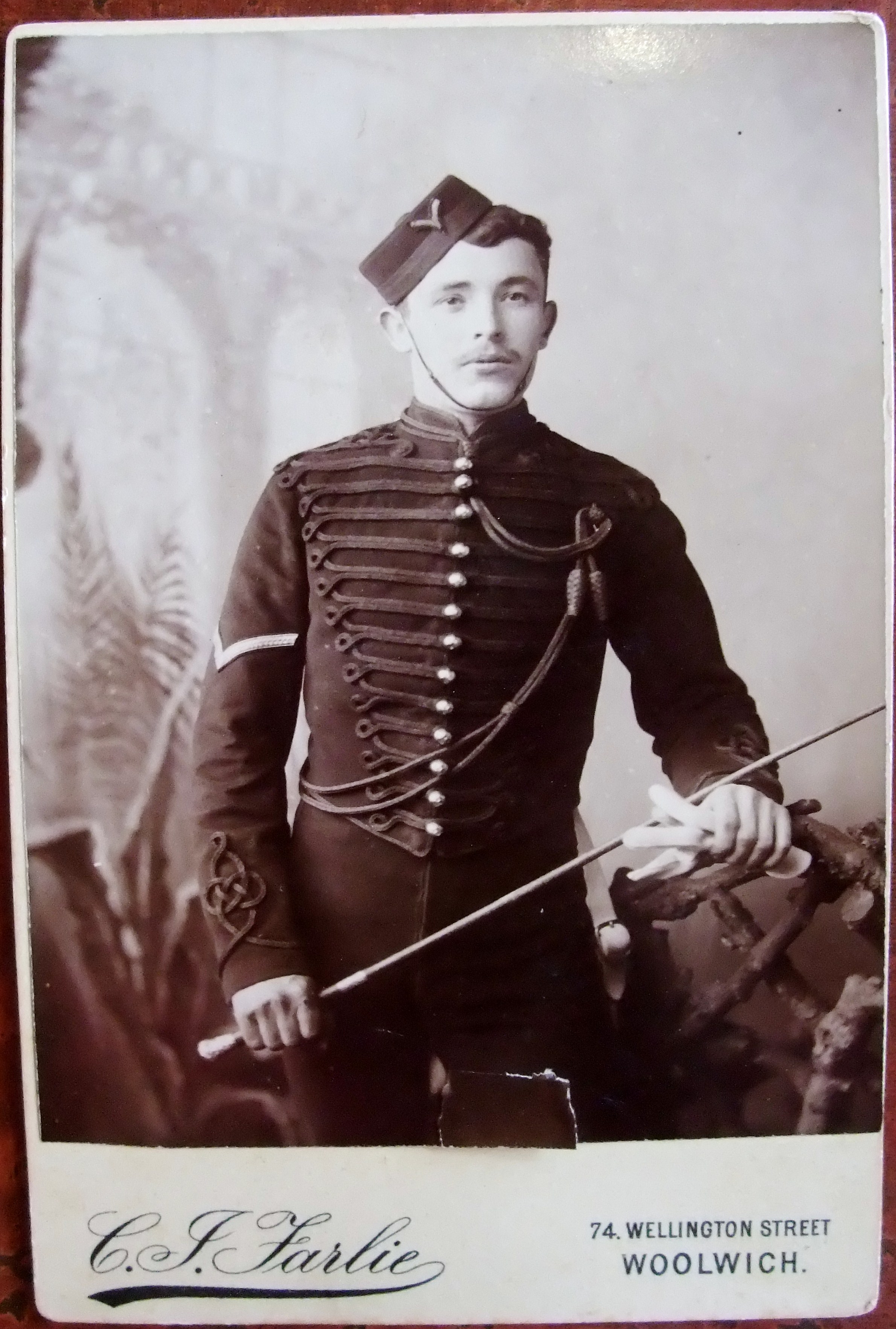
Richard Sleath (4)Richard  Edward Sleath was my Great Uncle. I had seen pictures of this man in my Grannie’s steamer trunk, which also stored my Mother’s Christmas Decorations and which was hauled out annually in mid-December.  Being that he and others, whose pictures I came across, had been dead for years, no one really mentioned who they were. They were just pictures in a trunk.

He seemed especially interesting to a young girl as his picture was taken in the Punjab, India. Now I did know that my grannie, Sarah Jane Sleath Perkins was the only girl in the family. I knew almost nothing about the rest of her family, except for a brother, Jack Sleath, who had lived and died in Red Deer, Alberta long before I was born. It would be many years later when I began my Family History Research that I would learn all about these individuals.

Richard Sleath was only 18 years 6 months when he joined the  King’s Royal Rifle Corp (86267) at Winchester on September 23, 1889. He had been serving with the 4Bn North Staffordshire Regiment as a militiaman. He was posted to the Royal Horse Artillery Aug 8, 1891 in the Dublin District  and appointed Bombardier (a non-commissioned Officer)  May 26, 1892. He went to India  Sept  29, 1893 to fight on the  Northwest Frontier.

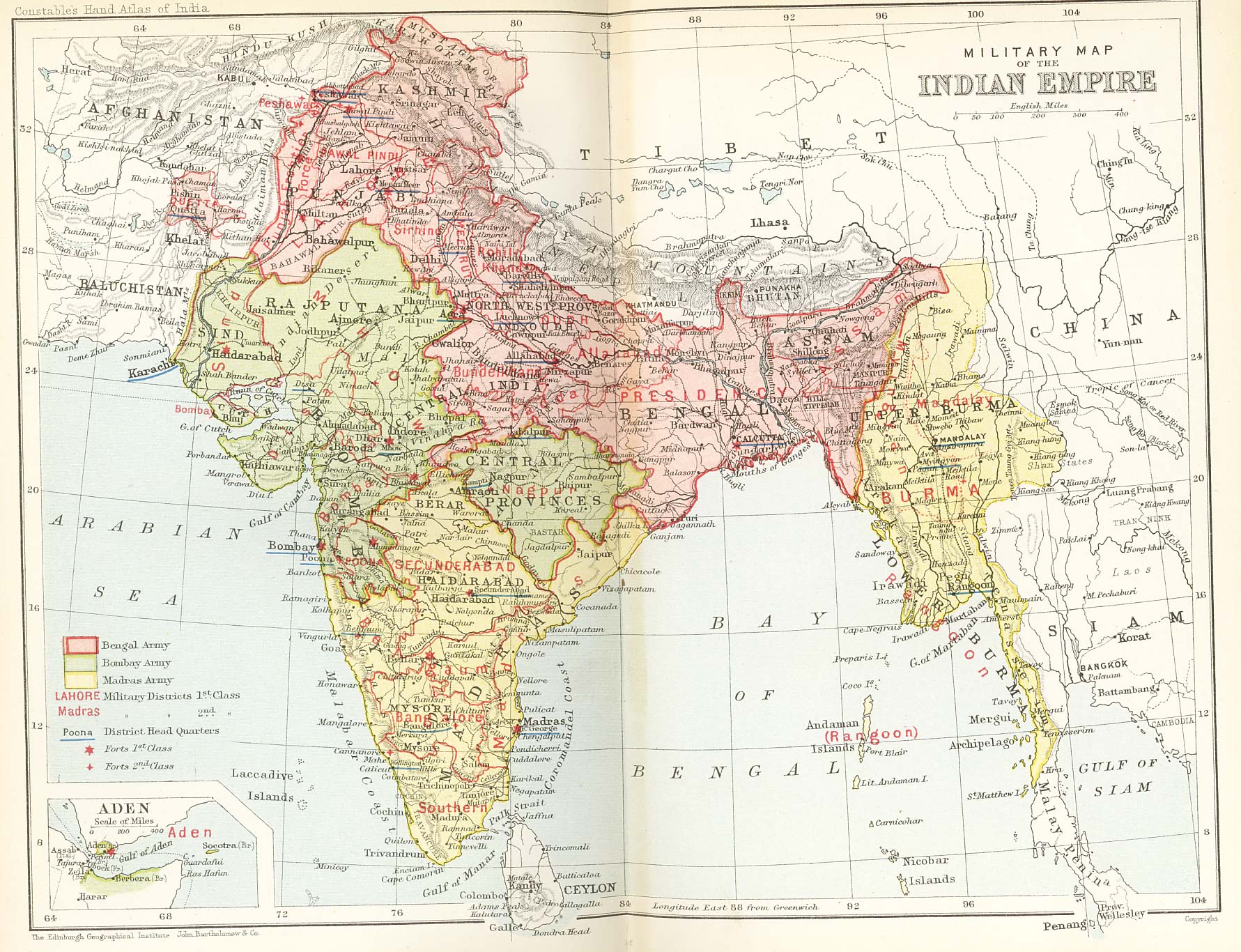
“The North-West Frontier region of British India was the most difficult area to conquer in the Indian subcontinent, strategically and militarily. It remains the western frontier of present-day Pakistan, extending from the Pamir Knot in the north to the Koh-i-Malik Siah in the west and separating the present-day Pakistani frontier regions of North-West Frontier Province (renamed as Khyber Pakhtunkhwa), FATA and Balochistan to the east from neighbouring Afghanistan in the west. The borderline in between is officially known as the Durand Line and divides Pashtun inhabitants of these provinces from their kinsmen in Afghanistan.


india_britishindianempire

The two main gateways on the North West Frontier are the Khyber and Bolan Pass. Since ancient times, the Indian subcontinent has been repeatedly invaded through these northwestern routes. With the expansion of the Russian Empire into Central Asia in the twentieth century, stability of the Frontier and control of Afghanistan became cornerstones of defensive strategy for British India. Between 1849 and 1947 the military history of the frontier was a succession of punitive expeditions against offending Pashtun (or Pathan) tribes, punctuated by three wars against Afghanistan.”  ( Info taken from Wikipedia )DSCF1926

For many years suspicion had persisted in India that Russia would attempt to invade India  from Afghanistan. Russia dominated the approaches to the country  from the west and could not be allowed to extend its influence  in the capital, Kabul, in order to develop the infrastructure  required for a military invasion of India across tribal territory.   Afghan and Pathan tribesmen were fiercely independent, warriors  first and last, skilled in ambush, exceptionally courageous and       hardy, able to assemble in a few hours and disperse as quickly.

There was no international frontier with the Punjab until 1894 when the Durand Line was demarcated across tribal territory. Within it the tribesmen were deemed to be protected persons subject to British law. There were police, roads and schools, and revenues were collected. British political officers maintained contact       with the tribesmen who were subsidized as long as their conduct remained within bounds. When it did not, military operations were mounted to restore order and apply punishment.  As I read this info and see names familiar to me from present day wars and events, I see that little has changed in this region in the 120 years since Richard Sleath arrived with the British Army. His time there and the battles in which he fought are a story for another time after I do the required research.

Richard was discharged at the East India Railway station at Allahabad on the  September 29, 1901.

Richard Sleath on an outing with friends. Looks like Gwyndon is there as well.

Richard Sleath on an outing with friends. Looks like Gwyndon is there as well.

Where and how he met and married Gwyndon is unknown. The photo appears to show him and friends on an outing. Gwyndon is in the picture. She would have only been 16 or 17 when they met.

Richard Sleath and Gwyndon Ophelia Mathias

Richard Sleath and Gwyndon Ophelia Mathias

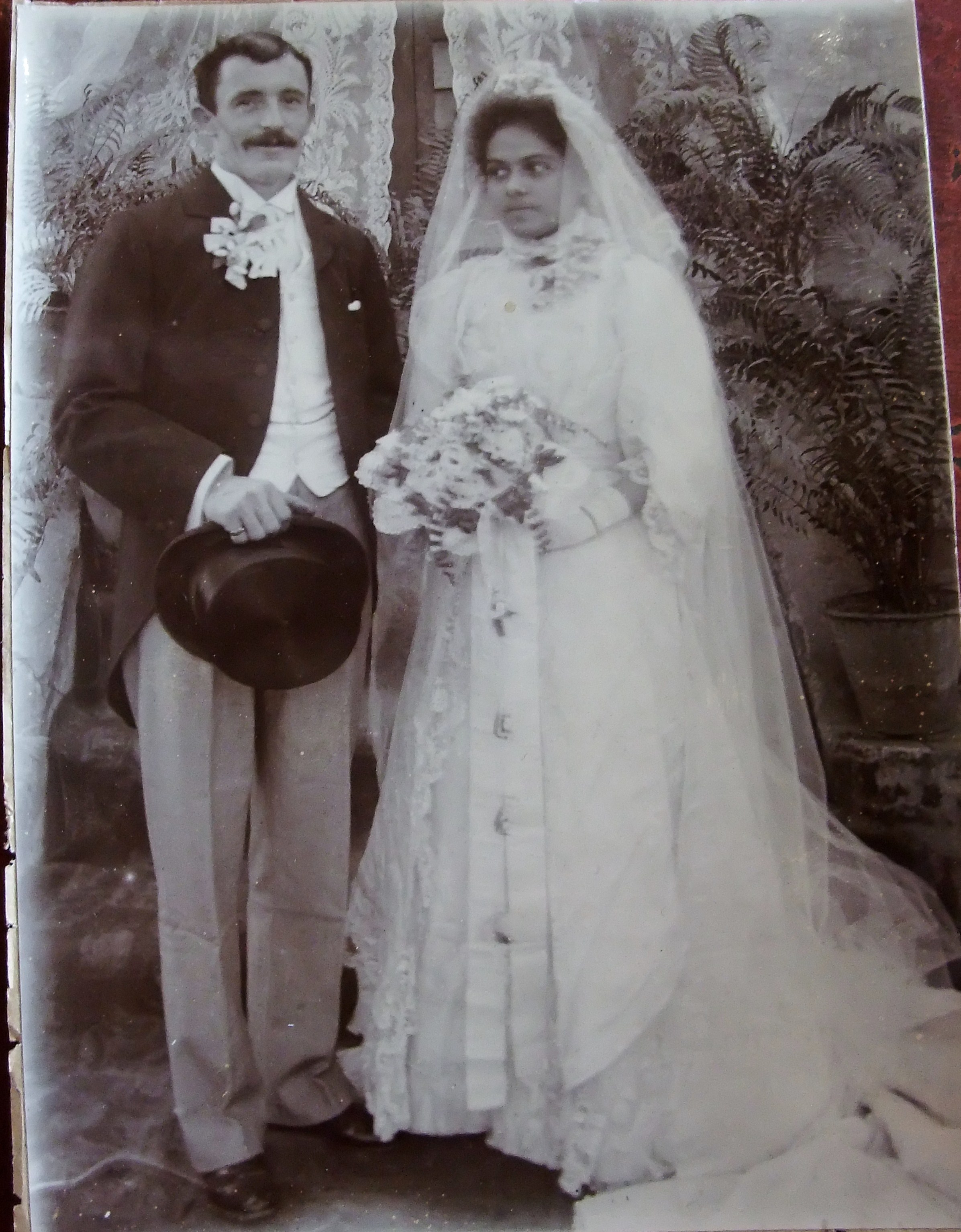
On September 25, 1902 he married Gwyndon Ophelia Mathias at Khaogole, Bengal, India .She was 17 years old. His death was reported in the newspaper in 1907. He died at College Hospital in Calcutta on  February 24, 1907  (of the Rajmehal EI Railway)  aged 35 years. I have no information save for a few pictures(no names) that were in my Grannie’s trunk.What was his life like and why did he die at such a young age?

Gwyndon Sleath married William Frederick Perris in  Dinapur, Bengal on May 12, 1908. He was born in Bareilly, Bengal on September 22, 1879, the son of Frederic and Amelia Perris. They had a son, William Mathias Perris on March 29, 1909.

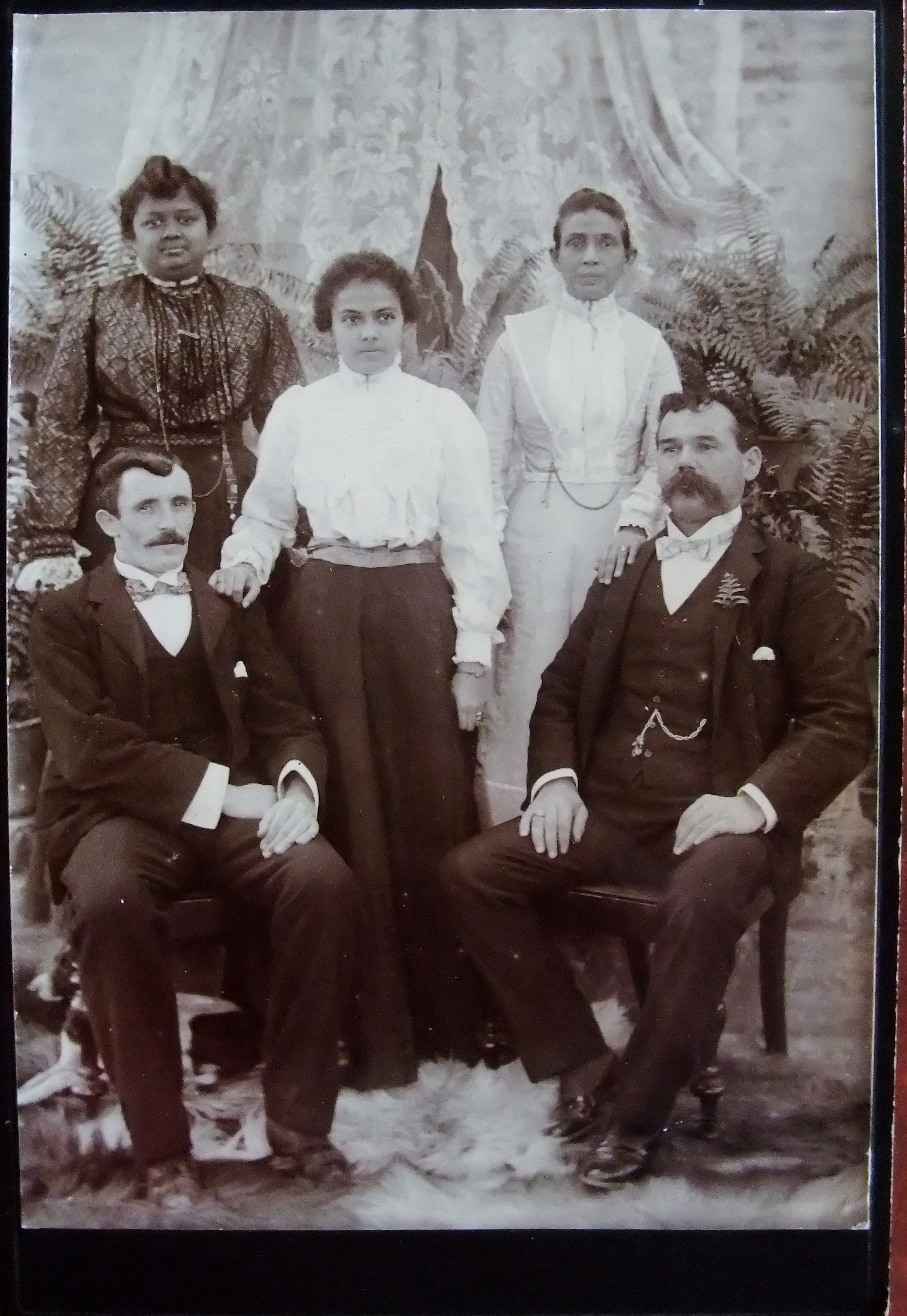
Gwyndon's Mother Ophelia, possible sister or other relative and Father John Mathias.

Gwyndon’s Mother Ophelia, possible sister or other relative and Father John Mathias.

Of late I have been thinking that one of my next trips should be to India. AMA has a great tour this fall but I am already committed to going to England  to do  more research. Oh well, at least I am still a  Genealogist who Goes Wandering! India will just have to wait!  Doubt though, I will be visiting the Northwest Frontier region given the situation there today.

The Search for Benjamin Sleeth and Mary Quinton in Staffordshire, England

12 Apr

I’m stuck! For the past 8 years I have been trying to trace my Sleath Family and it hasn’t been easy. They of course couldn’t be consistent in the spelling of their surname, and this is only the first of many issues.  I started out by tracing my Grandmother, Sarah Jane Sleath, born 13 Aug 1869 in The Outwoods, Shropshire.  Things seemed to be going well and I located her father, George Sleath born in Hinstock, Shropshire in 1830.  His father John Sleith, I found in Church Eaton, Staffordshire. John Sleith (note first change of spelling for name) was christened 17 Mar 1805, the son of William Sleith of Church Eaton. I knew this was the right connection as St. Editha’s Church Cemetery is the burial place for a number of  my Sleith’s. Richard Sleath, George’s brother,  was born in 1843 in Sydney, Shropshire and buried at St Editha’s. I took the photos in 1979 on my first trip to England, long before I got into searching my family history. Oh how I wish I would have asked those “oh so important questions” when I was there and my relatives were still alive.

Ann and Richard Sleath

Ann and Richard Sleath

William is christened as William Sleeth (2nd change of name) 22 Mar 1769 at Church Eaton, Staffordshire,  the son of Benjamin and Mary Sleeth. I thought how well I was doing until I started to trace Benjamin Sleeth. This is where the problems arose.  I have been able to find in the Parish Records for Abbotts Bromley a marriage for Benjamin Sleeth and Mary Quinton on 14 Feb 1753. There are no other Sleeth or Quinton names  in those parish records so likely the couple was from elsewhere. William(1769) is the only birth I have been able to locate for parents Benjamin and Mary  Sleeth under various spellings. Benjamin Sleeth is buried in Bloxwich, Staffordshire in 1798 (NBI) and Mary Quinton Sleeth is buried there as well in 1788(NBI). I have not found a baptismal record for either person.Where was this couple in the years following their 1753 marriage to 1769 when William is christened at Church Eaton? Did they have other living Children? Did earlier children die? Is William really their Child? Did they not baptize their children? Are the records simply not yet on the internet or are they lost in transcription errors?

Benjamin Sleeth

Mary Sleeth wife of Ben, Gentlemen’s Servant, a son 1772 parish of abode Rugeley, Staffordshire

I wasn’t quite correct when I said that I found no more births for Ben and Mary Sleeth. In 1772, at the British Lying in Hospital (for “poor and distressed married women”) in Endell Street, St Giles in the Field in London, I found a record for  male child born to Benjamin and Mary Sleeth. I would have discarded this as a possibility as I know there are many Sleeth’s/Sleith’s/Sleath’s born in the London area, however they listed their Parish of Abode as Rugeley, Staffordshire (6 miles from Abbotts Bromley) and he was a Gentleman’s Servant.

Another record for the same birth date, lists a girl Jane as being born to Benjamin and Mary Sleith.  Maybe Benjamin had been hired in Staffordshire and came to London with his Gentleman. Did his gentleman live in London with a country house in Staffordshire or did his Gentleman live in Staffordshire with another house in London? I kept looking in that area and discovered a Richard born to Benjamin and Mary Sleith in Wandsworth, Surrey in 1767. Wandsworth in those days was rural and agricultural. Was this the same Ben and Mary? Did the Gentleman have a home in this area?

Was talking to someone recently and she suggested that perhaps as Ben and Mary had not been able to have children in the first 16 years of marriage, they adopted a child whose mother died in childbirth or who had given away an illegitimate child and called him William. Adoptions weren’t formalized in those days. Or perhaps, one of their Sleeth family had an illegitimate child and they took him in as their own. Another possibility is the family was NonConformists and the births were not recorded or they haven’t yet shown up in the NonConformist Records.

Haven’t found a birth for either Benjamin or Mary. There is a  Sleeth who is having children in the early 1700’s right for the time of Benjamin being born  but they do not christen a Ben at the Great Presbyterian Meeting House in Leicester where their other children are christened. He is a Baker. Also a Benjamin and Mary Sleath have children in Husband’s Bosworth, LEI up to 1711 for recorded births, but no Ben. Husband’s Bosworth is only 45 miles from Rugeley. There are Sleeth’s having  children in Walsall, Stafffordshire but no Benjamin’s. SO I’M STUCK AT THIS POINT…… where do I g0 next?  Well perhaps it’s time to take a look at the manors in the area and who owned them. Maybe I can locate Benjamin’s Gentleman!

Claybrooke Magna, Leicestershire..John Perkins… The Village Blacksmith

16 Mar

My Ancestors were Blacksmiths      

The most thorough transformation of England relative to the period, probably took place during the reign of Queen Victoria. In 1837, when she came to the throne, the nation was primarily rural and 66% of the population lived in the countryside. By 1851, those living in rural areas had been  reduced to 50% and by 1901, to just 25% of the population.

The appearance of the village reflected the character of the land, for they were built with the materials that could be obtained locally, stone where there were quarries, bricks where there was clay, and timber where wood was available. In the 19th Century, country folk were dependent on the land for their living  and the village for its services.

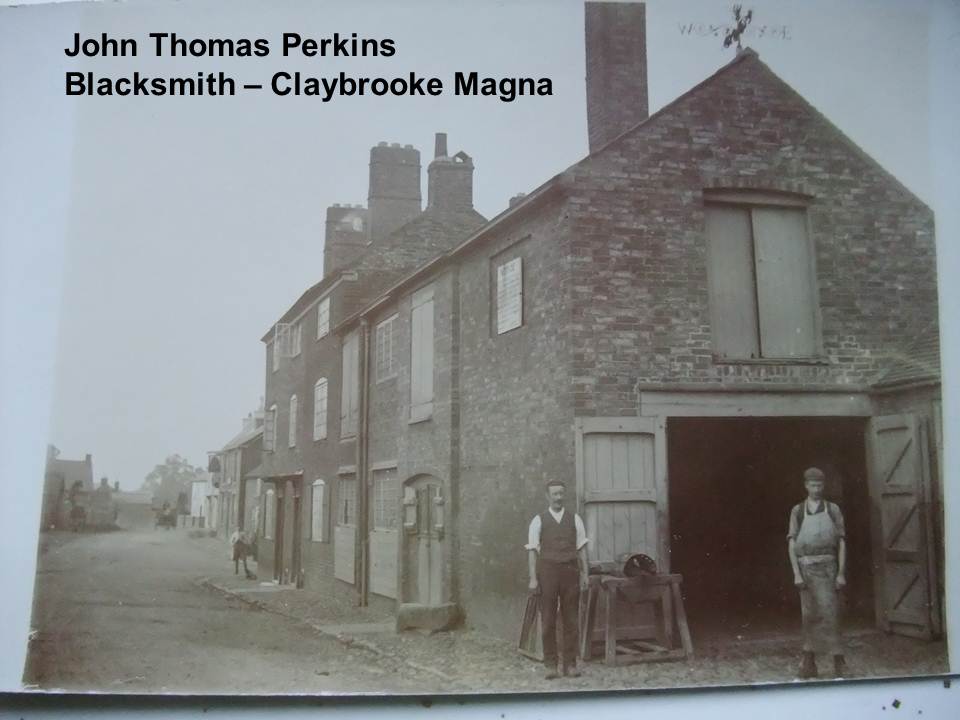
John Thomas Perkins Blacksmith

Thomas Hardy wrote that “villages, in addition to the agricultural inhabitants, contained an interesting and better informed class ranking above the others – the Blacksmiths, the Carpenters, the Wheelwrights and a wide range of  other individuals that were required to maintain the village and keep it generally self-sufficient. The “Prince of the Tradesmen” was the BLACKSMITH.

My immediate ancestors came from the small Midland villages,  Claybrooke Magna, Burbage and Withybrook in the border area between Leicestershire and Warwickshire. My grandfather John Perkins and his two sons, John Thomas and Walter Joseph, were Blacksmiths in the village of Claybrooke Magna from 1861 to at least 1916 and possibly longer, though I will have to wait for the 1921 Census to find out. Blacksmiths not only shod horses, but made wrought iron works of every kind, made and repaired tools, implements, parts of gates and ornamental iron work – all these things were produced on the hearth of the smithy to the accompaniment of the roar of the bellows and the ring of the hammer. Blacksmithing was a trade carried out by the same family over generations.

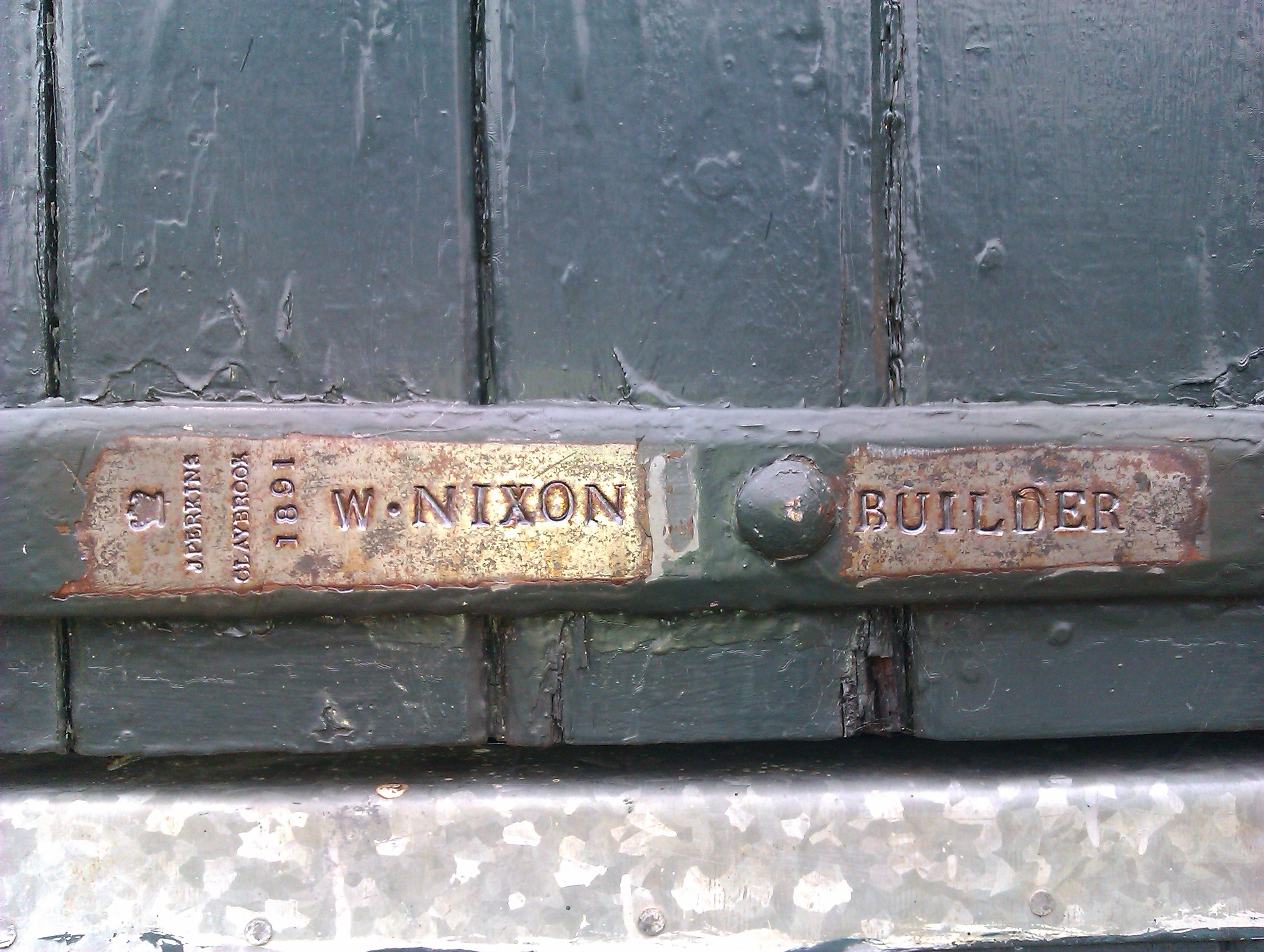
1891 Perkins & Nixon stables (1)

The metalwork on the stableblock (shown in the picture) of W. Nixon, the builder in 1891 was done by “J. Perkins Claybrook”. Whether this was the work of father or son, I don’t know.

On the 1851 Census, John Perkins, my great grandfather, was listed as an Apprentice Blacksmith. He was 19 years old and living in Withybrook with his widowed Mother Ann on his Uncle John Mason’s Farm. I don’t know how he came to this trade as his father Joseph was a Butcher.  Joseph however, had died when John was only 7, so someone else, possibly his uncle,  had arranged this apprenticeship for him, likely when he was around 14. In Historical Directories, I discovered that he was apprenticed to William Holyoak of Claybrooke Magna. William was one of three brothers, the others in Burbage, who were all Blacksmiths. By the 1861 Census, John had married Clara Benford and  was living in Claybrooke Magna and had become a Master Blacksmith. His 2 sons followed in the trade, my Grandfather John Thomas in Claybrooke Magna and his brother Walter Joseph in Rugby.

Master Blacksmith

Master Blacksmith

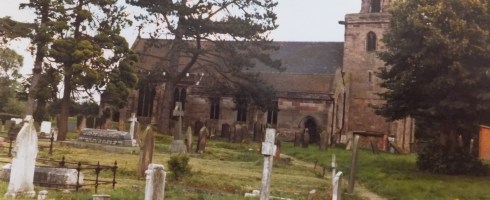
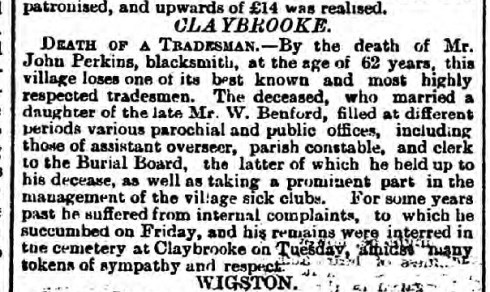
John Perkins died in 1896. The Leicester Chronicle headed his Obituary “Death of a Tradesman” and goes on to say “By the death of Mr. John Perkins, Blacksmith, at the age of 62, this village loses one of its best known and most highly respected tradesmen”. It would appear that not only was he a Master Tradesman, he was a volunteer in many community activities. He held various “public and parochial offices, including those of Assistant Parish Overseer, Parish Constable, and Clerk to the Burial Board, the later he held up to his decease, as well as taking a prominent part in the management of the various Village Sick Clubs.” He was buried at St. Peter’s Church Cemetery in Claybrooke Parva, LEI.


out-13

St Peter's Church

John Perkins of Claybrooke Magna

1851  Census   John Perkins (19)  apprentice Blacksmith  to William Holyoak (Master)

1861   Census   John Perkins (29)        Blacksmith in Claybrooke Magna

Apprentices  George Cramp 15, William Bird 19

Interestingly, John’s wife Clara Benford  had a younger sister who married William Bird when he finished his apprenticeship.  Often relatives of tradesmen, would marry tradesmen and the Benford’s were Carpenters in the village.

1871   Census   John Perkins (39)   Blacksmith (Master) Claybrooke Magna

Apprentice   Thomas Knight 19

1881  Census  John Perkins  (49)   Blacksmith (Master)

1891  Census  John Perkins (59)    Blacksmith

KELLY’S DIRECTORIES shows John Perkins for the following years : 1877   Black & Shoeing Smith, agricultural implement maker & machinist 1884  Blacksmith & machine & implement maker 1891  Blacksmith & Clerk to Burial Board 1896  Blacksmith, implement maker & Clerk to Burial Board

Apprenticeships

The Statute of Labor and Apprentices 1563 was the framework on which the career of most young men were based. It was the legal duty of a father to get his son apprenticed to a trade, at 14 or before and generally they aimed to get the best trade  they could afford, not necessarily one selected by the lad. Men involved in  craft trades had to serve  an apprenticeship of 7 years from the age of 14 to 21. This involved a payment  from the father to the Master. Once this term of service was met, the second stage was to work as a Journeyman. He was paid by the day while he worked for a Master. Usually a new Master tradesman had to wait for 5 years after the apprenticeship before he himself  could take on an apprentice.

JOHN THOMAS PERKINS

1881 Census        John Thomas Perkins (17)  Smith and machinist

1891  Census       John Thomas Perkins (27) Blacksmith  Claybrooke  Magna

Walter Joseph Perkins (26) Blacksmith  Rugby

1901   Census      John Thomas Perkins (37) Blacksmith Claybrooke Magna

Walter Joseph  Perkins (36) Blacksmith  Rugby

1916       Walter Joseph Perkins still village Blacksmith

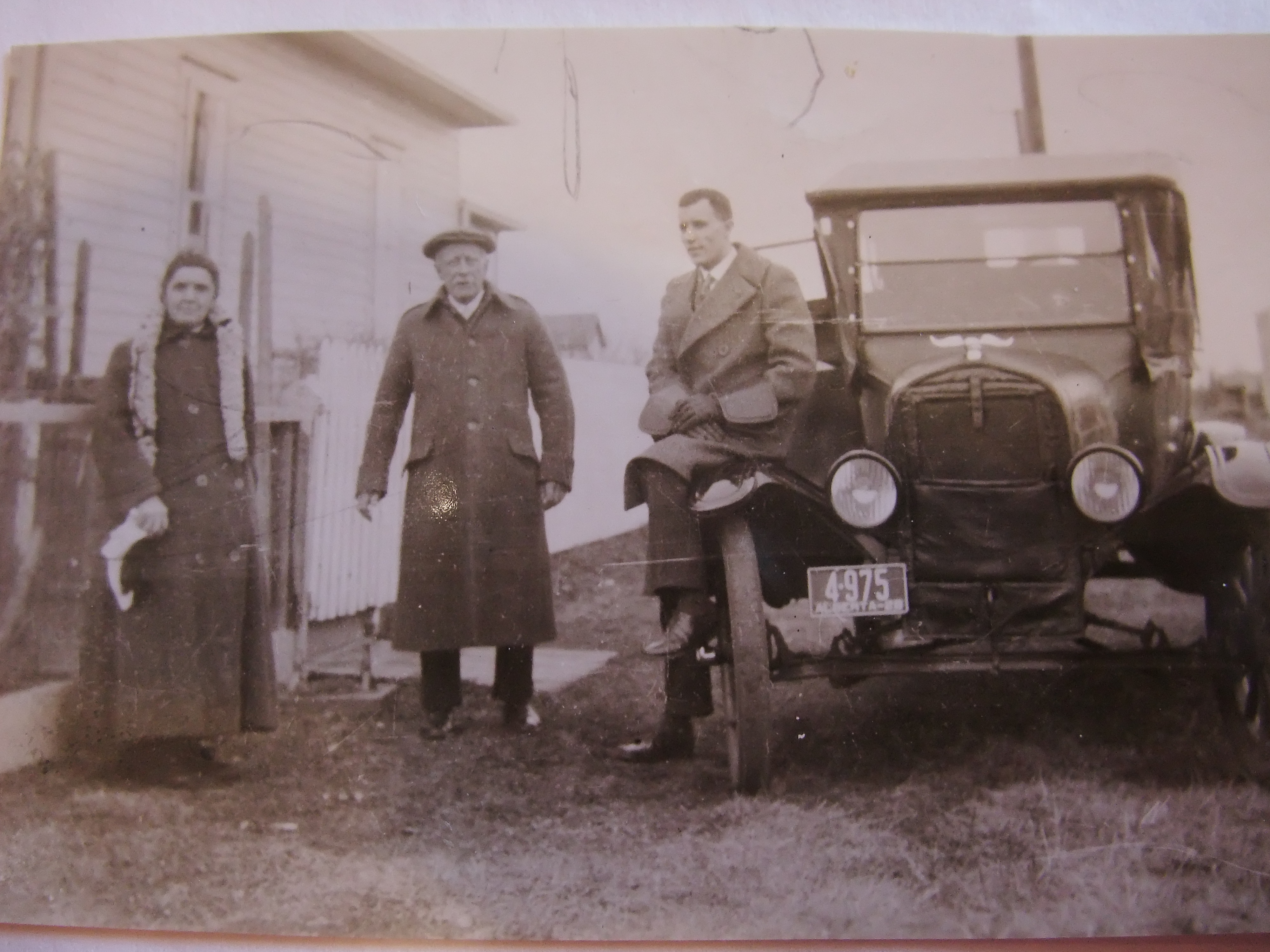
 JohnThomas Perkins moved his family into Leicester after his mother, Clara Benford Perkins died in 1910. He lived at #51 Walton Street and worked at an Iron Foundry as a Blacksmith. When his father-in-law, George Sleath, died in 1912, John Thomas was free to emigrate to Canada at age 49. This would have been a difficult decision but things in England were difficult and he felt that there would be more opportunity for him and his son in Canada. They arrived in  July 1913 and settled in the Ritchie District of Edmonton, Alberta. John Thomas first worked as a Blacksmith for Ribchester’s and then for the Hudson Bay Company as a clerk. I suspect he was employed in the Hardware Department. John Thomas, his wifr Sarah Jane and son Tertius in Canada circa 1929

The photo shows John Thomas, his wife Sarah Jane and son Tertius Bernard outside their home in Ritchie. circa 1929. Tertius was working for the CPR Telegraphs and obviously earned enough to buy himself a car.

John Thomas Perkins died in 1936 and was buried in Red Deer, Alberta, alongside his Brother-in-law Jack Sleath and his wife Clara Shotton Sleath.

Like Father……Like Daughter!

6 Mar
Showing off his new car to his parents outside the house in Ritchie!

Showing off his new car to his parents outside the house in Ritchie!

“Like Father…..Like Daughter”……. I had never realized how true this saying was until I caught myself telling a friend about “my cave” in the basement of my house. We have had a very long winter which began in late October and is still ongoing. The message on my phone says something about “not being available as I have gone into my cave until spring”. Well it isn’t really a cave, it is the cellar in my house. It has a cement floor and walls and you can barely stand up without banging your noggan on the floor beams, but it does have a furnace and is very warm and cozy in the winter. I  have spent considerable time down there the past few months. I have all my Genealogy Research Material, books, maps, stacks of notes  and binders spread out over many surfaces. I never have to put anything away. No one else except the cat ventures down there.  I  take my laptop down with me and turn on the TV for additional stimulation. I can lose myself for hours doing my research.

The connection with my dad goes way back. On those long winter nights, after he got home from work, he would go down to the cellar to listen to his ham radio and police scanner. I would go down to play with my toys and listen in to his conversations. My friends would also come over and we would play 78’s on an old RCA Record Player. Great entertainment in the 50’s and 60’s before all the other types of entertainment developed. I remember being excited when the mailman would bring cards confirming a contact he had made. His call letters were VE6 IR and he too would send these card to those he had connected with on his ham radio.

I often think how little I knew of my Dad. I was 33 years old when he died and to that point I guess I wasn’t all that interested in him as a person. He was just My Dad!

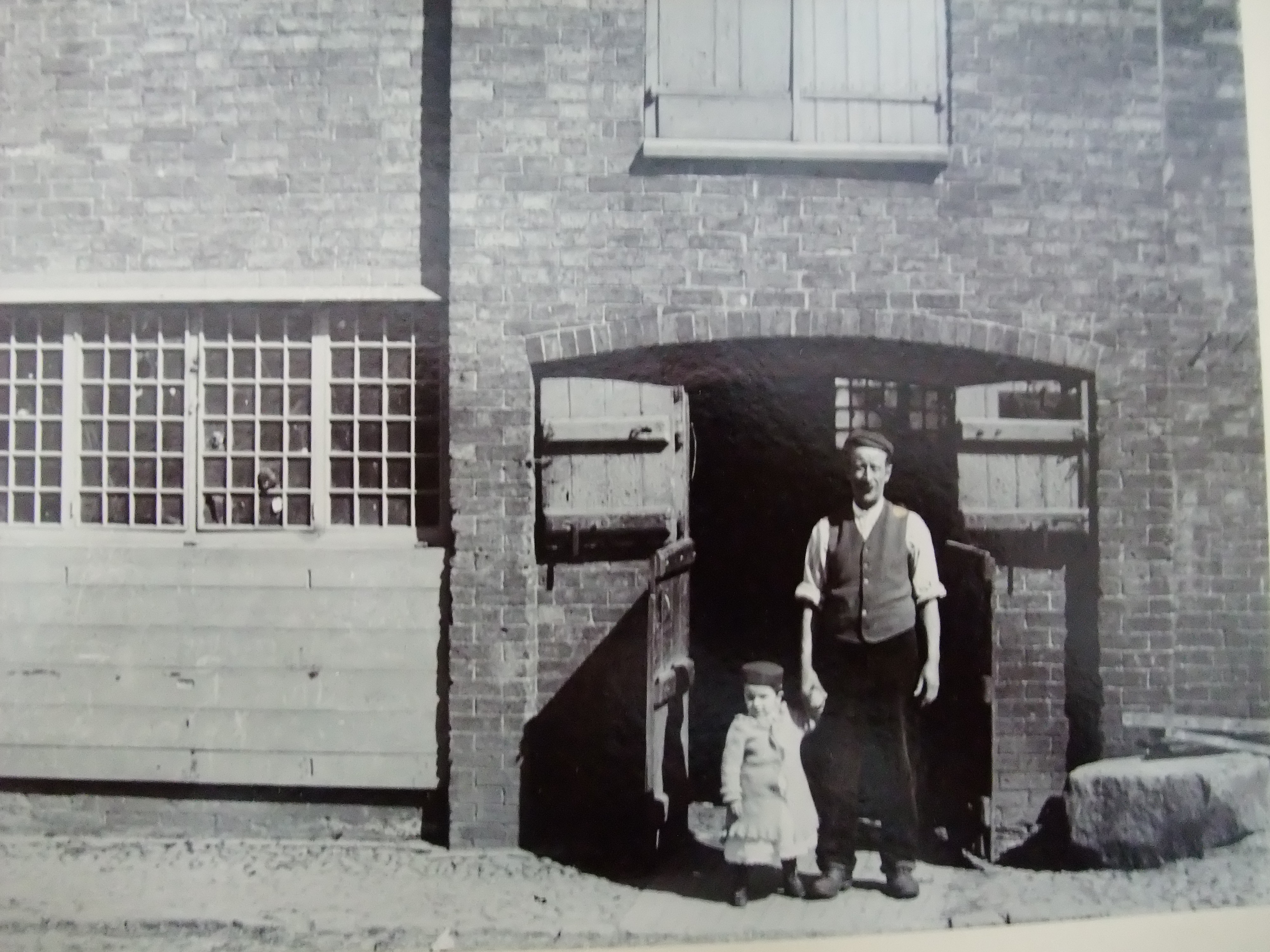
Tertius Bernard and his Dad, the Claybrooke Village Blacksmith (1906)

Tertius Bernard and his Dad, the Claybrooke Village Blacksmith (1906)

He was born in 1904 in Claybrooke Magna, a small village in the midlands of England just outside the city of Leicester. This city has made headlines in the past few months due to the discovery of the bones of Richard III under a car park in the city centre. On the site once stood the Grey Friars Priory. Something like this would really have raised his interest. I watched a CBC documentary last evening titled “The King in the CarPark” which told the story of finding the skeleton and thought, if he were alive, he too would have been watching. I do know that my Dad loved to read and learn new things. He loved doing math problems just for the sheer enjoyment of solving them. He tutored many of my friends for their Grade 12 Departmental Exams. I would often go with him to the Library to get books for myself. When I had read all the books in the Children’s’ Library,  I would use his card to get books in the Adult Library. In those days, I think you had to be 12 to borrow books from there, but you could use an adult’s card if you had their permission.

My Dad was 9 when he emigrated to Canada with his parents, John Thomas and Sarah Jane Perkins. They settled in the Ritchie area and he was one of the first students to go to Ritchie School when it opened in 1913. By age 16, he was delivering Telegrams for the Canadian Pacific Railway, a company that he was to work for his entire life. He wasn’t very athletic, but we did go for bicycle rides out to the country and at one time, I remember him going to wrestling matches when Gene Kiniski was fighting. He had a stamp collection, but was not very organized and the stamps were mostly loose in a box. I must have inherited this trait as my Genealogy Research is mostly loose papers in piles. Someday I will get organized……just not sure when! We were also at the opening of the Queen Elizabeth Planetarium in 1960, a first for Western Canada, and oddly enough, I now volunteer at the Telus World of Science just across the park from the Planetarium which has long been closed. It has the Margaret Zeidlar Star Theatre which offers a full dome immersive video experience. The Telus World of Science Edmonton was the first planetarium and science centre in Canada to showcase this new technology for domed theatres. (2008)

Dad retired in 1968 and by the next fall he had enrolled at NAIT, the local Technical Institute to take the Radio and TV Service Program. Guess he figured he would fix TV’s in his spare time or maybe he just wanted a chance to go to school to get a Diploma, something that he hadn’t been able to do as a young person. He probably knew more than all the instructors put together, but he had a great 2 years, socializing with the other students and likely doing some tutoring on the side.

Dad died in 1980 at age 76, way too young by today’s standards. I know he would have loved computers and the internet and would have been one of the first to embrace any new technology. For an Old Ham Radio Operator…… texting and tweeting would have been second nature.