Tag Archives: Genealogy

Rippon Street, Calcutta Serendipitous Connections

12 Mar


What does a picture in a steamer trunk, a man named Mircea Eliade, a researcher in Budapest and a house at 82 Rippon Street Calcutta have in common?  

This story has its beginning with a picture in a steamer trunk kept in our basement. Not only did the trunk store Christmas decorations, it held pictures from the past. I had seen these pictures each December when my mom got out her decorations. Mom said these pictures belonged to my grandmother Sarah Jane Sleath Perkins. Sarah Jane was the only grandparent I ever met and she died when I was only 7 years old.

Fifteen years ago when I first became interested in researching my family history, those pictures were the first things I decided to check out. Some faces I recognized, others I did not. I concentrated on the people I knew, did my research and moved on. It was only more recently when I became interested in telling the stories of individual ancestors that I returned to the unidentified pictures in the trunk. The whole point of this exercise was to see what I could discover about an ancestor and if it would be sufficient to develop a story. I chose the picture taken in the Punjab of a young man in an army uniform with the scribbled name “Dick”.   This man, I would come to learn, was Richard Sleath, my grandmother’s brother.
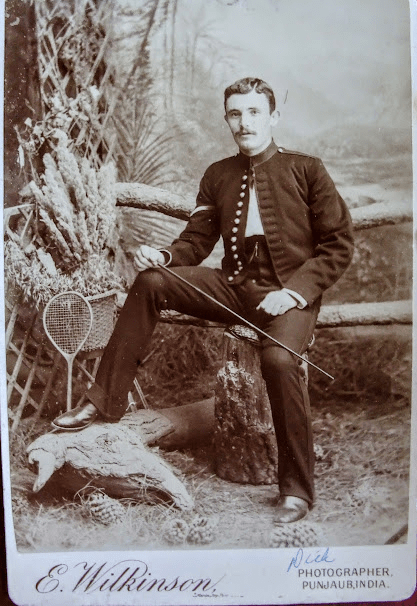
Over time, I learned a great deal about my Great Uncle Richard Edward Sleath, his wife Gwyndon Ophelia Mathias and her second husband William Frederic Perris.  I did presentations on my ancestor’s life to both the England Wales and Postscript SIGs during the winter of 2019.  To the latter, I was showing how even if you only had minimal in formation to start, it was possible to develop a story.

Since Spring 2019, the story itself has grown a life of its own and recently put me in touch with a Romanian, Liviu Bordas in Budapest, who just happened to be researching the Perris Family of Calcutta, India. I am getting ahead of myself though and must return to first telling you what I discovered about my ancestor, Richard Sleath. After that I will explain how his story morphed into a story for Relatively Speaking.   

I knew my maternal grandmother, Sarah Jane Sleath, had a number of brothers and that one or more had served with the British Army. I had her 1901 wedding photo taken in Claybrooke, Leicestershire, England. The young man called Dick was not in the picture so it was possible, if indeed he was Sarah Jane’s brother, that he was stationed somewhere with the British Army in Punjab, India. 
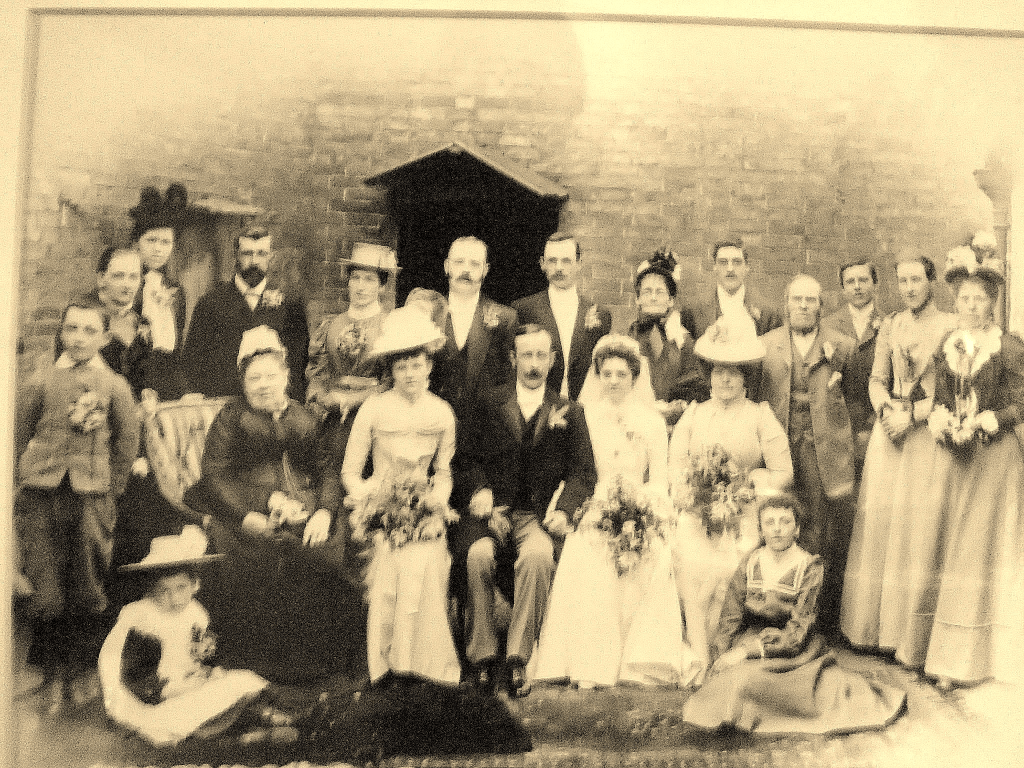
  

I referred to a pedigree chart I had developed when I was researching the Sleath Family. Sarah Jane was born in 1869 and her brother Jack in 1866. These were the two Sleath siblings that had ended up in Alberta in the early 1900’s. There was one older brother and 4 younger brothers that remained in England.  

As I have a number of paid genealogy sites, it was natural to access them to discoverer what information they might hold. I first went to Find My Past UK and located a baptism record for Richard Edward Sleath. He was christened at St. Mary’s Parish Church in Moreton, Staffordshire on Feb 25, 1872. This document confirmed his parents were George and Abigail Sleath, the same as Sarah Jane. On the 1881 Census on Ancestry, I found the family living in Streethay, Staffordshire. This document confirmed the names and ages of all the family. It appeared that George and Jack (John) were the older brothers while Richard, Joseph and the twins, Thomas and Samuel, were the younger brothers. Sarah Jane was the only girl.   

On Ancestry I was fortunate to find Service Documents from the UK Royal Hospital, Chelsea, Pensioner Soldier Service Records 1760 – 1920. I was referred to Fold3 (owned by Ancestry) for the original documents.  These records gave me a summary of Richard’s military career.  

Summary: Richard Sleath - Military Career 

1889                –   joined the 4th Battalion Staffordshire Reg as a Militiaman​​ 

23Sept1889      -   joined King’s Royal Rifle Corp at Winchester (86267) ​​ 

08Aug1891      -   posted to Royal Horse Artillery  Dublin District formed in 1793 as distinct arm of the Royal  Regiment of  Artillery

26May1892      – appointed as a Bombardier, a military rank that has existed since the 16th century in artillery regiments various armies equivalent to the rank of corporal in other branches. 

09Sept1893      -  sent to India to fight on the NW Frontier​ 

29Sept1901  – discharged at Allahabad India ​ 

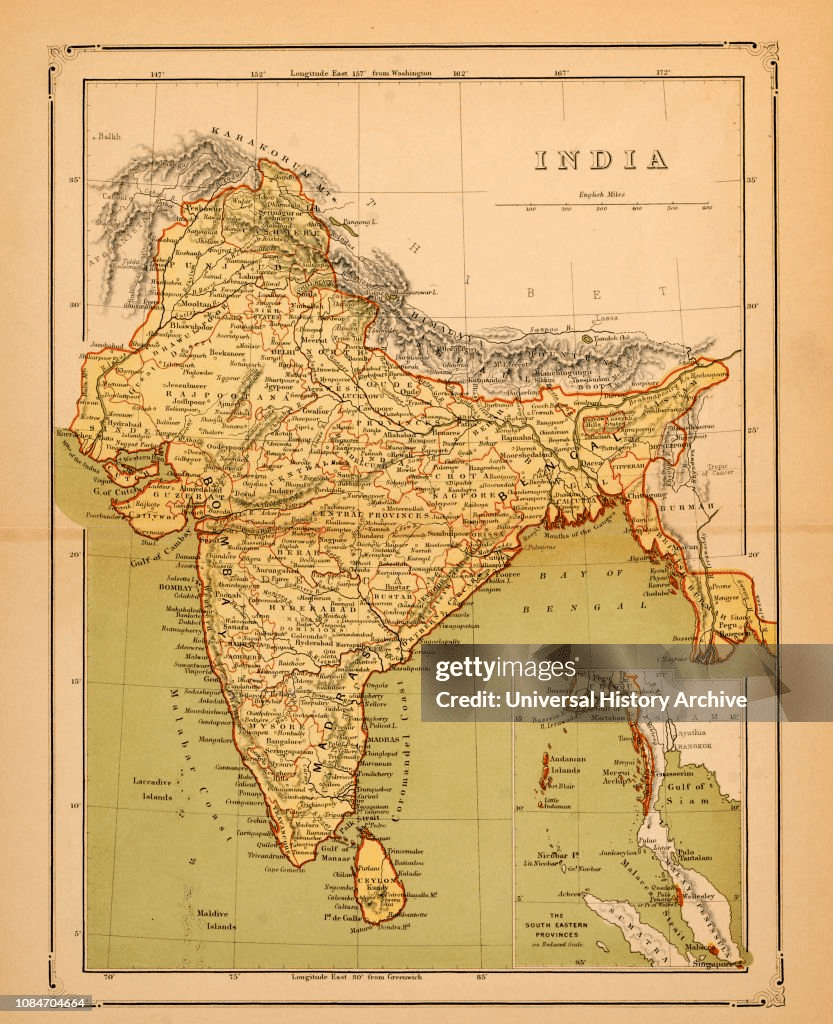
It was at this point that I had to get myself a good map of India in the 1890s plus smaller maps of the various provinces. I really had no idea where anything was and how far apart some of these places were. I also had to delve into the history of the country. It certainly wasn’t covered in my High School classes.
I found a book on Google called North-West Frontier 1837–1947 by  Robert Wilson Latham 

There was a summary as follows: 

“For over a hundred years British and Indian troops were engaged on the North-West Frontier of India, policing the tribes, mounting expeditions, and guarding against the ever-present threat from Russia. Populated mainly by Pathans, one of the fiercest warrior races on earth, the Frontier came to be known as “The Grim” by generations of British soldiers. It offers a rare glimpse into life on the Frontier, illuminating Lord Curzon’s remark, “No man who has read a page of Indian history will ever prophesy about the frontier”.

​I don’t know where Richard was stationed or what battles he may have been in. I do know that he was shipped to India in 1891 with the Royal Horse Artillery as a Bombardier and he was discharged at Allahabad Station in 1901.   

I created a Timeline to help in writing the story of Richard Edward Sleath​.​ 

1872    Baptized in Moreton Staffordshire​ England

1881    Living in Streethay Staffordshire​ 

1889    Militia Man in Lichfield  Stafffordshire​ 

1889    Joined Kings Royal Rifles​ 

1891    Dublin District Royal Horse Artillery Gunner​ 

1893    India  Bombardier​ (Rank between that of gunner and that of sergeant)  Royal Horse Artillery  Punjab India            

1901    Discharged at East India Railway Station​ Allahabab

       ​ 

1902    Married Gwyndon Ophelia Mathias at ​  Khagole, Bengal, India​ 

1907    Richard Sleath died 24Feb1907​ 

1908    Gwyndon Sleath (Richard’s widow) marries William Frederic Perris​ 

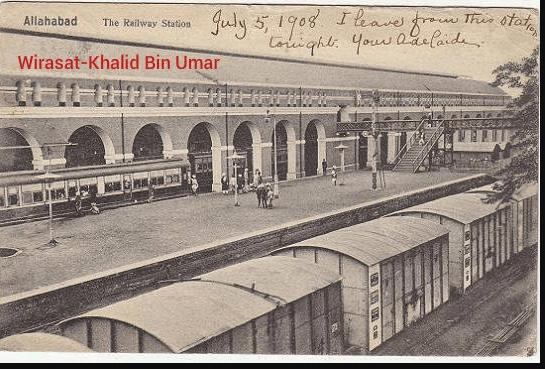
Richard was discharged from the British Army in 1901. He would have been 29 years old. As I was searching for pictures of the East India Railway Station at Allahabad on the internet I found a postcard. It had been written by Adelaide in July of 1908. She was letting someone know she was leaving from the Allahabad Station.  It struck me that this was the same station Richard would have seen. The steamer trunk held other photos including one of Richard Sleath in civilian dress. He looked older than the man in the army uniform. I guessed the photo would have been taken after he had been discharged from the army in 1901. The photographer was identified as Bourne and Shepherd of Calcutta.  I thought this picture might have been taken around the time of his wedding (1902) and one that he would send to his sister Sarah Jane.  I located an Extract from India Eagle Paper in Calcutta and learned something about this company.  
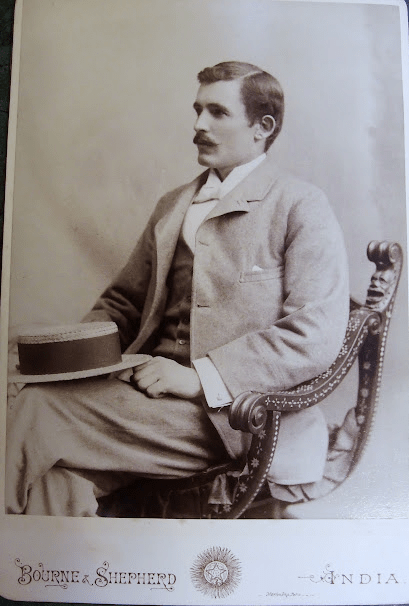
Bourne & Shepherd: World’s Oldest Operating Photo Studio in Kolkata Breathed its Last (2016) 

“This dilapidated building named ‘Photographe’ in the busiest neighborhood of Kolkata could have been converted into a world-class photography museum to preserve the footprints of India’s journey from the colonial times to the post-independence era. But Fate had something else in store for the iconic landmark where many historic events across the country were documented through photography for 176 years…..the photo studio was renamed Bourne & Shepherd in 1866  when the British photographer and traveler duo – Samuel Bourne and Charles Shepherd – took control of the business after William Howard left India.” 

 
What happened to Richard Sleath following his discharge? This was an important question I needed to answer.  I discovered a marriage registration on findmypast.co.uk. He had married a woman by the name of Gwyndon Ophelia Mathias at Christ Church, Khagole, India on September 25,1902. This record was part of the British India Office Collection . He said he was 23 and she was 17. In actuality he would have been 30. Yes our ancestors stretched the truth! 
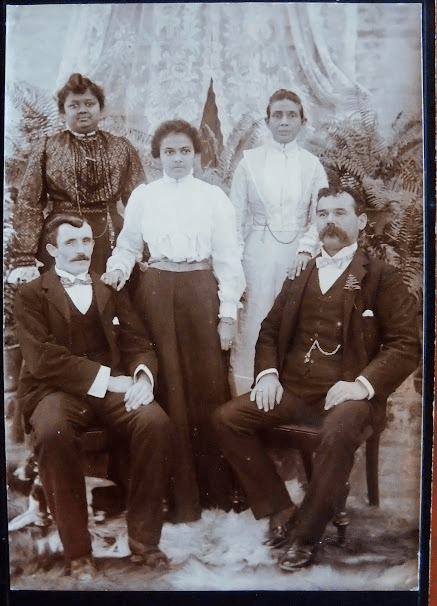
I had the wedding picture for Richard and Gwyndon. Given the style of the wedding dress this had been a very English wedding.  The couple were married for only five years when Richard died February 24, 1907 in the Medical College Hospital in Calcutta at age 35. This information was from the Times of India newspapers on the Families in British India website.  I could not find a death record. He was an employee of the East India Railway Company.

I located Richard’s will on Find My Past. It would appear that he was living a very good life in India and based on conversion rates for the rupee to today’s purchasing power in UK pounds, Gwyndon was a moderately wealthy widow. 

“I give…my household furniture, linens and wearing apparel, plates, pictures, china, horse carts and carriages and also every sum and sums of money which may be in my house…..also my stock funds and securities and all and every other money or bank notes or other securities.”

I could end my story at this point. My ancestor is deceased and he left no living children. Gwyndon, at 22 would  move on with her life. Indeed she married William Frederic Perris in 1908. 

I was curious though, as to what would happen to such a young woman. I thought why not do some additional research into Gwyndon Ophelia and her maternal family. From the family picture it was clear that her mother Ophelia was an Anglo-Indian. This woman after whom she was named came from Sylhet, Bengal in northeast India. The family name was Grose.  I found Ophelia’s father Benjamin Grose born 1840 in Sylhet and his father Robert Grose born in Calcutta in 1808. His father was John Grose but I was unable to determine where he was born.  

On the Perris side we find her husband Wiliam Frederic Perris born into a military family in Bareilly, Uttar Pradesh, India in 1879 to Corporal and Amelia Perris (2nd of the 2nd Queens). He married Gwyndon Mathias Sleath in 1908 and they had 6 children. The senior Perris’ ended up in England in 1951 following the partition of the country. 

82 Rippon Street Calcutta India

This is where the story takes a serendipitous turn. I had advertised my presentation to the Postscript group, part of the Alberta Genealogy Society on my Facebook Page. Liviu Bordas a Romanian researcher saw the post on Facebook and got in touch with John Althouse. The following morning I had a forwarded email from Liviu Bordas. Liviu had being trying to reach me since finding my blog, A Genealogist Goes Wandering, on which I had a posting about Richard and Gwyndon Sleath and William Frederic Perris. 

Liviu writes:  May 2019 

“I am doing a research on Calcutta (and generally India) during the last period of the British Raj in connection with some European scholars who visited or lived there for some time. In 2015, I have researched the India Office Records in The British Library and National Archives and found some information. I found other information, including their migration to UK, on various genealogical websites. I would like to know what you have found. Thank you.”  

Emails went back and forth. I wanted to know why he was researching the Perris Family. Turns out he was researching a noted Romanian religious scholar Mircea Eliade who had stayed with the Perris Family in their Calcutta guesthouse from 1929 to 1931. He was writing a book soon to be published and wanted permission to use some of my pictures.  

Liviu Wrote in reply to one of my emails:  “Their entire life is a great story. I wrote it. 🙂 

I put all the information I could find about them (their lives and their ancestors) in a text I wrote as introduction to Mircea Eliade’s Indian travelogue (India) and Indian diary (Șantier = Work in progress), published in 1934 and 1935 (now republished in a single volume). Eliade lived in their house for the duration of his stay in India (January 1929 – November 1931), except for January-September 1930, when he lived in the house of his professor, Surendranath Dasgupta. The Perris kept their rented home in Calcutta as a “pension” / “guest house”. In India, Eliade mentions, briefly, only Fred Perris and his brothers. But in Șantier all of them,  including Ophelia, Gwyn’s mother) are a constant presence. Isabel is modeled after Gwyndon, while Maitreyi is Maitreyi Devi, Dasguptas’s daughter. Almost all the other Perris appear under a guise in the two novels. The last one is the only one translated in English and made into a film – Bengali Nights. Eliade also kept a correspondence with the Perris family while he was traveling in India and after his return to Bucharest as well, until 1936.

The book is coming out in a week or two. I have quoted your blog post and also included one of the pictures (with Richard, Gwyn and her parents) mentioning as source the personal archive of Louise Perkins”. I apologize for doing it without securing your permission. I have tried to contact you in October and November but received no answer. Unfortunately, the publisher made the picture very small, so I think there is no much use of it in the book. The readers can go however to your blog post. I hope you won’t mind that. Let’s keep in touch. We might find other things to share. With best wishes,”  Liviu 
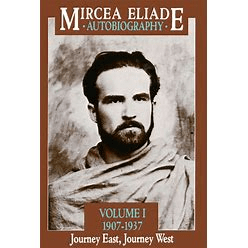
Serendipitous connections kept occurring. I found a book in a bookstore on Whyte Avenue. It contained additional information about the family and their lives when Mircea Eliade was staying there. He refers to Gwyndon Perris as Mrs. P who ran the establishment at 82 Rippon Street.. Her sons were  the same age as Mircea, all in their late teens or early 20’s. I await the publication of Liviu’s book  and translation to English. Who knows what else I might discover?  

I this story,  I discovered a further connection to a man I had never heard about until May 2019. I was taking a class and the speaker was David Goa, (Adele Goa’s brother for those of you in the know). He is a noted Religious Scholar and curated the Anno Domini Exhibit at the Royal Alberta Museum in the early 2000s. I thought I would ask him if he was familiar with Mircea Eliade. He looked at me and said “of course, he was my professor when I studied at the University of Chicago in the 60’s. He was a brilliant man!”  It is indeed a small world!

What does a picture in a trunk, a man named Mircea Eliade, a researcher in Budapest and a house at 82 Rippon Street Calcutta have in common? I have discovered that they form the basis for a very interesting story and now you know the answer. Serendipitous Connections  

Who was David Taylor McMillan?

24 Jan

I had very little information on my mother’s family when I first began to research my family history. I knew she had a brother David and a sister Daisy. They were born in Coquimbo, Chile as was my mother. They were all children of Thomas McMillan and a local woman. As these ancestors were all dead before I was born, there was no one I could question for more details. My mother was only a child when they left Chile and had few memories of her childhood by the time I got around to asking questions.

Recently I decided to see if I could find more information as it had been about 10 years since I did my first research.

I discovered that David McMillan was born in Glasgow, Scotland,not Chile, the son of Thomas McMillan and Jane Thomson, on November 30, 1879. His parents had married on June 14, 1872 at Carnmarnock near Glasgow.

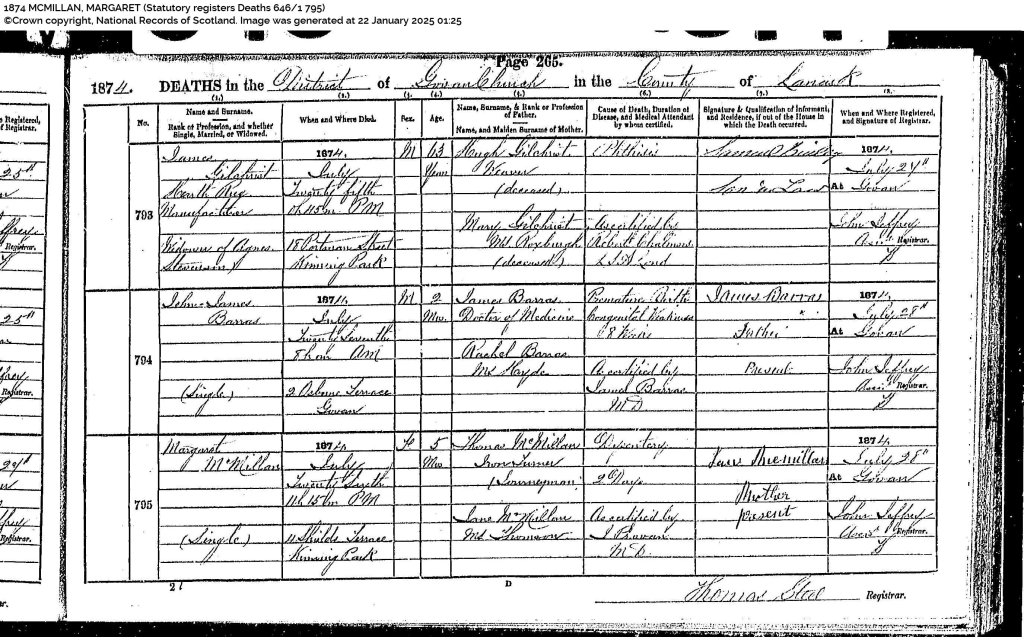
He had an older sister Margaret who was born on February 16, 1874 in Bridgeton, Glasgow Scotland. The family was living at 748 Gallowgate, Glasgow. She died on July 26, age 5 months, of dysentry and by then the family had moved and were living at 11 Shields Terrace, Kinning Park, Glasgow.

David Taylor was born on November 30, 1879 and the family had moved to 192 Claythorn Street, Glasgow.

On the 1881 Scottish census Jane and David were still living at 192 Claythorn street in Glasgow. Thomas, a steamship engineer, was likely at sea. Sometime after this the family relocates to Peru where Thomas is working for the Pacific Steamship Navigation Company on the Coastal Steamers.

Household Members (Name)AgeRelationship
Jane McMillan29Wife
David T McMillan1Son

A third child, Maria, was born December 25, 1886 in Callao, Peru but she did not survive.

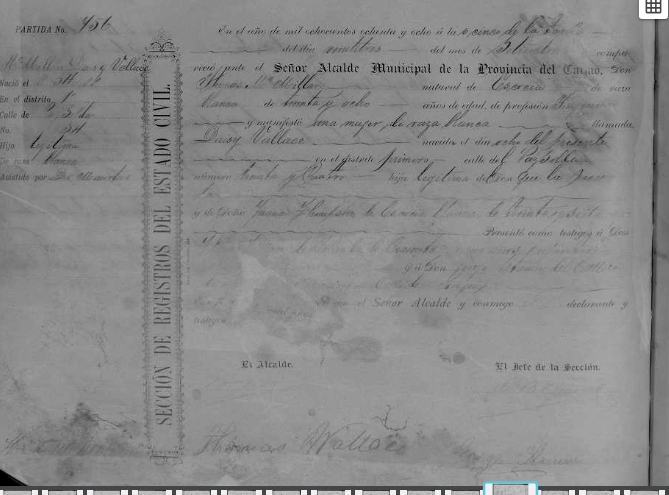
A fourth child was also born in Callao on November, 1888 . This was the woman I believed to be my aunt. Her name was Daisy Wallace McMillan.

I know little about the family’s early years in South America, as by the time my mom, Agnes Irvine McMillan was born on October 23,1908, the family was living in Coquimbo, Chile. This is where questions come in. My mother was 20 years younger than her sister Daisy. I now believe because of my DNA results, that my mom was the illegitimate daughter of Daisy. Her father is unknown but he must have been part indigenous, part Spanish. This unknown man passed on his DNA to me. I could not have had 11% Indigenous DNA from Chile/Peru/Boliva from any other source.

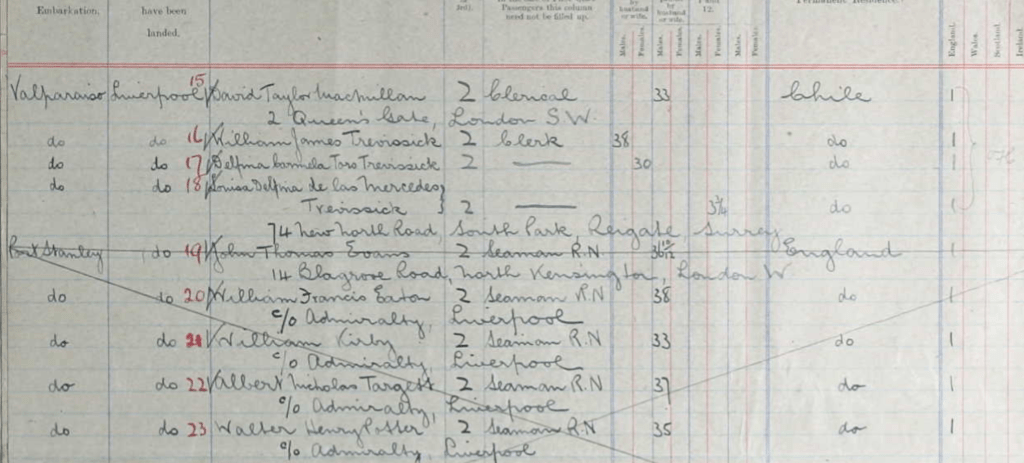
The other question was what had happened to David? My mother never spoke of him. I decided to see what I could discover about this man. David first appears on a document in 1917 when he heads to England to serve in WW1. He embarked from Valpariso, Chile destination Liverpool, England. He was 33 years old. (incorrect as he was born in 1879 and would be 37 at time of sailing in March 1917.) His address in UK was 2 Queen’s Gate, London, England. Occupation listed as clerical.

I have no information on his military service in WW1, just a photo of him in uniform.

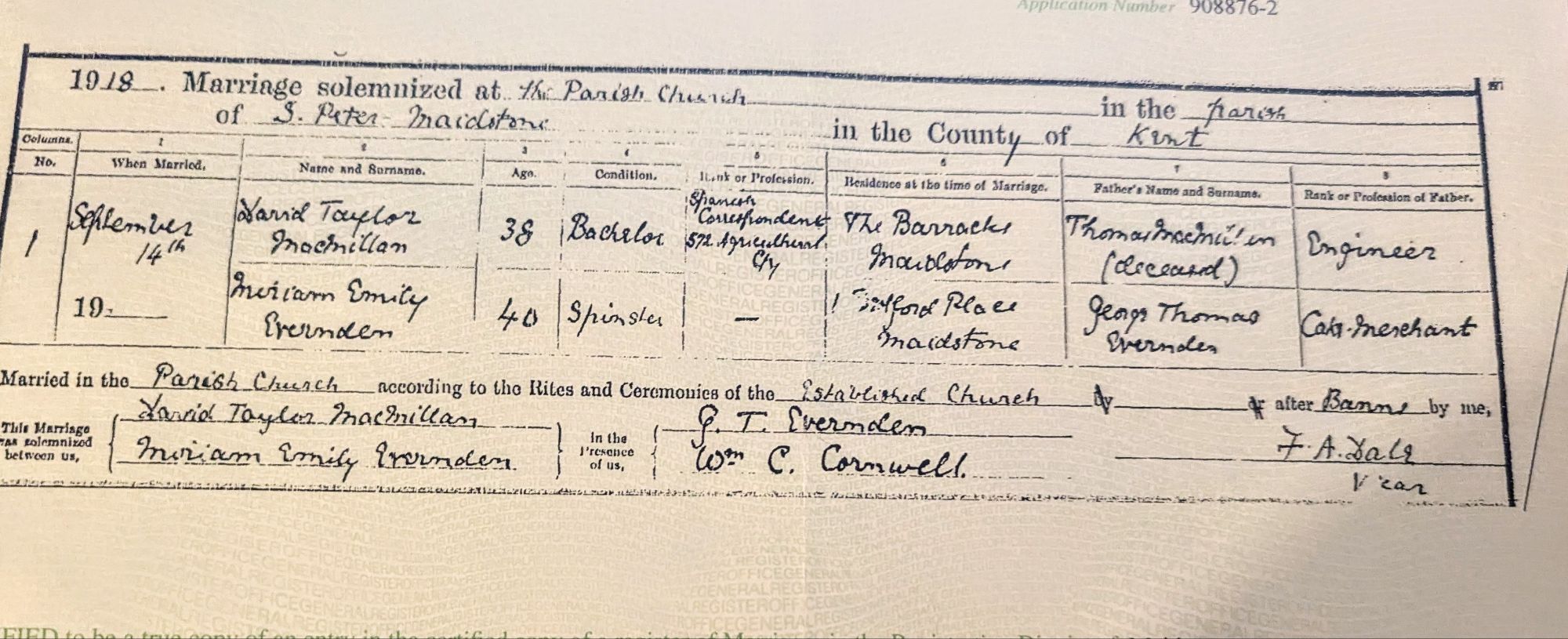
David marries Miriam Evernden, an English woman, in Maidstone, Kent on September 14, 1918.

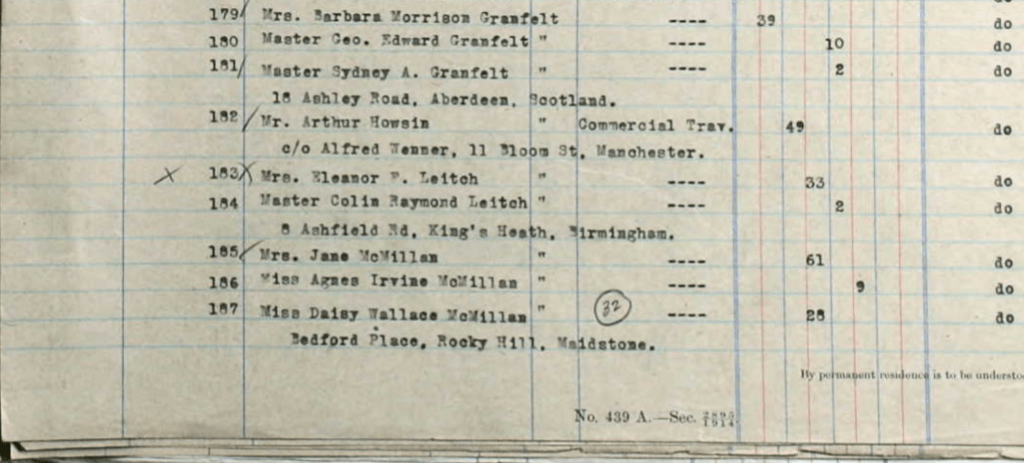
Thomas, the patriarch dies in Coquimbo in April 1919. Jane, Daisy and Agnes set sail for England. David as the only son had become responsible for the family.

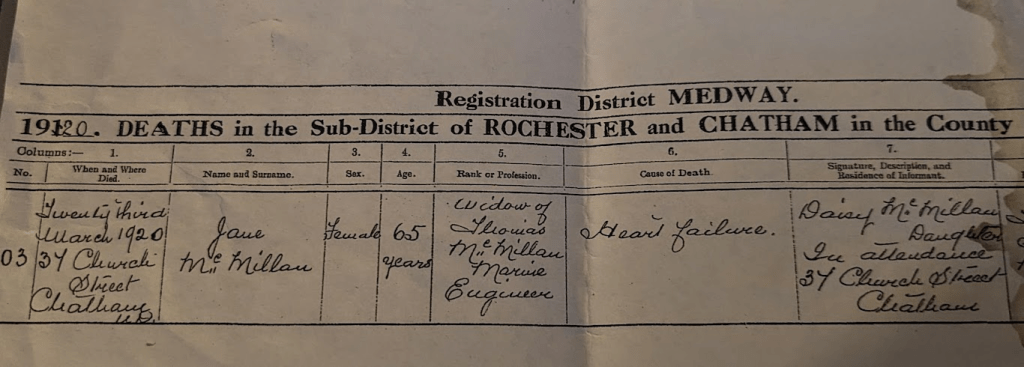
My mother remembered going to school in Maidstone. Jane McMillan, the matriarch, dies March 23, 1920 of Heart Failure. She was listed as 65 but as she was born in 1850 she would have been 70. They were living at 34 Church Street, Chatham, Kent.

Daisy marries Fred Bates, a Canadian who served in WW1, in June 1921 just before leaving for Canada.

When Daisy, her new husband Fred Bates and my mom leave England for Canada, their arrival form shows David living at Devon House, Argyle Square London, W6. This is in June 8, 1921.

The mystery deepens. I find a David MacMillan living at 66 Balcombe Street, Marylebone N W 1 on June 19, 1921 date of census. Age and birthplace is correct and he is working in a clerical job. He indicates he is marrried but is not living with his wife Miriam.


1921 England Census

NameDavid Macmillan
GenderMale
Marital StatusMarried
Age41 Years 7 Months
Relation to HeadHead
Estimated Birth Year1879
Birth PlaceGlasgow, Lancashire, England
Residence Date1921
Residence Street Address66 Balcombe Street, Marylebone N W 1
Residence PlaceSt Marylebone, London, Middlesex, England
OccupationTemp Government Clerk
Occupation Code800/6
EmployerMinistry of Labour
Employer Code719
Place of WorkKew, Surrey
Number of Children Under 160
InhabitedY
WardNo 4 Dorset Square & Regent’s Park
Parliamentary DivisionSt Marylebone Pb
Registration districtSt Marylebone
Registration District Number7
Sub registration districtNorth Marylebone
Sub Registration District Number3
RespondentMr Mac Millan
Enumeration District NameSt Marylebone Mb
Enumeration District34
Schedule344
Schedule Type CodeE
NameAge
David Macmillan41 Years 7 Month

Strangely, a further search reveals his wife Miriam back living with her parents on the 1921 census. She indicates her husband deserted her.

I searched for a death certificate for David but without success. I had all but given up when I came across a newspaper article in the Richmond Times. The name was switched around to David MacMillan Taylor. What caught my eye was the reference to a Chilean citizen. This had to be my David.

His death occurs in April 15, 1922. He would be 42, not 38. The address is 66 Balcombe Road, the same address David reported on the 1921 census. Was this an attempt to hide his whereabouts from his wife?

So the man who was born David Taylor MacMacMillan died as David MacMillan Taylor. Was this just a clerical error or was he trying to hide from his wife? Why did Miriam say her husband deserted her on the 1921 census? How long had they been living apart? They would have been married for less than 2 years. What had happened in such a short time? I guess this is something I will never know. I had wondered why David had never married in Chile. The thing that came to mind was a question. Was he gay? This was something that would be hidden in those days.

Marian, his wife died in 1960, a widow. She had money when she died. I do hope she had a good life.

Claybrooke Magna, Leicestershire..John Perkins… The Village Blacksmith

16 Mar

My Ancestors were Blacksmiths      

The most thorough transformation of England relative to the period, probably took place during the reign of Queen Victoria. In 1837, when she came to the throne, the nation was primarily rural and 66% of the population lived in the countryside. By 1851, those living in rural areas had been  reduced to 50% and by 1901, to just 25% of the population.

The appearance of the village reflected the character of the land, for they were built with the materials that could be obtained locally, stone where there were quarries, bricks where there was clay, and timber where wood was available. In the 19th Century, country folk were dependent on the land for their living  and the village for its services.

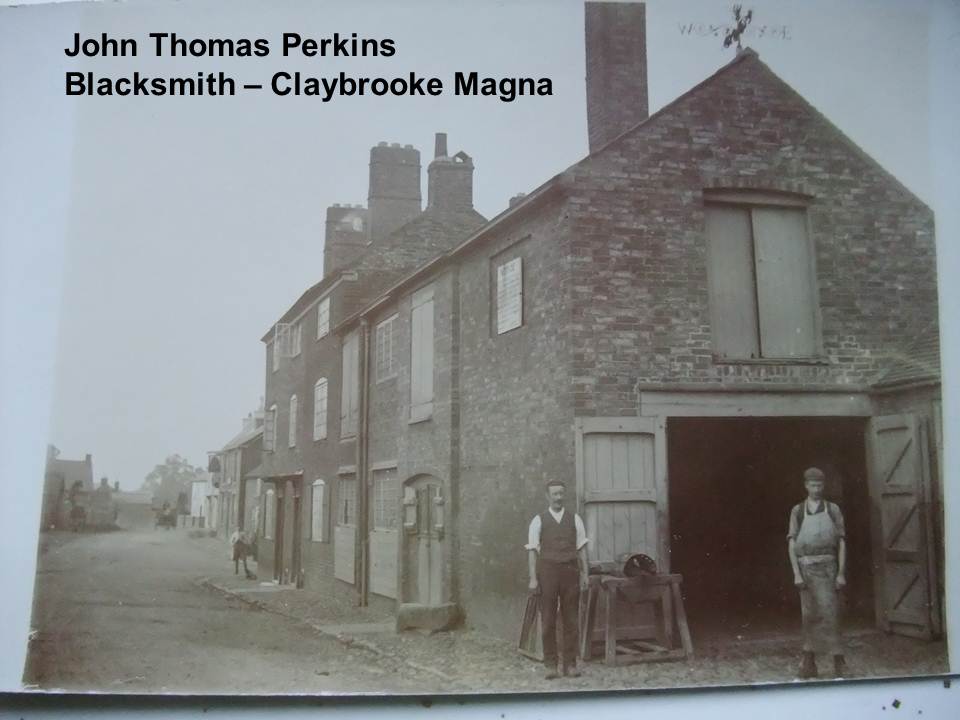
John Thomas Perkins Blacksmith

Thomas Hardy wrote that “villages, in addition to the agricultural inhabitants, contained an interesting and better informed class ranking above the others – the Blacksmiths, the Carpenters, the Wheelwrights and a wide range of  other individuals that were required to maintain the village and keep it generally self-sufficient. The “Prince of the Tradesmen” was the BLACKSMITH.

My immediate ancestors came from the small Midland villages,  Claybrooke Magna, Burbage and Withybrook in the border area between Leicestershire and Warwickshire. My grandfather John Perkins and his two sons, John Thomas and Walter Joseph, were Blacksmiths in the village of Claybrooke Magna from 1861 to at least 1916 and possibly longer, though I will have to wait for the 1921 Census to find out. Blacksmiths not only shod horses, but made wrought iron works of every kind, made and repaired tools, implements, parts of gates and ornamental iron work – all these things were produced on the hearth of the smithy to the accompaniment of the roar of the bellows and the ring of the hammer. Blacksmithing was a trade carried out by the same family over generations.

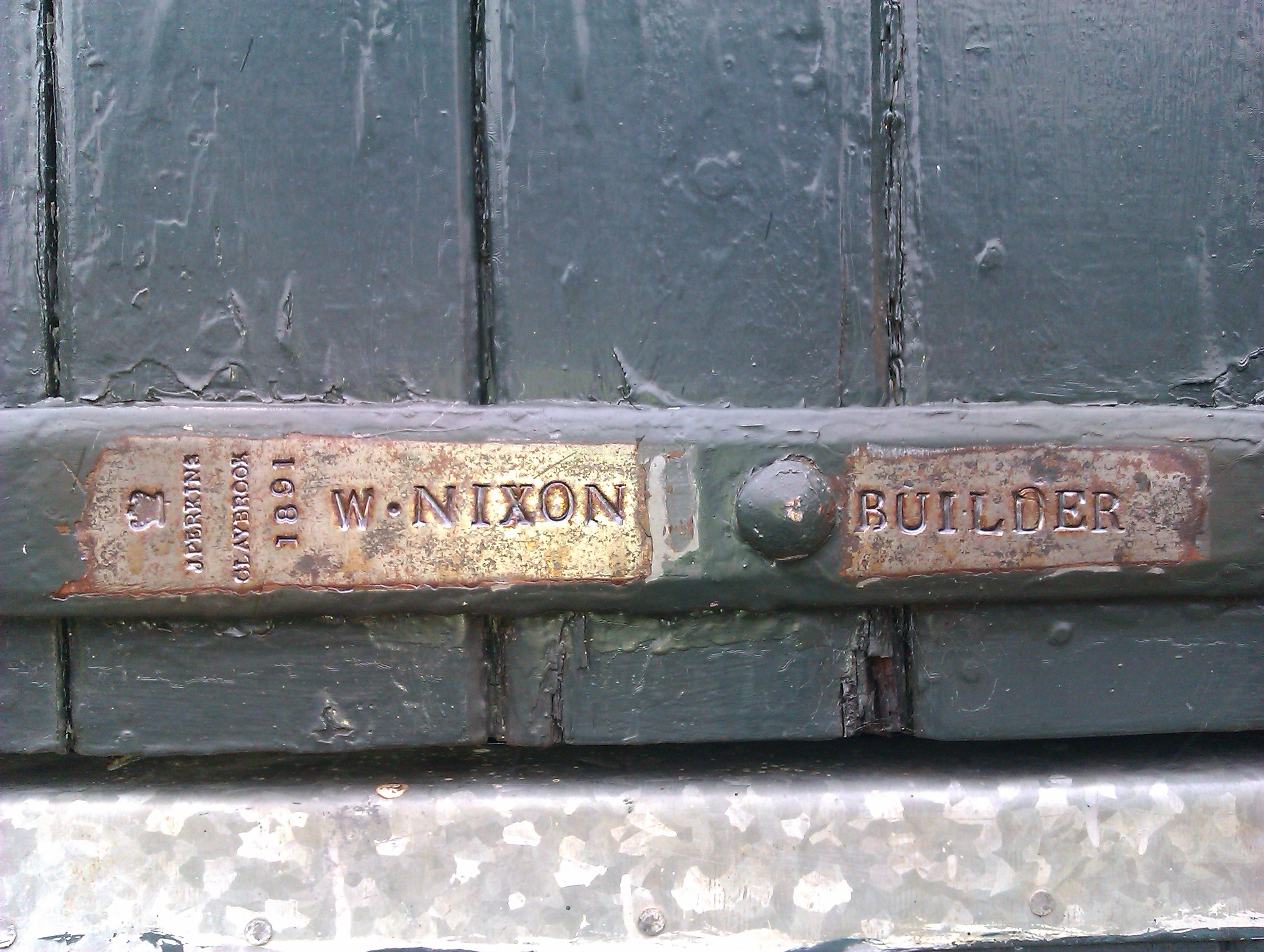
1891 Perkins & Nixon stables (1)

The metalwork on the stableblock (shown in the picture) of W. Nixon, the builder in 1891 was done by “J. Perkins Claybrook”. Whether this was the work of father or son, I don’t know.

On the 1851 Census, John Perkins, my great grandfather, was listed as an Apprentice Blacksmith. He was 19 years old and living in Withybrook with his widowed Mother Ann on his Uncle John Mason’s Farm. I don’t know how he came to this trade as his father Joseph was a Butcher.  Joseph however, had died when John was only 7, so someone else, possibly his uncle,  had arranged this apprenticeship for him, likely when he was around 14. In Historical Directories, I discovered that he was apprenticed to William Holyoak of Claybrooke Magna. William was one of three brothers, the others in Burbage, who were all Blacksmiths. By the 1861 Census, John had married Clara Benford and  was living in Claybrooke Magna and had become a Master Blacksmith. His 2 sons followed in the trade, my Grandfather John Thomas in Claybrooke Magna and his brother Walter Joseph in Rugby.

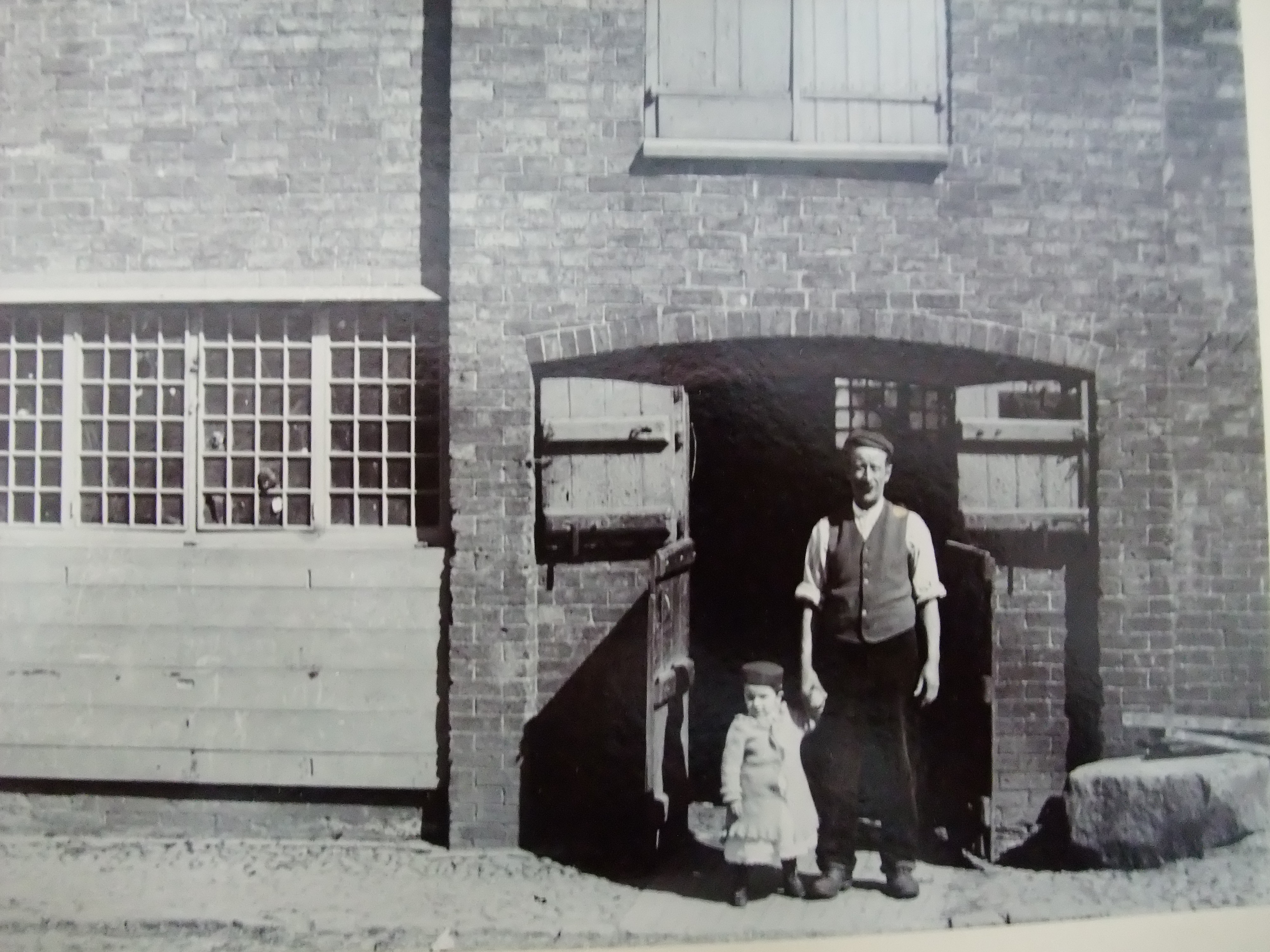
Master Blacksmith

Master Blacksmith

John Perkins died in 1896. The Leicester Chronicle headed his Obituary “Death of a Tradesman” and goes on to say “By the death of Mr. John Perkins, Blacksmith, at the age of 62, this village loses one of its best known and most highly respected tradesmen”. It would appear that not only was he a Master Tradesman, he was a volunteer in many community activities. He held various “public and parochial offices, including those of Assistant Parish Overseer, Parish Constable, and Clerk to the Burial Board, the later he held up to his decease, as well as taking a prominent part in the management of the various Village Sick Clubs.” He was buried at St. Peter’s Church Cemetery in Claybrooke Parva, LEI.


out-13

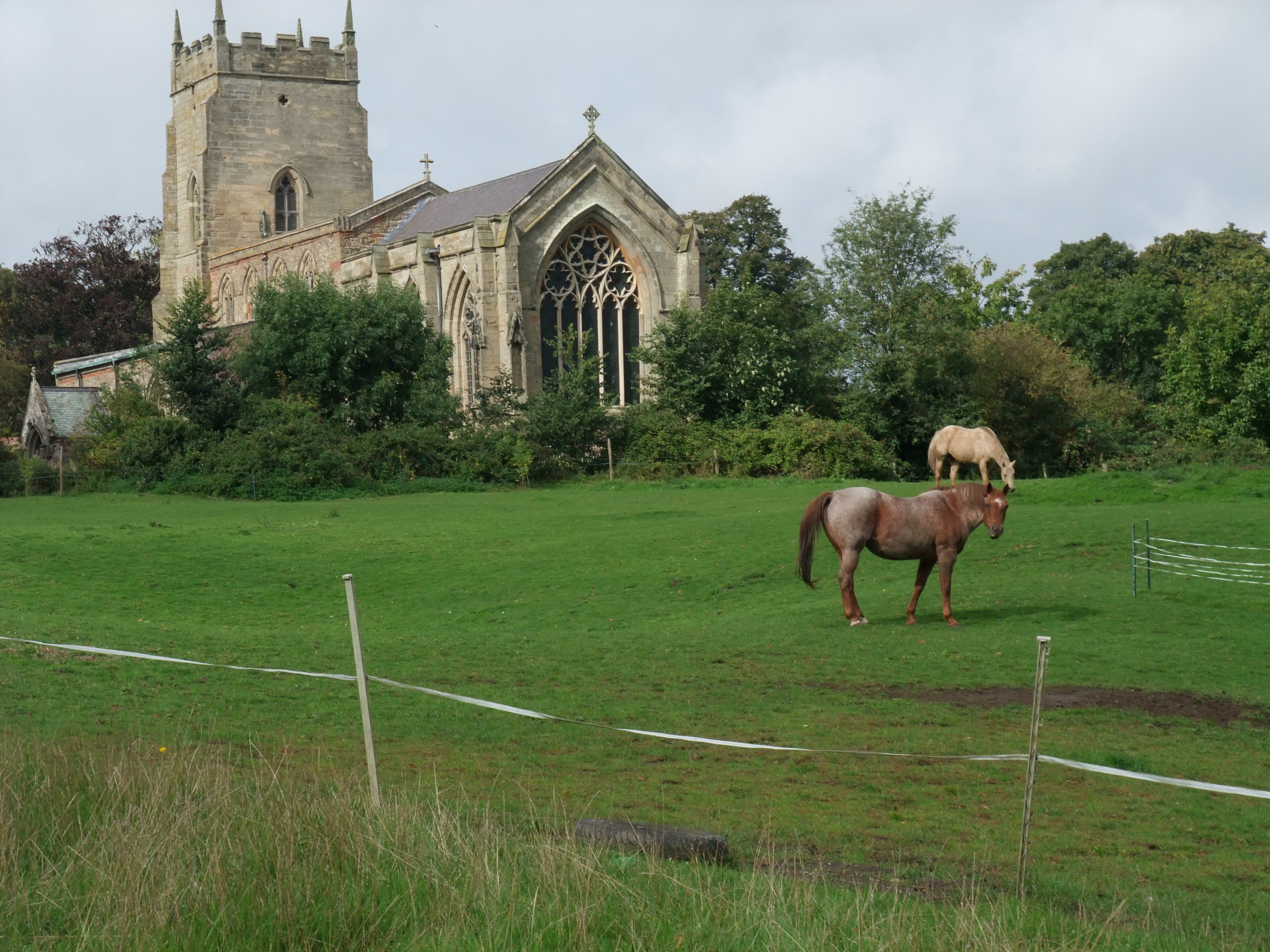
St Peter's Church

John Perkins of Claybrooke Magna

1851  Census   John Perkins (19)  apprentice Blacksmith  to William Holyoak (Master)

1861   Census   John Perkins (29)        Blacksmith in Claybrooke Magna

Apprentices  George Cramp 15, William Bird 19

Interestingly, John’s wife Clara Benford  had a younger sister who married William Bird when he finished his apprenticeship.  Often relatives of tradesmen, would marry tradesmen and the Benford’s were Carpenters in the village.

1871   Census   John Perkins (39)   Blacksmith (Master) Claybrooke Magna

Apprentice   Thomas Knight 19

1881  Census  John Perkins  (49)   Blacksmith (Master)

1891  Census  John Perkins (59)    Blacksmith

KELLY’S DIRECTORIES shows John Perkins for the following years : 1877   Black & Shoeing Smith, agricultural implement maker & machinist 1884  Blacksmith & machine & implement maker 1891  Blacksmith & Clerk to Burial Board 1896  Blacksmith, implement maker & Clerk to Burial Board

Apprenticeships

The Statute of Labor and Apprentices 1563 was the framework on which the career of most young men were based. It was the legal duty of a father to get his son apprenticed to a trade, at 14 or before and generally they aimed to get the best trade  they could afford, not necessarily one selected by the lad. Men involved in  craft trades had to serve  an apprenticeship of 7 years from the age of 14 to 21. This involved a payment  from the father to the Master. Once this term of service was met, the second stage was to work as a Journeyman. He was paid by the day while he worked for a Master. Usually a new Master tradesman had to wait for 5 years after the apprenticeship before he himself  could take on an apprentice.

JOHN THOMAS PERKINS

1881 Census        John Thomas Perkins (17)  Smith and machinist

1891  Census       John Thomas Perkins (27) Blacksmith  Claybrooke  Magna

Walter Joseph Perkins (26) Blacksmith  Rugby

1901   Census      John Thomas Perkins (37) Blacksmith Claybrooke Magna

Walter Joseph  Perkins (36) Blacksmith  Rugby

1916       Walter Joseph Perkins still village Blacksmith

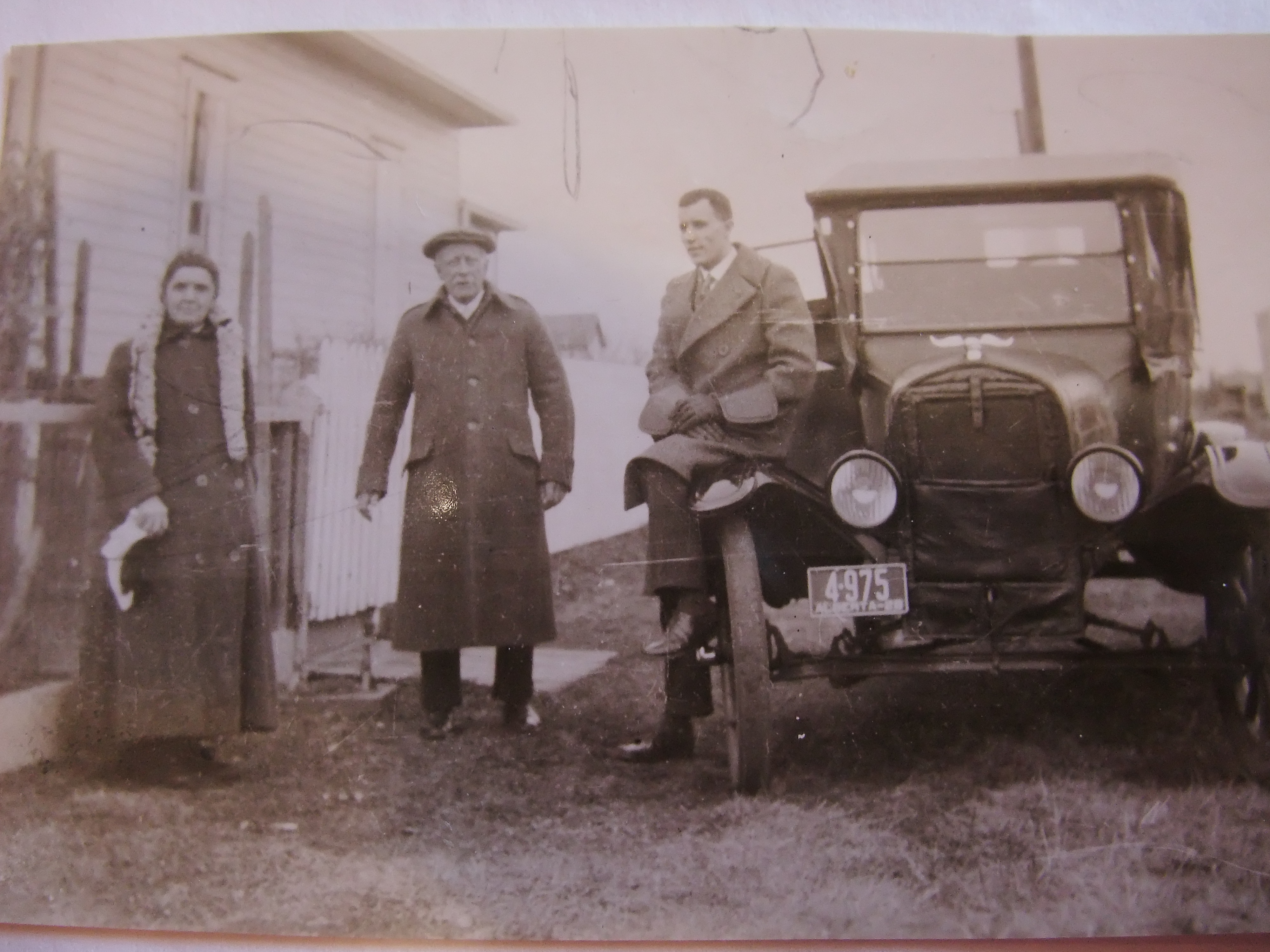
 JohnThomas Perkins moved his family into Leicester after his mother, Clara Benford Perkins died in 1910. He lived at #51 Walton Street and worked at an Iron Foundry as a Blacksmith. When his father-in-law, George Sleath, died in 1912, John Thomas was free to emigrate to Canada at age 49. This would have been a difficult decision but things in England were difficult and he felt that there would be more opportunity for him and his son in Canada. They arrived in  July 1913 and settled in the Ritchie District of Edmonton, Alberta. John Thomas first worked as a Blacksmith for Ribchester’s and then for the Hudson Bay Company as a clerk. I suspect he was employed in the Hardware Department. John Thomas, his wifr Sarah Jane and son Tertius in Canada circa 1929

The photo shows John Thomas, his wife Sarah Jane and son Tertius Bernard outside their home in Ritchie. circa 1929. Tertius was working for the CPR Telegraphs and obviously earned enough to buy himself a car.

John Thomas Perkins died in 1936 and was buried in Red Deer, Alberta, alongside his Brother-in-law Jack Sleath and his wife Clara Shotton Sleath.

Like Father……Like Daughter!

6 Mar

Showing off his new car to his parents outside the house in Ritchie!

Showing off his new car to his parents outside the house in Ritchie!

“Like Father…..Like Daughter”……. I had never realized how true this saying was until I caught myself telling a friend about “my cave” in the basement of my house. We have had a very long winter which began in late October and is still ongoing. The message on my phone says something about “not being available as I have gone into my cave until spring”. Well it isn’t really a cave, it is the cellar in my house. It has a cement floor and walls and you can barely stand up without banging your noggan on the floor beams, but it does have a furnace and is very warm and cozy in the winter. I  have spent considerable time down there the past few months. I have all my Genealogy Research Material, books, maps, stacks of notes  and binders spread out over many surfaces. I never have to put anything away. No one else except the cat ventures down there.  I  take my laptop down with me and turn on the TV for additional stimulation. I can lose myself for hours doing my research.

The connection with my dad goes way back. On those long winter nights, after he got home from work, he would go down to the cellar to listen to his ham radio and police scanner. I would go down to play with my toys and listen in to his conversations. My friends would also come over and we would play 78’s on an old RCA Record Player. Great entertainment in the 50’s and 60’s before all the other types of entertainment developed. I remember being excited when the mailman would bring cards confirming a contact he had made. His call letters were VE6 IR and he too would send these card to those he had connected with on his ham radio.

I often think how little I knew of my Dad. I was 33 years old when he died and to that point I guess I wasn’t all that interested in him as a person. He was just My Dad!

Tertius Bernard and his Dad, the Claybrooke Village Blacksmith (1906)

Tertius Bernard and his Dad, the Claybrooke Village Blacksmith (1906)

He was born in 1904 in Claybrooke Magna, a small village in the midlands of England just outside the city of Leicester. This city has made headlines in the past few months due to the discovery of the bones of Richard III under a car park in the city centre. On the site once stood the Grey Friars Priory. Something like this would really have raised his interest. I watched a CBC documentary last evening titled “The King in the CarPark” which told the story of finding the skeleton and thought, if he were alive, he too would have been watching. I do know that my Dad loved to read and learn new things. He loved doing math problems just for the sheer enjoyment of solving them. He tutored many of my friends for their Grade 12 Departmental Exams. I would often go with him to the Library to get books for myself. When I had read all the books in the Children’s’ Library,  I would use his card to get books in the Adult Library. In those days, I think you had to be 12 to borrow books from there, but you could use an adult’s card if you had their permission.

My Dad was 9 when he emigrated to Canada with his parents, John Thomas and Sarah Jane Perkins. They settled in the Ritchie area and he was one of the first students to go to Ritchie School when it opened in 1913. By age 16, he was delivering Telegrams for the Canadian Pacific Railway, a company that he was to work for his entire life. He wasn’t very athletic, but we did go for bicycle rides out to the country and at one time, I remember him going to wrestling matches when Gene Kiniski was fighting. He had a stamp collection, but was not very organized and the stamps were mostly loose in a box. I must have inherited this trait as my Genealogy Research is mostly loose papers in piles. Someday I will get organized……just not sure when! We were also at the opening of the Queen Elizabeth Planetarium in 1960, a first for Western Canada, and oddly enough, I now volunteer at the Telus World of Science just across the park from the Planetarium which has long been closed. It has the Margaret Zeidlar Star Theatre which offers a full dome immersive video experience. The Telus World of Science Edmonton was the first planetarium and science centre in Canada to showcase this new technology for domed theatres. (2008)

Dad retired in 1968 and by the next fall he had enrolled at NAIT, the local Technical Institute to take the Radio and TV Service Program. Guess he figured he would fix TV’s in his spare time or maybe he just wanted a chance to go to school to get a Diploma, something that he hadn’t been able to do as a young person. He probably knew more than all the instructors put together, but he had a great 2 years, socializing with the other students and likely doing some tutoring on the side.

Dad died in 1980 at age 76, way too young by today’s standards. I know he would have loved computers and the internet and would have been one of the first to embrace any new technology. For an Old Ham Radio Operator…… texting and tweeting would have been second nature.

My English Gene Pool!

22 Jun

Last Sunday was Father’s Day here in Canada. Time to remember my own father and the other men whose genes I have inherited. I can trace the Perkins family line back to John Perkins, son of Joseph Perkins and Ann Mason Sutton. He was born in Withybrook, WAR in 1833 and christened at the Independent Chapel in Stretton under Fosse. This would make the Mason family Non Conformists. He married Clara Benford in 1859 and lived in Claybrooke Magna where they had 2 sons, John Thomas and Walter Joseph. John was the Village Blacksmith as well as serving many public volunteer roles in the village. His son, John Thomas was also a Blacksmith until he left the village in 1910. My Dad, Tertius Bernard Jack Perkins was the only child of John Thomas Perkins and Sarah Jane Sleath. They were married at St. Peter’s in 1901 and he was born in 1904. In 1913, at the age of 9, he emigrated to Canada with his parents.

Joseph Perkins remains something of a brick wall. I believe him to be the son of Thomas and Dorothy Perkins and christened at Sharnford,LEI in 1795. He is listed as a Butcher on John and Clara’s Marriage Certificate. The other men, John and John Thomas were Blacksmiths and my Dad was a Telecommunications Technician with the CPR (Canadian Pacific Railway).

Thomas Perkins? C. 1765
Joseph Perkins 1795 – 1838
John Perkins 1833 – 1896
John Thomas Perkins 1863 – 1936 Walter Joseph Perkins 1864 – 1938
Tertius Bernard Jack Perkins 1904 – 1980
John David Perkins b/d 1942

If I look at naming patterns, I see the name JOHN carried down. Since John named his second son, Walter Joseph, the Joseph after his father, could I be correct in that he named his first son John Thomas after himself and his grandfather THOMAS? Someday……I may discover the elusive record which will prove me correct.

How long had this family been on the land in |Middle England? They seem to have inhabited the border areas of Warwickshire and Leicestershire along what was Watling Street and Fosse Way, the old Roman Roads. Over the centuries, this area had been occupied by the Britons, Romans, Saxons, Danes, and Normans . What stories these people would have to tell…..and if I think I am ENGLISH, perhaps I should take another look or at least, take a DNA test, given the peoples who have emigrated to this land.